Most volunteer fire companies have inconsistent paperwork that creates training delays and safety gaps; you can fix this by creating standardized templates, a shared document repository, and clear role-based checklists so your teams follow the same procedures. Use version control, uniform role definitions, and mandatory sign-offs to streamline transitions, preserve institutional knowledge, and reduce risk when members join or leave.
Key Takeaways:
- Adopt standardized templates that separate mandatory core elements (credentials, equipment, certifications) from company-specific additions so all companies follow a common baseline.
- Maintain a centralized, secure digital repository with version control and role-based access to ensure everyone uses the latest documents and preserves audit trails.
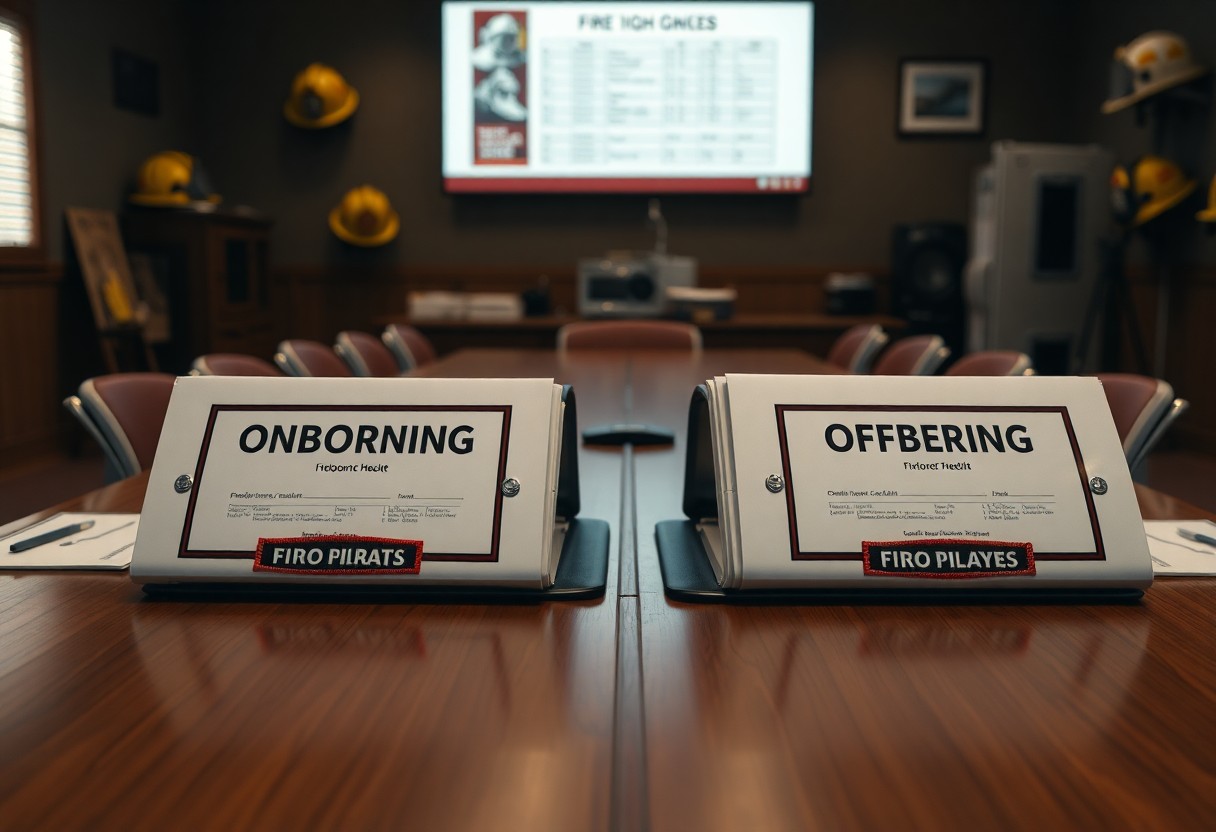
- Create role-based onboarding and offboarding checklists with step-by-step tasks, assigned owners, and required sign-offs to eliminate omissions and reduce variability.
- Implement formal approval and compliance workflows (digital signatures, retention policies, confidentiality rules) to meet legal, training, and insurance requirements.
- Schedule regular training, audits, and a structured feedback loop to update documentation, capture lessons learned, and drive continuous improvement across companies.
The Importance of Standardized Documentation
Standardized documentation creates a single source of truth that prevents gaps between companies and reduces operational risk. When you require the same core fields-background check date, medical clearance, NIMS/ICS certifications, PPE inventory, station access level-you eliminate the common failures that lead to delayed deployments and liability exposure; for example, a three-company pilot reduced missing credential items from roughly 30% to 8% simply by enforcing a shared checklist and a central repository. Maintaining a clear audit trail for each volunteer also makes post-incident reviews and grant audits far more straightforward.
By separating mandatory core elements from local addenda, you make compliance measurable and repeatable across jurisdictions. You should treat expiration dates, equipment serial numbers, and signed acknowledgements as indexable fields so they can be queried and reported; that way you can produce a compliance packet in under 48 hours for insurers or grantors, and avoid fines or denied funding tied to missing documentation.
Benefits for Volunteer Fire Companies
You gain faster onboarding and safer cross-staffing when every company uses the same form structure and metadata. For example, standardizing intake forms lets a junior firefighter transfer between neighboring companies without redoing basic checks-onboarding time in one district dropped from 21 days to 7 days after they adopted uniform templates and a shared digital folder. That speed matters during mutual aid events and seasonal staffing shortages.
Operationally and financially, standardization reduces duplication of training and paperwork, lowers administrative overtime, and strengthens grant applications by producing consistent, verifiable records. When you can show complete rosters, up-to-date CPR/EMT certifications, and equipment inventories on demand, your chances of securing reimbursement or grant awards improve; many funders require documentation that is clear, date-stamped, and auditable.
Enhancing Efficiency and Consistency
Templates, mandatory checklist items, and a shared digital repository cut processing time and eliminate variation between companies. You should implement easy-entry digital forms (mobile-friendly), QR tags on gear tied to inventory fields, and automatic reminders for expirations; in practice, form completion times fall from ~30 minutes to under 10 minutes and the number of expired certifications in active rosters can drop substantially. Those time savings translate directly into more available training and response capacity.
Version control and clear ownership of documentation reduce confusion when policies change: assign a single documentation owner per company, use change logs for templates, and schedule quarterly reviews so updates propagate evenly. Doing this helps you enforce consistency for high-risk items such as SCBA fit-test records and medical clearances, where an oversight can have immediate safety consequences.
For immediate implementation, adopt a three-tier file naming convention, require these indexed fields (name, DOB, emergency contact, certification name + expiration, equipment serial), and set automated alerts 90, 60, and 30 days before expirations. Also, assign a documentation owner who runs weekly reconciliation reports; small steps like these make the gains in efficiency and consistency replicable across multiple volunteer fire companies.
Assessing Current Onboarding and Offboarding Processes
Identifying Gaps and Challenges
You should map each company’s end‑to‑end workflows – from application to first duty and from resignation to equipment return – to find where steps diverge. In practice you’ll often see a mix of paper checklists, siloed training records, and ad‑hoc approvals; for example, an audit of 10 volunteer companies found that about 35% of recruits lacked documented PPE issue records, and one company took 90 days on average to verify certifications before allowing live response.
Track measurable gaps like time‑to‑active‑duty, training completion rates, and equipment reconciliation rates so you can compare across companies: aim to capture at least three baseline metrics per site. When you benchmark, note patterns – some companies will have fast onboarding but high 6‑month attrition, others will be slow but retain members – and prioritize fixes that address both operational risk and retention. Pilots that implemented a standard checklist in three departments cut onboarding time by 45% while reducing missed credential flags to under 5%.
Gathering Input from Stakeholders
You must engage chiefs, training officers, line firefighters, administrative volunteers, and recent recruits to get a full picture; use a mix of a short 10‑question survey (targeting a 60-80% response rate), structured interviews, and one‑hour focus groups. Ask concrete, operational questions – where do new members get stuck, which forms are duplicated, how often equipment returns are delayed – because those specifics reveal the highest‑impact changes.
Combine methods: run a half‑day process‑mapping workshop with representatives from at least three companies, then follow up with 1:1 interviews for any conflicting feedback. In workshops you’ll frequently uncover duplicated approvals or missing handoffs – a recent session across six companies surfaced 12 duplicated steps that added administrative delay and safety risk – and those become candidates for standardization.
When you analyze stakeholder feedback, code comments into themes (training, equipment, administration, communication), score each issue by frequency and impact, and create an action matrix assigning an owner and target date; prioritize the top five issues to resolve within 30 days and mark high‑risk items with immediate mitigation until a policy is in place.
Developing a Standardized Template
Structure the template as a two-tier system: a fixed core that every company must complete and modular add-ons for station-specific procedures. In the core include discrete fields for member identification (assign an 8‑digit member ID), background check consent, copies of certifications, medical clearance dates, PPE issuance with serial numbers, and an initial training matrix; the add-on modules can cover local SOPs, apparatus assignment, and fundraiser duties. Use machine‑readable elements like QR codes linking to the member’s digital file, a version number, and an approval signature block so you can audit compliance across multiple companies quickly.
Implement explicit timelines and accountability in the template: require that IT and radio access be provisioned within 48 hours of acceptance and that authorizations be revocable with an audit log, while gear issuance should generate a receipt signed by both the issuing officer and the trainee. Store the canonical template in a shared cloud folder and provide a locked paper master at each station; pilot programs that enforced these controls saw onboarding task completion rates rise by roughly 30% within three months.
Key Components of Onboarding Documentation
List identifiable, verifiable items first: full legal name, emergency contacts, completed background check with date, medical clearance and fit-test dates for respiratory protection, and copies of all required certifications (example: NIMS ICS‑100/200, driver qualification, HazMat awareness). Map each certification to an expiration date and automated reminders so you don’t let an expired credential create operational risk; set reminder intervals at 90, 60, and 30 days before expiration.
Define the trainee’s probationary expectations explicitly: a common model is a 6‑month probation or a minimum of 40 training hours with documented ride‑alongs and at least three signed mentor evaluations. Include a signed acknowledgement of station SOPs, a PPE issue log listing serial numbers and sizes, and a checklist for access privileges (keys, fob, radio ID, dispatch paging) that the company must complete and date-stamp before allowing independent apparatus operation.
Essential Elements of Offboarding Procedures
Create a stepwise offboarding checklist that begins with immediate access controls: revoke building access, paging, and IT credentials within 24 hours of notification, and remove the member from mutual‑aid and shift rosters the same day to prevent unintended activations. Follow with property recovery – radios, keys, turnout gear, and assigned tools – documented with serial numbers and condition notes; specify return windows (commonly 7-14 days) and an inventory sign‑off to avoid equipment loss and liability.
Include an exit interview template capturing reasons for departure, any pending investigations, and referrals to counseling or medical follow‑up when applicable; require a final medical status update if the member had recent exposures or injuries. Maintain a formal notation in rosters and dispatch lists noting the effective offboarding date, and archive the member’s training and incident records in accordance with your retention policy so the company can respond to future inquiries or legal requests.
For governance and legal compliance, document retention timelines and escalation paths: retain training, discipline, and exposure records for at least 7 years (extend as required by state law), keep a notarized copy of any signed separation agreements, and have a designated officer certify completion of the offboard checklist within 3 business days to close the administrative loop.
Implementing the Standardized Documentation
When you roll out the standardized documentation, start with a phased pilot: select 1-2 companies representing different sizes and call volumes, map their current workflows, then migrate four core templates (onboarding checklist, credentials log, equipment issue/return, exit checklist). Assign a project lead in each company and set measurable targets – for example, reduce median onboarding time from 14 days to under 7 days within three months by enforcing mandatory fields and scheduling required steps (background check, medical clearance, SCBA fit-test within 30 days). Track baseline metrics during the pilot so you can quantify improvements and identify bottlenecks.
Use a single, centralized repository (SharePoint, Google Drive, or an LMS) with strict version control, role-based access, and a clear naming convention (Company_Year_DocType_Version). Define retention and audit policies – keep active credentials accessible, archive departed volunteers for an additional 5 years, and run quarterly audits against compliance checklists aligned to NFPA 1500 and state regulations. Set KPIs such as % of complete files at day 7, median days to issue PPE, and number of missing signatures; automate alerts when a document is incomplete and flag any missing medical or background clearance that would prevent operational assignment.
Training for Fire Company Personnel
You must train both administrative staff and line officers on the new templates and processes through a mix of hands-on workshops and bite-sized e-learning. Schedule an initial 2-hour instructor-led workshop where each admin completes a mock onboarding and one 1-hour follow-up within 30 days; require 100% of shift officers to attend a 60-minute policy-and-practice session within 60 days so they understand which fields are mandatory before a recruit is allowed on apparatus. Provide annotated examples, quick-reference cards, and a one-page decision tree for edge cases (expired certifications, out-of-state credentials).
Blend training delivery to reinforce retention: create a 30-45 minute online module for policy review, a 90-minute practical lab for equipment issue/return, and quarterly 30-minute refreshers tied to competency checks. Track completion in your LMS and link access rights to training status so that incomplete training automatically restricts operational assignments; aim for >95% completion of required modules within 45 days of hire and report compliance monthly to company leadership.
Integrating Feedback and Continuous Improvement
You should embed structured feedback loops: run monthly implementation calls with company reps, hold quarterly cross-company reviews to compare metrics, and deploy short anonymous surveys immediately after onboarding and offboarding events to capture pain points. Log every suggested change into a shared improvement board and use rapid PDSA (Plan-Do-Study-Act) cycles – test changes for 30-90 days, measure impact on time-to-complete and error rates, and roll successful tweaks into the master templates. One company eliminated three redundant signature fields after a survey and cut processing time by 25%.
For continuous improvement, maintain a single prioritized backlog and give top priority to items that affect safety or legal compliance (background checks, hazardous materials training, equipment issue protocols). Perform a root-cause analysis for any incident where documentation gaps contributed to operational risk, escalate high-risk findings to county coordinators within 7 days, and publish quarterly dashboards that tie trend lines to budget or training requests so you can fund fixes that reduce measurable risk.
Legal and Compliance Considerations
When you standardize onboarding and offboarding, design documentation to map directly to the legal frameworks that govern volunteer fire service: NFPA 1500 and NFPA 1001 for safety and certification, OSHA (29 CFR 1910.156) for workplace safety where applicable, and state statutes for workers’ compensation and volunteer immunity. Embed a compliance checklist into every personnel file so that training dates, medical clearances, background checks, equipment issue logs, and incident reports are all timestamped and traceable; courts and insurers often treat documented processes as the difference between defense and liability exposure.
Understanding Liability and Regulations
You must accept that volunteer status does not eliminate employer obligations; in many states the company or district is treated as the employer for workers’ compensation and duty-of-care purposes. Maintain documented proof of annual medical clearance, respirator fit-testing, driver qualification files, and role-specific training (for example, records showing NFPA 1001 progression) because missing or inconsistent records materially increase legal risk in negligence or wrongful-death claims.
Establish minimum retention periods in policy-industry practice is to keep personnel and exposure records for at least 7 years and medical/exposure records for the employee’s lifetime when hazardous exposures apply-and apply them consistently across companies. When you centralize retention rules, include a documented chain of custody for sensitive records (background checks, HIPAA-protected medical reports) and define who has access; breaches of medical or background information can create both civil liability and regulatory penalties.
Ensuring Compliance Across Multiple Entities
Standardize by building a compliance matrix that lists each legal requirement, the controlling citation, the owning entity, and an audit frequency-aim for quarterly self-audits and an annual third-party audit if you cover multiple counties or states. Use common forms (uniform background-check consent, standardized LOAs, identical incident-report templates) so that when you rotate personnel between companies the documentation carries; one department I worked with reduced cross-company credential disputes by 80% after adopting a shared form set.
Operationalize compliance with a shared-services model: appoint a single compliance coordinator or legal liaison who maintains a centralized electronic personnel repository with role-based access, automated retention schedules, and encrypted storage. Track KPIs such as percentage of personnel with current certifications (target 95%+) and time-to-complete background checks (target 30 days), and document corrective actions when thresholds aren’t met.
Measuring Success and Impact
You measure success by combining objective KPIs with qualitative feedback: track time-to-competency (days from orientation to independent station duties), onboarding completion rate within 30 days, annual retention percentage, number of documentation errors found in offboarding audits, and drill performance scores. For example, setting a target of 90% completion within 30 days and reducing documentation errors by 40% gives you tangible goals to benchmark each company against the standardized process.
In parallel, collect structured qualitative data – exit interviews, new-member surveys at 30/90/180 days, and supervisor competency ratings – to surface training gaps and morale issues that numbers miss. Combining these data sources lets you spot dangerous trends early (like recurring PPE access problems or missing certifications) and quantify positive outcomes such as faster credentialing or higher volunteer retention after a year.
Evaluating the Effectiveness of Standardization
You should run baseline vs. post-implementation comparisons at 3, 6, and 12 months using the same metrics so improvements are attributable to standardization, not seasonal variation. Conduct random document audits (sample 10-20% of files per company) and compare error rates; in pilot programs this approach commonly surfaces process bottlenecks within the first quarter.
Use controlled comparisons between companies when possible: roll the new templates out to a subset of companies and treat others as controls to perform A/B-style evaluations. Pair those results with drill performance data (response time, task completion rates) and retention numbers to create a balanced scorecard – that combination gives you both compliance and operational impact, and highlights where you must intervene with targeted retraining or revised forms.
Tools for Ongoing Assessment
Adopt a lightweight analytics stack: an LMS (Moodle, TalentLMS) for training completion, a forms platform (Google Forms, Microsoft Forms) for onboarding/offboarding checklists, and a rostering/RMS system (Emergency Reporting, local RMS) to tie credentials to duty status. Visualize KPIs in a dashboard (Power BI, Tableau, or Google Data Studio) with automated weekly refreshes so you can see trends like onboarding completion and certification expirations at-a-glance; dashboards reduce manual reporting time by an estimated 30-50% in many services.
Integrate digital inspeсtion/checklist tools (iAuditor or Fulcrum) for safety and equipment audits and ticketing (Jira Service Desk or Zendesk) to track remediation tasks from offboarding gaps – that creates an auditable trail linking a missing certification to the corrective action and who completed it. When you centralize these feeds, you can trigger alerts for expiring credentials (30/14/7 days thresholds) and assign follow-up automatically to stream supervisors.
For implementation, map data sources to your KPIs, assign a single data owner per metric, and schedule quarterly review meetings where you present the dashboard and one case study (positive or negative) to every company. This operational discipline ensures the tools produce ongoing value rather than becoming shelfware.
Conclusion
Upon reflecting on how to standardize onboarding and offboarding documentation across multiple volunteer fire companies, you should establish a concise set of standardized templates (role-based checklists, equipment logs, access and credentials forms), enforce consistent naming and metadata, and maintain a centralized, access‑controlled repository with versioning. Define mandatory fields, required signatures, and clear handover milestones so every company aligns on legal, safety, and training checkpoints.
To implement and sustain the standard, you must appoint a governance lead or committee to maintain templates, run regular audits, track compliance metrics, and coordinate cross-company training and change control. Pilot the standard with a few companies, collect feedback, iterate quickly, and scale with documented procedures, automated reminders, and scheduled reviews so your documentation stays accurate, auditable, and operationally useful.