Procedures for PAR checks require you to assign clear roles, maintain concise accountability logs, verify crew locations promptly, and enforce consistent communication to ensure every member is accounted for during incidents.
Defining the PAR Protocol in Volunteer Settings
You set a concise PAR protocol that assigns roles, defines check intervals, and establishes clear reporting lines so volunteers know how and when to confirm location and status during incidents.
Core Objectives of Personnel Accountability Reports
Establish PAR objectives to ensure you track each member’s location, confirm assignment status, account for personnel after actions, and deliver timely, focused updates to command during evolving scenes.
Addressing Unique Challenges of On-Scene Staffing
Adapt your PAR methods for variable staffing by assigning an accountability officer, simplifying reports, scheduling routine check-ins, and using backup communicators to cover gaps when volunteers arrive or depart unexpectedly.
Plan specific tactics such as pre-assigned PAR tags, staggered check-in schedules tied to incident benchmarks, and a clear handoff procedure when volunteers rotate or staging changes; include short radio scripts and laminated assignment boards so you reduce ambiguity and speed roll calls, and train your crews regularly on these routines so you maintain accuracy under stress.
The Safety Officer’s Strategic Oversight
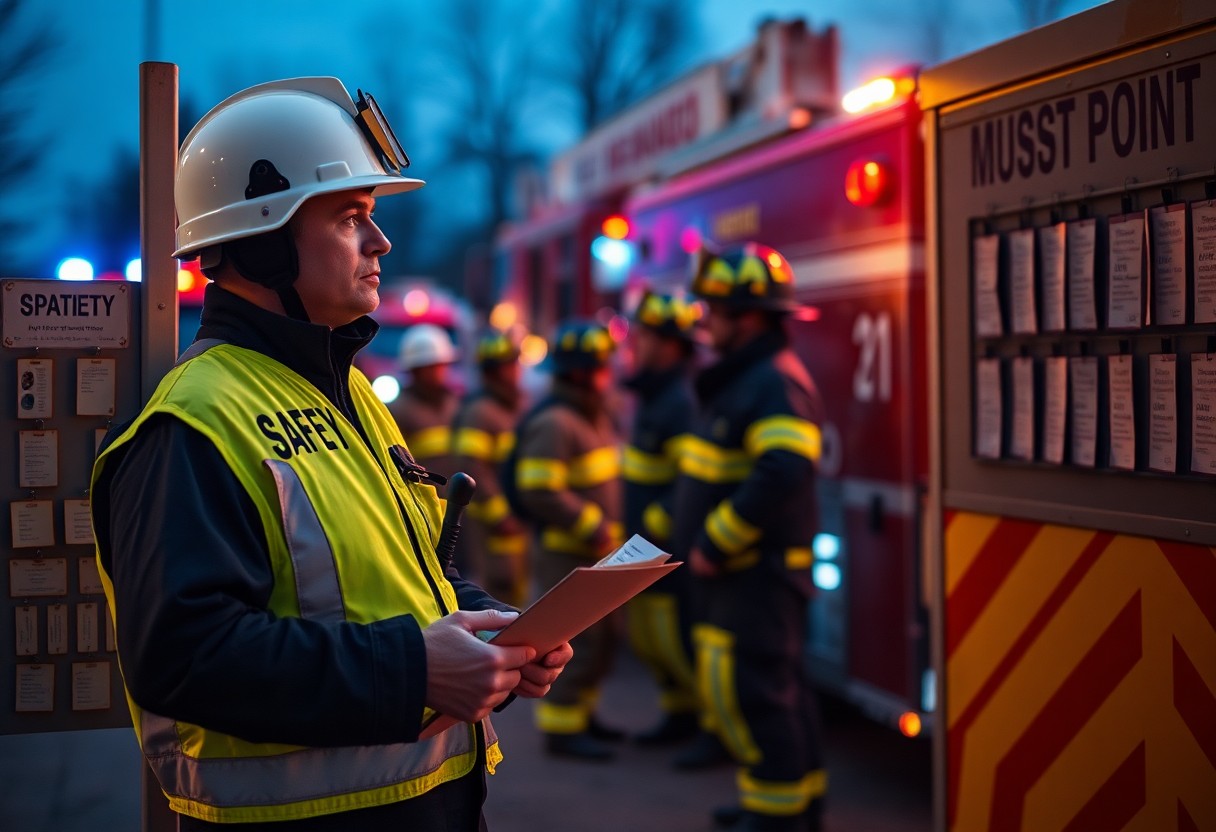
You coordinate PAR checks by setting priorities, assigning roles, and scheduling repetitions to match incident phases; your oversight maintains accountability, informs tactical decisions, and keeps operational risk visible to command.
Establishing Authority within the Incident Command System
Command authority becomes clear when you define safety responsibilities, set PAR procedures in the ICS, and communicate enforcement expectations so crews follow accountability directives during operations.
Monitoring High-Hazard Zones and Personnel Movement
Monitor high-hazard zones by assigning entry/exit controllers, tracking crew locations, and enforcing time limits so you can trigger immediate PARs for missing or delayed personnel.
Document zone boundaries, entry/exit times, air-monitoring readings, and crew assignments so you can cross-check telemetry, witness reports, and PAR outcomes. You train company officers to report delays immediately and require tag or electronic RIT tracking on each entry. You use portable boards or digital trackers at sector lines, enforce immediate roll calls after high-exposure tasks, and coordinate rapid withdrawal or rescue when accountability gaps persist.
Implementing Standardized PAR Triggers
Set predefined PAR triggers so you activate accountability promptly when benchmarks like lost-contact, trapped-member reports, or rapid fire spread occur, ensuring unified response expectations across shifts.
Identifying Critical Incident Benchmarks
Identify specific incident benchmarks you will use to trigger a PAR-mayday calls, sudden structural changes, confirmed civilian entrapment, or multiple simultaneous injuries-to reduce ambiguity and speed decision-making.
Establishing Routine Time-Interval Checks
Schedule fixed-interval PARs during prolonged incidents so you verify crew locations and statuses without waiting for visible signs of trouble.
During extended incidents you should set interval timing based on activity intensity, crew fatigue, and building complexity so checks are practical and avoid alert fatigue. Assign a specific officer to initiate checks, require concise status reports, and log each PAR so you can identify trends and training needs.
Communication Discipline and Radio Management
You enforce strict radio discipline during PAR checks: limit transmissions to status confirmations, use unit identifiers, pause for answers, and silence noncrucial traffic so accountability is immediate. Your control sets tone and prevents confusion when crews report in.
Streamlining Transmissions for Clarity and Speed
Keep transmissions short and specific: use clear unit IDs, report only status or immediate needs, pause for acknowledgments, and avoid procedural chatter; practice standard phrasing so you cut radio time during PAR drills.
Protocol for Interruptions and Emergency Traffic
Set strict rules for interruptions: only emergency traffic preempts PAR, use the designated “Emergency” proword, and require immediate acknowledgment; you must halt routine transmissions and clear the net until the incident is resolved.
When an interruption occurs, you enforce a single proword – “Emergency” – reserved for life-threatening reports from command or crews; everyone stops, acknowledges with unit ID, and yields the air. After the threat is handled, the sender declares “Clear Emergency” before normal traffic resumes, and you log the event and reconcile any missed PAR responses.
Leveraging Accountability Tools and Technology
Accountability tools and straightforward technology let you track crew status, speed PAR checks, and reduce guesswork during incidents; set clear update triggers and backup methods to keep data reliable.
Hard-Tag Systems and Tactical Boards
Hard-tag systems and tactical boards give you physical checkpoints to confirm crew locations and statuses quickly, letting you spot gaps and reassign volunteers without delay.
Digital Solutions for Real-Time Volunteer Tracking
Digital apps and radio-integrated platforms let you see volunteer check-ins, assignments, and PAR updates in real time so you can direct resources and resolve discrepancies fast.
Integrating GPS-enabled apps, QR/NFC check-ins, and status-tag syncing gives you layered verification; train volunteers on app use, set short update intervals, and keep offline modes active so tracking continues without connectivity. Assign a PAR officer to validate automated feeds, run drills to test integrations, restrict access to operational data, and standardize status codes so your team interprets live updates consistently.
Training for Operational Consistency
Consistent training keeps you aligned with SOPs for PAR checks, ensuring clear roles, radio phrases, and timing. Use standardized modules, regular refreshers, and competency evaluations so each member executes checks uniformly under stress.
Conducting Tabletop Scenarios for Safety Officers
You should run tabletop scenarios that force decision-making, role clarity, and rapid PAR sequencing; script radio failures and casualty injects, then conduct focused after-action reviews so you can refine checklists and communication under simulated pressure.
Integrating PAR Drills into Multi-Agency Exercises
Joint multi-agency drills let you test interoperability, shared PAR terminology, unified radio procedures, and command interface; observe handoffs, timing, and accountability to spot gaps before an actual mutual-aid response.
Plan joint objectives with partner agencies, agree on a common PAR protocol, and schedule integrated tabletop and live drills so you validate terminology, radio nets, and command liaisons. Assign safety officer liaisons to manage cross-agency accountability and inject realistic stressors that test your check procedures. Conduct a structured debrief to capture corrective actions, revise SOPs, and document lessons for mutual-aid deployment.
Conclusion
The safety officer guides PAR checks by assigning roles, maintaining clear radio protocols, conducting rapid accountability sweeps, and training volunteers in checklist procedures, so you can confirm team locations and conditions quickly and reduce risk during operations.
FAQ
Q: How should a Safety Officer design and implement a PAR check procedure?
A: Safety officers should define clear triggers for PAR checks such as change of operational mode, crew withdrawal, missing personnel reports, and set time intervals during prolonged incidents. Create a concise written SOP that assigns the Safety Officer as PAR coordinator and names alternate PAR leads when staffing is limited. Use a standardized accountability format that includes unit ID, assigned crew size, and current status (on-scene, injured, missing). Place an accountability board or electronic roster at the command post and require unit leaders to report immediately when a PAR is requested. Perform a rapid confirmation call for any reported missing member and log all responses with time stamps. Train all members on the SOP and revise the document after each after-action review.
Q: What communication protocols and tools should Safety Officers use to perform fast, accurate PAR checks during incidents?
A: Use a single radio frequency for accountability updates and enforce standardized radio phraseology to reduce confusion. Designate one Accountability Officer to collect responses and a separate recorder to log confirmations, with a backup person assigned. Implement simple physical accountability devices such as passport boards or SCBA tags and verify tag status during PAR calls. Employ time-stamped digital tools or mobile apps when reliable connectivity exists, but require voice confirmation as the primary method in noisy or chaotic conditions. Preassign crew leaders on rosters before arrival to speed identification. Report PAR progress and completion to incident command within a pre-established timeframe.
Q: How can volunteer fire companies train and evaluate PAR check performance and improve procedures over time?
A: Integrate PAR checks into regular drills and scenario-based training with realistic time pressure and role rotations so every member practices both reporting and conducting PARs. Run surprise PAR call exercises during other training events to simulate stress and distractions. Track key metrics such as time-to-complete PAR, number of missed or incorrect reports, and instances of SOP deviation. Conduct structured after-action reviews that identify root causes of failures and assign specific corrective actions with deadlines. Update SOPs, rosters, and accountability tools based on lessons learned and document training completion for each member.