You can ensure your volunteer fire department responds effectively to severe weather by using easy printable checklists that standardize pre-storm tasks, equipment checks, communication plans, staffing rotations, and sheltering procedures. Use the checklists for training, pre-deployment staging, and post-event accountability; update them after exercises and storms. Implement a simple color-coded system, assign clear responsibilities, and store physical and digital copies so your team can act fast and consistently when seconds matter.
Understanding Severe Weather
You should map local hazard profiles and historical response data: tornadoes can exceed 200 mph and obliterate structures, hurricanes bring sustained winds ≥74 mph plus storm surge and prolonged flooding, severe thunderstorms create large hail and damaging straight-line winds, flash floods form within minutes in urban and canyon corridors, and winter storms can immobilize entire counties with ice and heavy snow. Use past call volumes and infrastructure vulnerabilities to shape staging and supply decisions.
Common Types of Severe Weather
You should sort threats by onset, scale, and lead time: tornadoes are short-duration but high-intensity; hurricanes affect broad areas over days; flash floods strike quickly with little warning; severe thunderstorms produce hail, lightning, and microbursts; winter storms create long-duration mobility and heating emergencies. The mix you face determines mutual-aid timelines, pre-positioning sites, and inventory thresholds.
- Tornadoes
- Hurricanes / Tropical cyclones
- Severe thunderstorms (hail, lightning, downbursts)
- Flash floods
- Winter storms (snow, ice, freezing rain)
| Tornadoes | Localized structural collapse, mass casualty search, debris-blocked access |
| Hurricanes | Wide-area wind damage, storm surge, prolonged sheltering and multi-jurisdictional response |
| Severe Thunderstorms | Power outages, fallen trees, vehicle incidents, isolated rescues |
| Flash Floods | Swift-water rescues, road washouts, submerged infrastructure |
| Winter Storms | Road closures, hypothermia incidents, increased vehicle and structure fires from heating |
Impact on Fire Departments
You will face surge calls, staffing shortages as volunteers deal with personal losses, and accelerated wear on pumps, generators, and SCBA; call volumes can jump 2-5× during major events and supply depletion commonly occurs within 24-72 hours if not pre-staged. Plan for alternate command posts, crew rotations, and prioritized asset protection to keep response capacity operational.
You should build checklists around sustainment metrics: aim for 72-hour fuel and parts reserves, maintain a 20% spare pool of turnout gear/SCBA for rotations, and predefine mutual-aid triggers to cover 24-72 hour surges. Historical incidents-Joplin (2011 EF5) and regional responses during Hurricane Harvey (2017)-show that unified command, logistics points, and rapid resupply decisions determine whether departments can maintain continuous rescue operations for multiple days. Your plans must translate those lessons into specific task lists and supply quantities.
Assessing Current Preparedness
Begin by conducting a formal audit of your department’s plans, equipment, and staffing against NFPA 1720 and FEMA guidance; track response times, mutual-aid agreements, and inventory counts. Use a checklist to log vehicle readiness, generator fuel levels, and comms on a weekly basis. For example, one county in Ohio reduced equipment downtime by 40% after instituting monthly inspections and a simple spreadsheet to track maintenance dates.
Evaluating Existing Protocols
Review your incident action plans, call-out procedures, and dispatching scripts against real incidents; run tabletop exercises simulating 70+ mph winds or flash flooding. Compare timelines from the last five incidents to find delays; if turnout exceeds 10 minutes on average, adjust alerts or staging points. Include mutual-aid triggers and evacuation routes in each protocol update.
Identifying Gaps in Training
Map each position in your roster to required competencies and log training hours; aim for a minimum of 12-24 hours per firefighter annually, with storm-specific modules on pump ops, rapid damage assessment, and scene safety. Use after-action reports-Joplin (2011) highlighted the benefit of multi-agency drills-to prioritize cross-training and comms exercises.
Drill specific failure scenarios such as pump failure, single-engine response, or loss of radio repeaters; run quarterly full-scale exercises and monthly 60-90 minute skill stations. You should track competency with a matrix that notes dates, instructor, and measurable outcomes (e.g., 90% proficiency on pump operations within three attempts). If your volunteer availability drops below 80% for critical roles, implement cross-staffing and targeted recruitment to close gaps.
Developing Comprehensive Checklists
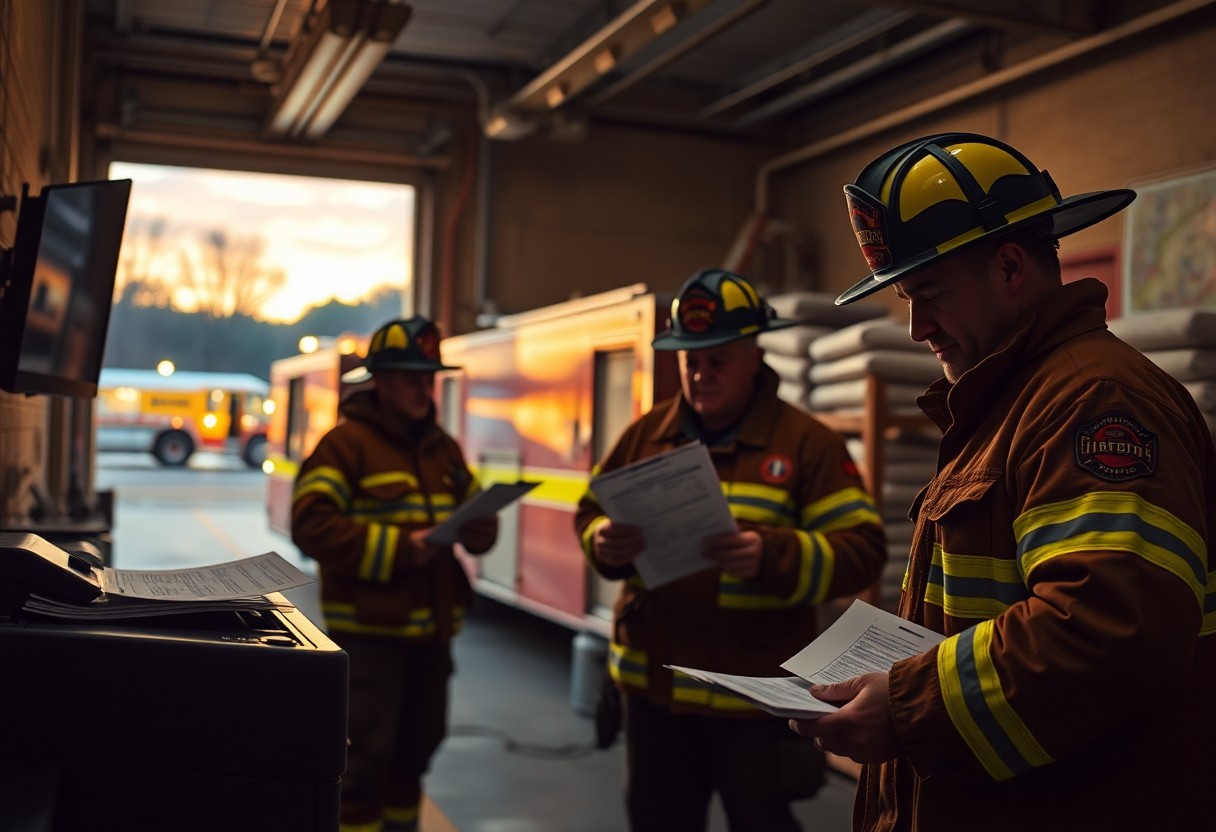
Break your checklist into pre-event, response, and recovery sections with clear task owners and timelines; include contact lists, mutual-aid triggers, equipment inventories, and staffing rotations. Use inspection intervals (daily during events, weekly otherwise), standard ICS forms (ICS-201 for incident objectives, ICS-214 for logs), and itemized stock counts so you can audit quickly. Assign specific personnel for communications, logistics, and safety, and include contingency thresholds (e.g., activate mutual aid when local staffing falls below 70%).
Essential Items for Checklists
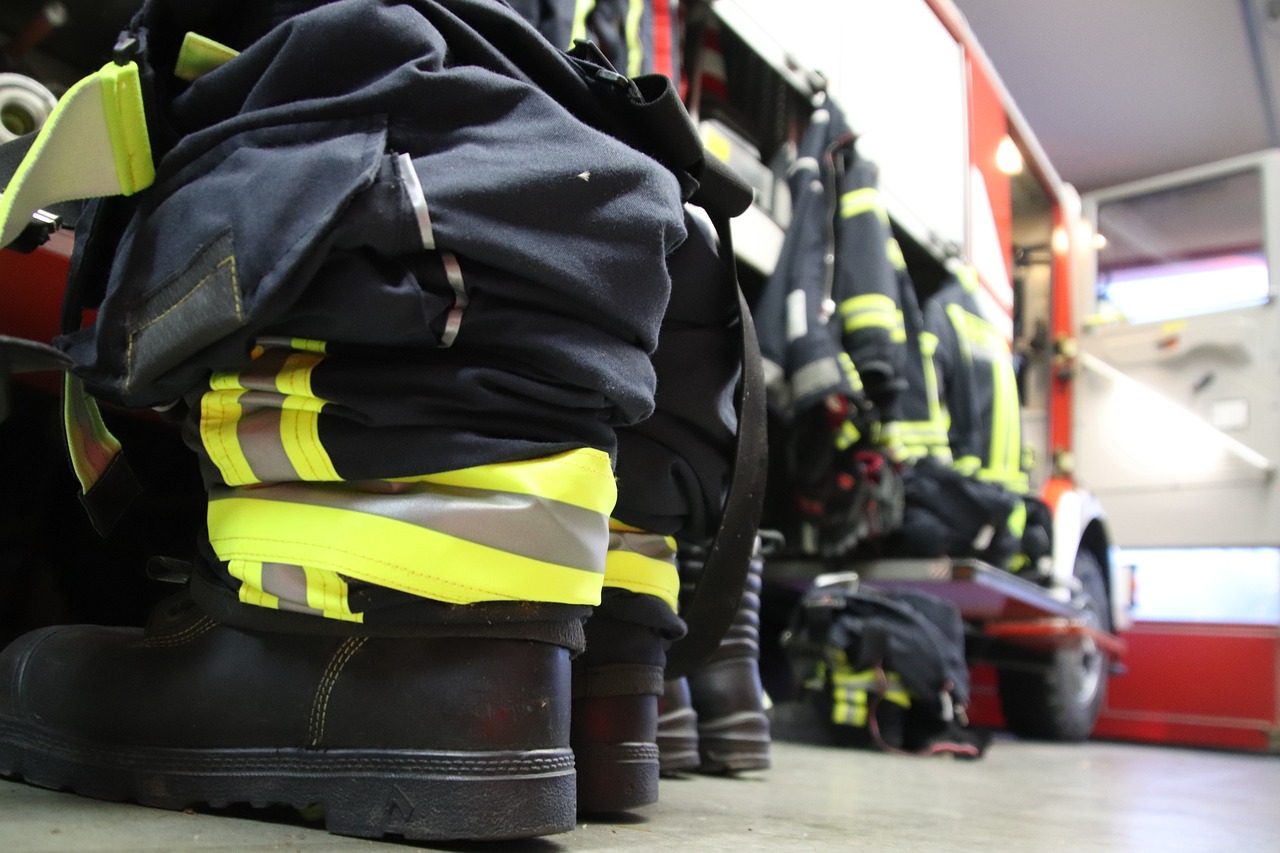
Include PPE inventories (helmets, gloves, N95/masks), SCBA spares (at least three cylinders per engine), portable generators (5-10 kW), fuel stocks for 72 hours, two dewatering pumps (3″ and 4″), chainsaws and spare chains, lighting towers, battery banks and chargers, multi-band radios with spare batteries, basic rehab supplies, AED and trauma kits, scene traffic control (cones, flares), and up-to-date building and evacuation maps.
Tailoring Checklists to Different Weather Events
Adapt items and timelines by hazard: for hurricanes plan 48-72 hour pre-storm actions, generator and fuel staging, and evacuation routes; for tornadoes emphasize shelter locations, rapid accountings, and fall-back apparatus locations; for floods prioritize pumps, elevated equipment staging, and waterborne rescue gear; for wildfires focus on brush truck readiness, defensible-space checks, and ember-control supplies.
For added detail, create event-specific subsections: list exactly which apparatus to relocate and when (e.g., move engine to high ground 48 hours pre-flood), specify quantities (two 4″ pumps, 600 gallons diesel for coastal storms), schedule 12-hour shifts for first 72 hours, and include trigger points for mutual aid activation and log templates to track resource use and personnel hours during extended incidents.
Effective Training for Volunteers
You should embed short, targeted trainings into weekly meetings and quarterly exercises so competencies are routine, not occasional. Set measurable goals-aim to cut turnout time by 15-25% within six months or complete equipment checklists in under 10 minutes-then track progress with signed skill sheets. Assign subject-matter leads for pumps, chainsaws, and communications, and rotate roles so every volunteer practices command, logistics, and patient triage at least once per quarter.
Conducting Workshops and Drills
Run tabletop workshops monthly to test decision-making and quarterly hands-on drills for vehicle ops, water supply, and debris clearance; schedule one annual full-scale multi-agency exercise with EMS and public works. Use realistic injects (power outages, blocked roads) and time each task to collect baseline metrics. One department reduced pump hookup time by 35% after a six-month series of focused pump-and-hose drills with video review and debriefs.
Resources for Continuous Learning
Leverage FEMA Independent Study (IS-100, IS-700), National Fire Academy courses, NFPA guidelines, and state EMS recert modules to structure your curriculum; mix online modules with hands-on skill sign-offs. Maintain a shared digital folder of SOPs, checklists, and past exercise after-action reports so volunteers can study on demand and trainers can build progressive lesson plans tied to your checklists.
Expand learning with a simple LMS or spreadsheet tracking training hours, competencies, and refresher due dates; require core certifications (e.g., CPR/first aid, pump operator) and set a minimum of 24 training hours per year per member, combining online study and practical drills. Partner with nearby departments for joint exercises, invite county emergency managers for tabletop critiques, and use weather-event case studies from the past five years to adapt scenarios to your local hazard profile.
Communicating with the Community
You set up multiple channels-SMS, email, NOAA weather radio, social media and local AM/FM alerts-to reach different audiences. Aim to enroll 1,000 residents in your emergency alert app and train five community liaisons to relay messages. Use weekly test messages, bilingual templates, and a documented escalation tree so volunteers know whom to notify within 15 minutes of a warning.
Engaging Local Residents
You run station open houses, door-to-door canvassing, and school assemblies to build trust; a single open house can reach 200-300 people. Delegate neighborhood captains covering 10-15 households each, keep a contact roster updated quarterly, and offer short volunteer shifts (traffic control, shelter ops) so residents participate without long-term commitment.
Promoting Safety Awareness
You produce one-page printable checklists for homeowners, tailored flyers for seniors, and kid-friendly coloring sheets; distribute 2,000 copies annually through libraries and schools. Pair these with 10-15 minute community talks and short how-to videos posted to Facebook and Nextdoor to boost retention and encourage action during warnings.
You run quarterly workshops (four per year) on sheltering, generator safety and basic first aid, and include a 5-question pre/post quiz to measure knowledge-aim for a 40% improvement. Track drill participation with a goal of reaching 20% of households annually, partner with utilities to insert checklists into 10,000 monthly bills, and log website downloads to quantify community reach.
Tips for Rapid Response
You should pre-assign jobs for a 2-3 person rapid-response team and stage apparatus within 5 minutes of probable impact; FEMA analysis shows staged resources can reduce arrival times by up to 30%. Rotate crews every 12 hours to limit fatigue and maintain decision-making. Keep three emergency kits per engine with spare radios, road flares, and battery packs labeled for storm use. Any delay beyond 10 minutes tends to multiply incident escalation, so run timed drills weekly to cut seconds from dispatch-to-arrival.
- Pre-assign roles (driver, pump operator, safety officer) for each shift
- Stage 1 apparatus within 3-5 minutes of warning, 1-2 backup units nearby
- Fuel and battery checks at shift change, log with timestamps
- Maintain three labeled emergency kits per engine
- Run timed drills weekly and track dispatch-to-arrival metrics
Streamlining Communication Channels
You must maintain a primary VHF/UHF voice channel plus a secondary digital data channel; adopting P25 radios and a dedicated SMS/SOC group for up to 50 members prevents channel overload. Implement a 3-tier message protocol-alert (≤20 words), tactical (specific actions), operational (resource requests)-to keep transmissions actionable. Test voice and data monthly, log packet loss, and aim for <2% during drills; after County Z adopted this system, message clarity improved by 40% in severe-weather operations.
Coordinating with Other Agencies
You should negotiate MOUs with police, public works, and utilities that define tiered response roles, 24/7 contacts, and on-call schedules; mutual aid compacts can reduce handoff time by roughly 35%. Use ICS forms 201 and 202 for shared situational awareness and run joint tabletop exercises twice yearly. Share GPS waypoints for high-risk addresses and pre-authorize road-clearing priorities to speed access for your crews.
Include data-sharing protocols in those agreements-GIS layers, real-time asset tracking, and a common incident feed (CAP/EMWin) so you and partners operate from the same map. Assign a unified command liaison per shift; when County Y activated unified command during a 2019 storm, road clearance time dropped two hours and shelter setup accelerated by 25%, demonstrating measurable gains from structured coordination.
Conclusion
Following this, you can equip your volunteer fire department for severe weather with easy printable checklists that standardize tasks, equipment checks, communication plans, staffing rotations, and recovery actions. When you assign responsibilities, run regular drills, update lists after exercises, and keep supplies organized, you strengthen response speed, safety, and community resilience.