Firefighters depend on leaders like you to enforce health, safety, and NFPA 1403 standards, implement clear training protocols, monitor fitness and PPE, and ensure accountable incident command to reduce risks and sustain volunteer readiness.
Prioritizing Physical and Mental Health Factors
Prioritize regular medical checks, fitness routines and peer support to keep volunteers mission-ready.
- annual physicals
- fitness standards
- peer counseling
Thou must model healthy habits and enforce safe return-to-duty protocols.
How-to implement a comprehensive firefighter wellness program
Implement a program you lead with screening, structured fitness, mental-health access and confidential counseling, plus clear policies and regular evaluations to protect volunteer health.
Tips for identifying and mitigating chronic stress in volunteers
Spot early signs like sleep loss, irritability and declining performance and document trends.
- sleep disturbance
- isolation
- reduced focus
Any outreach you offer should be timely, confidential and linked to professional care.
Monitor training loads, call frequency and life events to detect cumulative strain; use simple reporting and peer check-ins.
- track shifts and rest
- regular mood surveys
- structured peer support
Any intervention you arrange should prioritize confidentiality, timely referral and documented follow-up.
Establishing a Safety-First Leadership Culture
You model safety through consistent enforcement of SOPs, visible PPE use, and deliberate training that aligns with NFPA 1403, signaling to volunteers that safety outweighs speed and encouraging disciplined, predictable behavior on the fireground.
Factors that influence safety compliance on the fireground
Clear expectations and accessible checklists help you maintain compliance on the fireground. After reviewing incidents, you update procedures, retrain crews, and document corrective actions to close gaps.
- Training frequency and realism
- PPE availability and usage
- SOP clarity and accessibility
- Leadership presence and supervision
- Fatigue, staffing, and workload
- Incident documentation and feedback
- Environmental and tactical hazards
- Open peer reporting culture
How-to foster accountability through transparent communication
Set transparent channels so you document decisions, share after-action findings, and assign follow-up responsibilities that make accountability visible and actionable.
Implement routine briefings, concise written assignments, and a tracked corrective-action log that ties issues to training and competence. Use candid, nonpunitive language during debriefs so volunteers report near-misses. Require leaders to follow through with performance coaching and visible record-keeping to reinforce standards and reduce repeat errors.
Mastering NFPA 1403 Standards for Live Fire Training
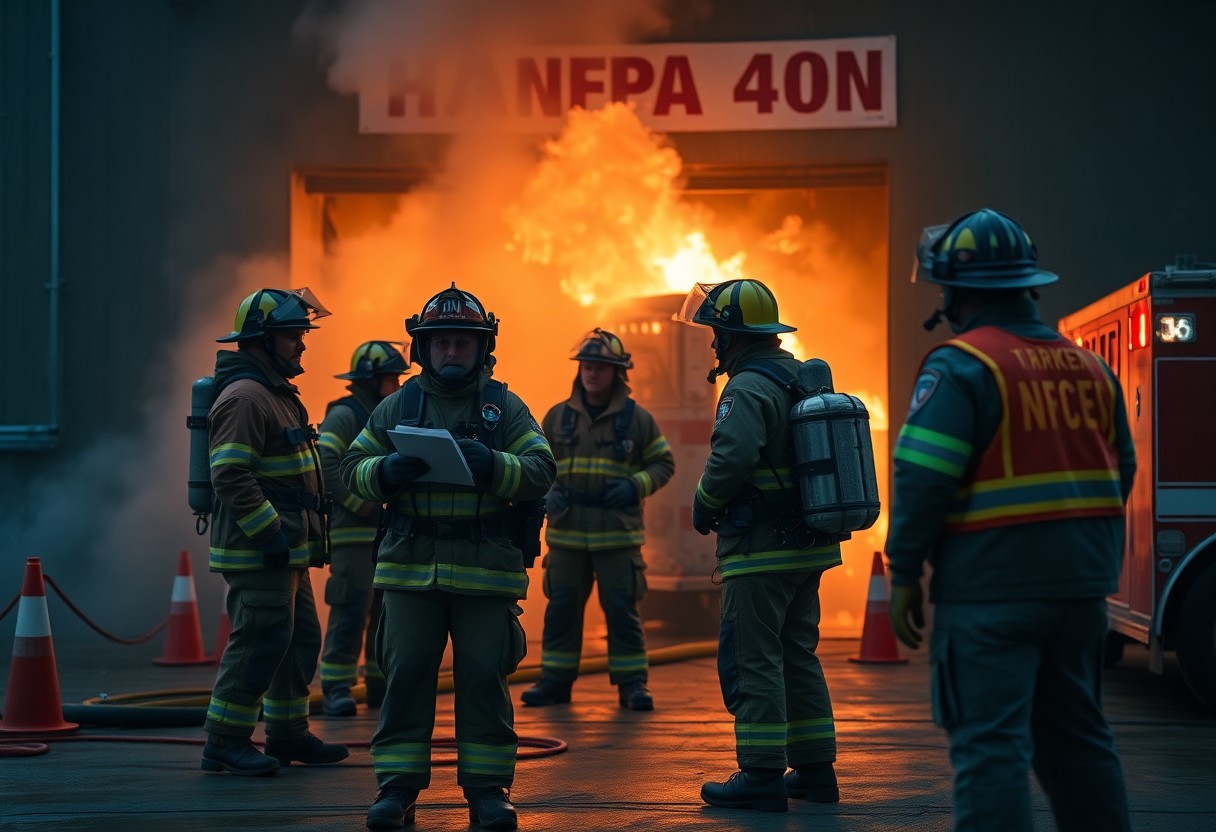
Adopt NFPA 1403 protocols, documented pre-burn plans, and strict ignition controls so you can deliver live-fire training that meets standards while minimizing risk to participants.
How-to conduct compliant and realistic training evolutions
Plan evolutions with clear objectives, controlled fuel loads, and staged safety zones so you can replicate fire behavior within NFPA limits while protecting students and property.
- Establish written risk assessments and pre-burn checklists.
- Limit fuel type and quantity per scenario.
- Assign a dedicated safety officer and communications plan.
- The incident commander must authorize ignition after final checks.
Tips for ensuring instructor qualifications and student safety
Train instructors to verified NFPA standards, require documented experience, and mandate regular skills refreshers so you can keep instruction competent and safe for students.
- Confirm certifications and relevant live-fire experience.
- Use scenario-specific instructor-to-student ratios.
- Perform pre-training briefings and PPE inspections.
- The safety officer must have authority to halt evolutions.
Confirm instructors complete competency assessments, mentor-led shadow shifts, and documented performance reviews before independent teaching so you can correct gaps and protect trainee welfare.
- Use standardized evaluation rubrics and checklists.
- Document mentoring progress and remediation steps.
- Schedule periodic medical and fitness screenings.
- The department must retain records of evaluations and corrective actions.
Empowering Personnel Through Skill Development
Practice cross-training, scenario repetition, and NFPA 1403-aligned live-fire oversight to build your team’s competence, reduce on-scene risk, and ensure safety-focused leadership.
Factors that drive volunteer engagement in safety drills
Motivation comes from relevance, respect for time, social connection, and clear outcomes that you can see.
- Realistic scenarios
- Flexible scheduling
- Peer recognition
Perceiving direct benefit drives regular turnout.
How-to modernize training scenarios for maximum impact
Update simulations with mobile props, multimedia, and blended virtual/live modules so you can rehearse complex incidents safely and comply with NFPA 1403 guidance.
Integrate immersive moulage, timed decision points, and focused AARs that map actions to NFPA 1403 checklists so you can identify skill gaps and target corrective coaching. Use live-fire exercises only after documented risk assessment and qualified oversight; supplement with VR and tabletop drills to sharpen command decisions without exposing crews to unnecessary hazard.
Optimizing Personal Protective Equipment (PPE) Management
Optimize PPE tracking, inspection, and replacement schedules so you minimize failure risk and exposure; implement size-fit checks, inventory controls, and training on don/doff procedures to meet NFPA 1403 standards while protecting your volunteers.
Tips for maintaining gear integrity and decontamination protocols
Inspect your gear after each use, log damage, and follow manufacturer cleaning methods to extend service life; train your crews on contamination risks and isolate contaminated items. Knowing proper decon prevents secondary exposures and maintains turnout integrity.
- Perform pre/post-incident inspections using your checklist
- Use manufacturer-approved detergents and drying methods
- Store cleaned gear separately from apparatus
Factors influencing proper equipment selection and procurement
Assess hazard type, call volume, and crew demographics to choose PPE that fits your operations; weigh certification, warranty, and lifecycle costs. This guides purchases that balance protection and budget.
- Match risk profile to PPE categories (structural, wildland, hazmat)
- Plan for sizes, fit-testing, and crew preferences
- Factor in maintenance, warranties, and replacement cycles
Consider total cost of ownership, grant opportunities, and supplier service when specifying equipment; involve your crews in trials and document fit-test results. This improves acceptance, reduces returns, and prolongs asset service life.
- Request quotes that include warranty and service terms
- Run vendor demos and involve your crews in fittings
- Track lifecycle costs, repairs, and replacement dates
Enhancing Operational Safety Protocols
You must update operational protocols to reflect NFPA 1403, enforce PPE and medical readiness, schedule realistic live-fire drills, and audit compliance so volunteers work within defined safety limits.
How-to integrate Standard Operating Procedures into daily tasks
Integrate SOPs by assigning specific checklist items to each duty, running brief SOP reviews at shift start, and using quick audits so you correct deviations before they become habits.
Tips for conducting effective post-incident safety reviews
Conduct post-incident reviews immediately, gather facts from all team members, document hazards and near-misses, and assign corrective steps so you prevent repeat errors.
- Establish a clear timeline and collect photos, radio logs, and witness statements to preserve evidence.
- Include safety officers, crew leaders, and trainees so perspectives are broad and accurate.
- Assign corrective actions with owners and deadlines to ensure closure.
- After sharing findings, integrate lessons into training and update SOPs.
Document findings in a standard report that separates facts from opinions, traces root causes with NFPA 1403 context, sets measurable corrective actions, and schedules follow-ups so your team applies lessons to future drills and incidents.
- Use a consistent template to record who did what, equipment used, and observed failures.
- Prioritize fixes that reduce exposure and fit volunteer schedules for realistic adoption.
- Communicate lessons during briefings and incorporate them into upcoming drills.
- After compiling reports, monitor implementation and report outcomes at monthly meetings.
Final Words
Taking this into account, you must prioritize firefighter health, enforce NFPA 1403 training and safety protocols, and implement clear leadership practices that protect volunteers, reduce risk, and maintain operational readiness.
FAQ
Q: How can volunteer fire service leaders implement NFPA 1403 requirements for live-fire training?
A: Department leaders should adopt a written live-fire training policy that aligns with NFPA 1403 and applicable local regulations. NFPA 1403 requires a documented burn plan, a designated safety officer with no other operational duties during the evolution, qualified instructors, and controlled fuels and props; leaders must assign and verify those roles and written procedures before every evolution. Conduct pre-burn briefs that cover ignition method, flow path control, safety and collapse zones, accountability, and termination criteria, and enforce mandatory SCBA and personal protective equipment use. Require on-site medical coverage and rehab for heat or smoke exposures, maintain a permit and checklist system for every burn, and retain complete records of instructor qualifications, student rosters, and incident logs. Schedule periodic third-party audits or peer reviews and use after-action findings to update policies and training content.
Q: What health and safety protocols should leadership require to protect volunteer firefighters during live-fire and training activities?
A: Implement baseline medical screening, periodic health surveillance, and respirator fit testing to identify and reduce medical risks before members participate in live-fire training. Maintain strict PPE inspection and cleaning programs, establish decontamination procedures after training and fires to reduce toxic exposure, and require immediate removal from service for any member showing signs of heat illness, smoke inhalation, or other acute problems. Set up on-scene rehab with monitoring for heat stress, hydration, and active cooling, and ensure rapid access to emergency medical care with a documented EMS plan. Provide confidential mental health resources and peer support after critical incidents, track exposures and near misses in a safety management system, and use collected data to refine training frequency, content, and protective measures.
Q: What leadership practices sustain a safe, compliant live-fire training program for volunteer departments?
A: Define a training continuum that specifies instructor qualifications, student progression requirements, and evaluation criteria so volunteers advance safely and consistently. Invest in instructor development, interagency joint exercises, and scenario-based drills that emphasize risk assessment, command structure, and communication. Budget for PPE replacement, SCBA service and flow testing, realistic props built to safe specifications, and medical monitoring; pursue grants and regional partnerships to offset costs and share training resources. Require formal after-action reviews for every live-fire evolution, document lessons learned, and revise standard operating procedures and checklists accordingly. Track injury and exposure trends, perform regular compliance audits against NFPA 1403, and report measurable safety outcomes to the membership to maintain accountability and continuous improvement.