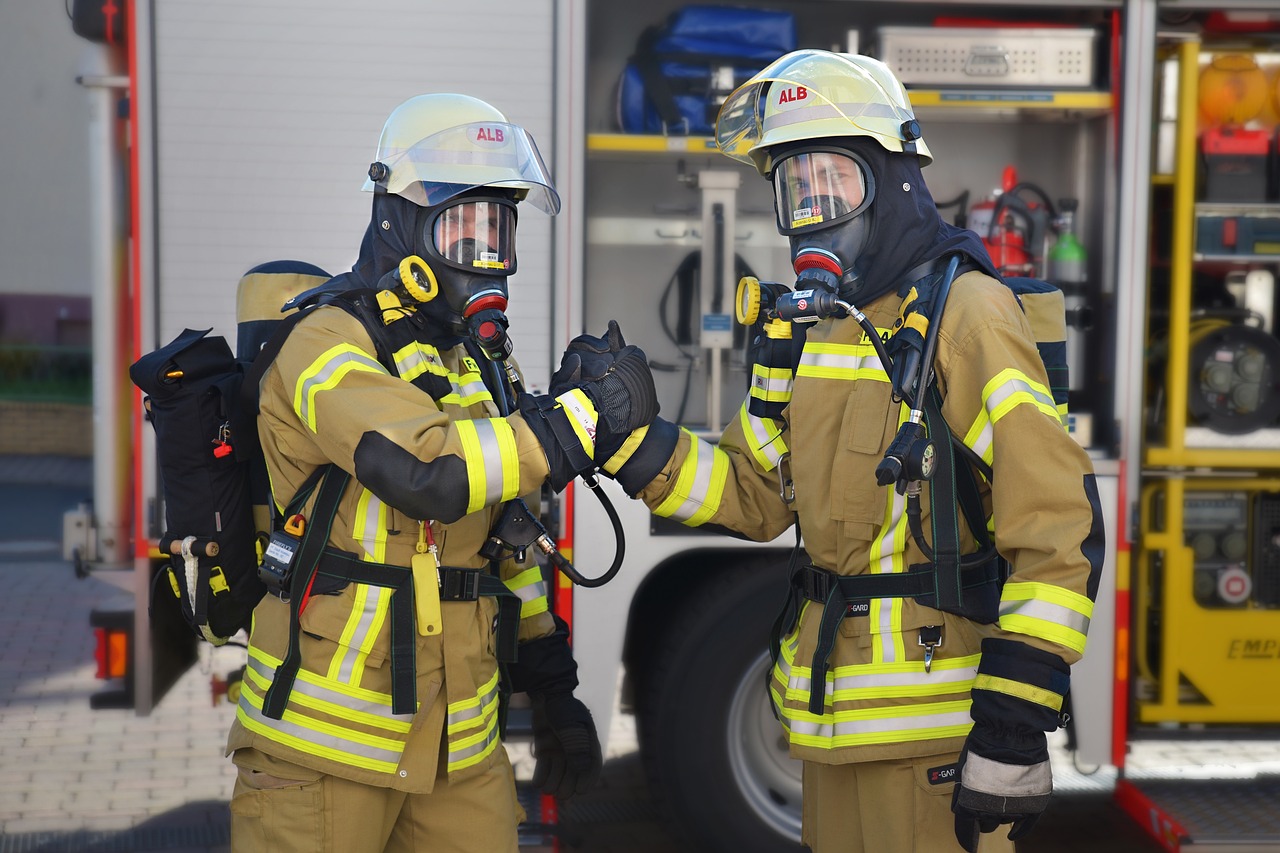
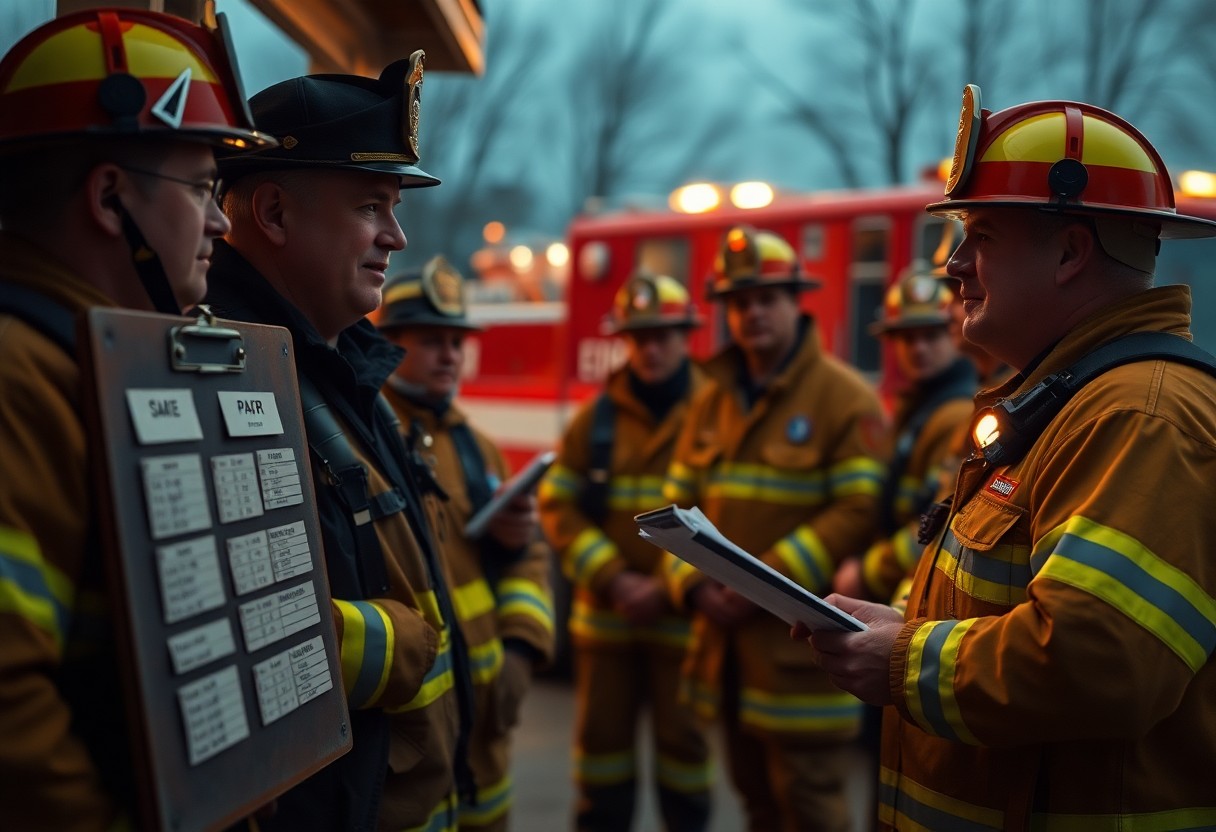
Just implement systematic PAR checks to verify each crew member’s location and status, so you can maintain clear accountability, reduce response confusion, and improve safety during operations.
Defining Personnel Accountability Requirements
You should specify who is accountable, when PAR checks occur, acceptable response times, and required confirmations so crews operate with consistent expectations.
Factors That Influence Effective PAR Systems
Operational variables shape how you apply PAR checks: crew size, experience, radio coverage and station distance determine procedural complexity. Any weak link in those areas lowers accountability unless you standardize responses and verify training.
- Crew size and composition
- Training frequency and quality
- Radio and communications coverage
- Incident complexity and scale
How-To Establish Baseline Safety Standards
Start by defining minimum PPE, PAR intervals, accountability roles, and documentation requirements so you can measure compliance after each incident.
Define measurable standards with specific PAR timing, mandatory confirmations, audit checklists and drill schedules; assign who verifies checks, record outcomes, and review results so you close gaps and refine protocols after each response.
Developing Standard Operating Procedures (SOPs)
SOPs should define PAR check steps, roles, and reporting timelines so you can maintain clear accountability during incidents.
Tips for Structuring Clear Accountability Protocols
Use concise roles, simple checklists, and fixed reporting windows so you can run PAR checks reliably.
- Assign roles
- Standardize wording
- Keep times fixed
Recognizing regular drills cements those habits.
Factors for Determining Roll Call Frequency
Balance frequency with risk, staffing patterns, and incident complexity so you can keep accountability without overburdening crews.
- Risk level
- Shift size
- Incident type
After significant changes in staffing or tactics, increase roll call frequency.
Consider operational tempo, mutual-aid reliance, crew experience, and environmental hazards when setting roll call timing so you can tailor checks to actual risk.
- High-tempo operations
- Shared resources
- New volunteers
- Weather or terrain
After analyzing incident types and past accountability gaps, adjust intervals and review them regularly.
Enhancing Fireground Communication Techniques
Use concise radio protocols, confirmed acknowledgements, and standard call signs so you maintain team awareness on the fireground. Enforce immediate location and status updates to track assignments and safety.
How-To Implement Efficient Radio Discipline
Keep transmissions brief: state your unit, location, and intended action, then await clear acknowledgment so you can prioritize urgent tasks while command maintains accountability.
- State unit and precise location on every transmission.
- Limit messages to necessary information only.
- This preserves channel availability for urgent traffic and tracking.
Tips for Clear Incident Command Reporting
Speak to command using unit, location, conditions, action, and needs in that order; keep language plain and numbers clear so you ensure decision-makers act fast.
Adopt regular drills where you report under stress, record transmissions for review, and refine phrasing to shave seconds and reduce misrouting of resources.
- Train all members on the reporting template.
- Use after-action reviews to correct recurring errors.
- This tightens command visibility and improves crew safety.
Integrating Modern Accountability Hardware
Integrating modern PAR hardware helps you track personnel quickly during incidents; choose durable tags and clear boards so you can confirm assignments and account for teams by sector.
Factors for Selecting Identification Tags and Boards
Assess tag visibility, attachment method, and resistance to heat or water so you can rely on them during intense conditions.
- Durability: metal or high-temp polymer options
- Readability: large fonts and reflective colors
- Compatibility: tag-to-board and reader integration
- Any replacement stock should be available and labeling standardized
How-To Use Digital Tracking for Real-Time Monitoring
Use GPS-enabled tags and mobile apps to view locations, set alerts for missed PAR checks, and push updates to command so you can act on missing personnel immediately.
Sync your digital tracking with dispatch and incident command systems, test connectivity before shifts, and train crews on app workflows so you can reduce confusion during active incidents. Use offline caching, battery-conservation settings, and clear escalation rules so you can continue accountability when signals drop.
Training and Drill Execution for Volunteers
Training sessions must integrate timed PAR checks and clear roles so you maintain crew accountability during live scenarios; practice calls, tag systems, and rapid status updates to shorten response times under pressure.
Tips for Running Realistic Accountability Drills
Run drills that force you to call, confirm, and log PARs under smoke, low visibility, and time pressure; vary injects and casualties so your team adapts to surprises without losing track of personnel.
- Schedule frequent, short accountability scenarios during regular drills.
- Rotate roles so you practice command and crew responsibilities.
- Assume that injecting chaos reveals gaps you can fix in procedure and teamwork.
How-To Prepare Personnel for High-Stress Scenarios
Simulate escalating threats and fatigue so you condition yourself to keep PAR discipline while managing tasks, stress, and communication breakdowns in tight spaces.
Focus training on progressive overload: start with simple PAR drills, then add complexity-limited light, noise, timed evacuations, and role-based failures-so you build instinctive responses. Include stress-inoculation techniques like controlled breathing and decision drills, and run structured debriefs that let you correct errors quickly. Assign accountability officers so you always have a clear point for status and recovery.
Building a Leadership Culture of Accountability
Leaders set expectations through consistent PAR checks, clear role assignments, and visible follow-through so you know accountability is practiced, not just talked about. You model check-in behavior, enforce fair consequences, and reward compliance to normalize accountability across the department.
Factors That Drive Department-Wide Compliance
Clear expectations, routine training, transparent consequences, and reliable equipment keep you aligned; peer modeling and leadership visibility reinforce safe performance and consistent PAR adherence.
- Written SOPs and checklists
- Regular drill practice and debriefs
- Consistent leadership presence
- Perceiving peer behavior as the norm encourages compliance
Tips for Peer-to-Peer Safety Reinforcement
Peers step in to call missed PARs, offer brief coaching, and rotate accountability roles so you share ownership of safety. The consistent, respectful interventions normalize safe behavior and reduce hesitation.
- Use direct, specific language
- Practice brief corrective scripts
- The model of mutual accountability strengthens safety culture
Practice scheduled peer-checks during drills and daily tasks so you build muscle memory; track follow-up actions and review near-misses to turn observations into improvement. You should encourage concise, objective feedback to keep corrections effective and nonconfrontational.
- Schedule peer-checks into routine drills
- Document interventions and outcomes
- The consistent application of peer checks reduces risk and builds trust
Summing up
With these considerations you can strengthen accountability in your volunteer fire department by instituting regular PAR checks, clear role assignment, consistent training, and transparent incident reporting; these steps help you track personnel, reduce risk, and improve response reliability.
FAQ
Q: What is a PAR check and how does it strengthen accountability in volunteer fire departments?
A: PAR (Personnel Accountability Report) is a systematic roll call that confirms the location and status of all personnel operating at an incident. A PAR process normally combines a visible tag or passport board, radio confirmation, and an assigned accountability officer who tracks assignments and crew locations. Regular PARs at tactical benchmarks such as completion of primary search, change of strategy, crew rotation, or after a mayday allow command to detect missing or trapped members quickly and direct rescue resources faster. Well-defined PAR procedures clarify roles and reporting expectations, reduce confusion during chaotic operations, and shorten the time between a lost-person event and response.
Q: How can a small volunteer department implement PAR checks with limited personnel and equipment?
A: Start with a simple written SOP that defines when PARs are conducted, who performs them, and the exact radio phraseology to use. Assign an accountability officer on every call; that role can be combined with another command position if staffing is low. Use low-cost tools such as index-card passport boards, clipboard checklists, colored tags on turnout gear, or a whiteboard at command to record crew assignments and entry times. Train crews to report entry and exit consistently over the radio using brief, standardized replies, and drill PARs during monthly training so the steps become habit. Coordinate PAR methods with mutual aid partners so everyone uses the same triggers and reporting language on multi-agency incidents.
Q: What common obstacles prevent effective PAR checks and how can departments measure and maintain compliance?
A: Common obstacles include inconsistent training, poor radio discipline, unclear role assignment, high turnover, and failure to treat PARs as a required tactical function. Address these by making PARs part of standard operating procedures, integrating them into every drill and incident brief, enforcing concise radio use, and requiring an accountability officer at every incident. Measure compliance with simple metrics such as time-to-complete PAR after a trigger, percentage of incidents with documented PARs, drill pass rates, and the number of missed-person or near-miss incidents year over year. Use after-action reviews and periodic audits of PAR logs to correct weaknesses, update SOPs, and assign targeted training where metrics show gaps.