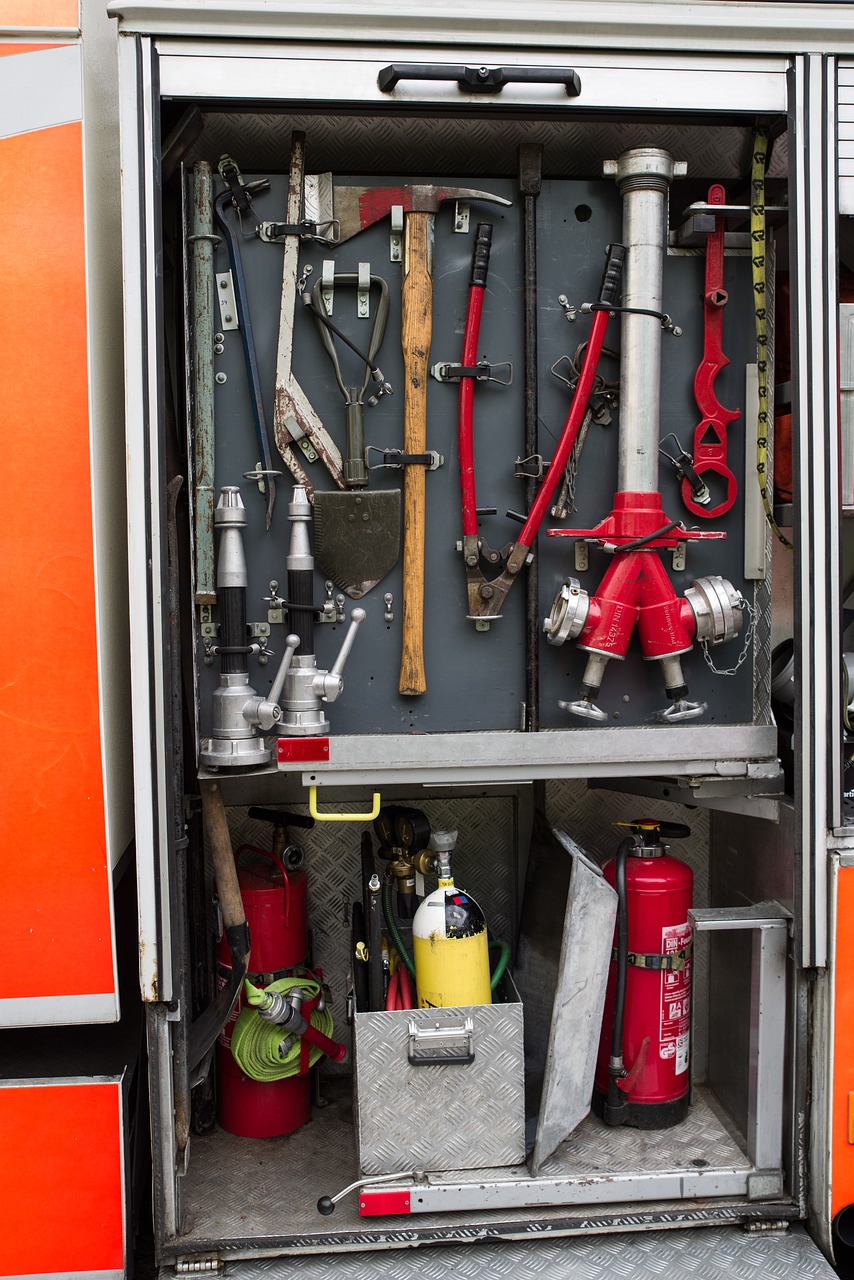
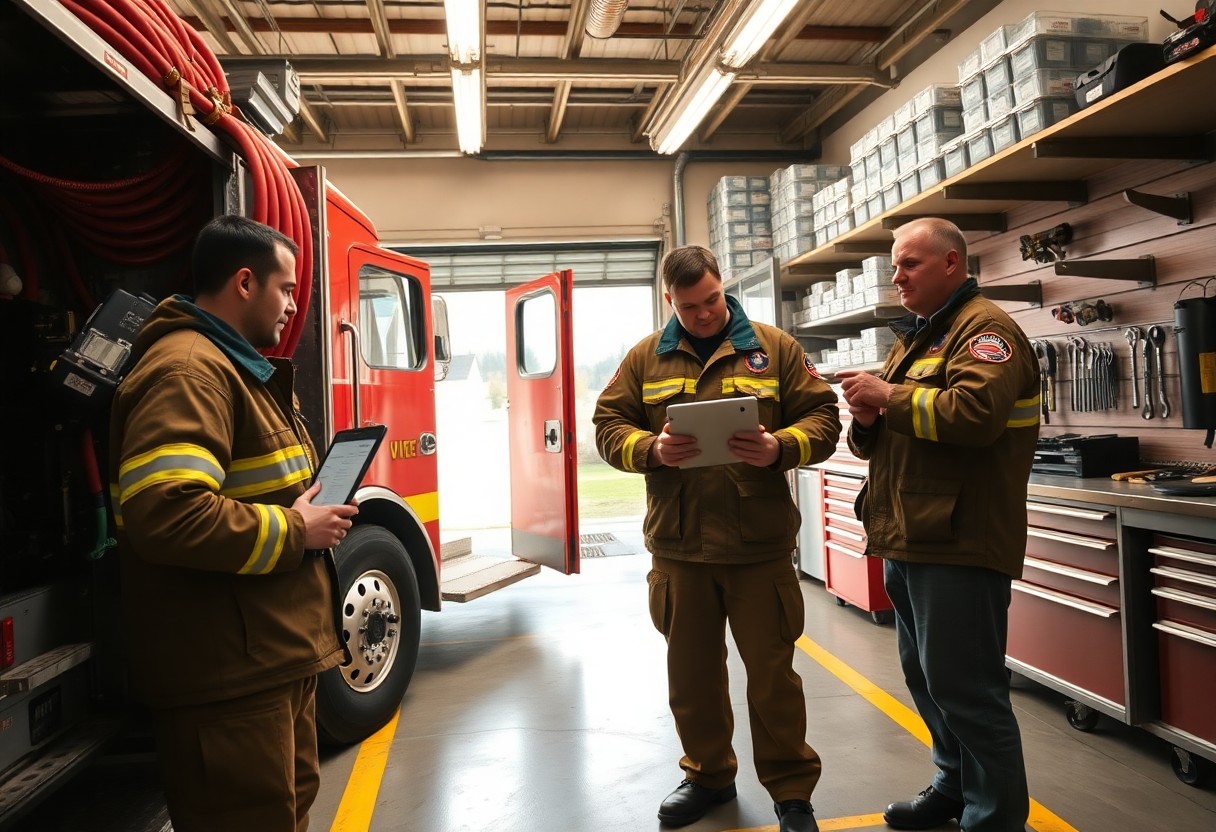
Maintenance systems tailored to volunteer fire and rescue units help you standardize inspections, log service history, assign tasks, and set reminders so your gear stays mission-ready; prioritize routine checks to prevent catastrophic failures during response and reduce the risk to crews, and implement simple digital tracking and training to cut downtime and deliver measurable safety and readiness gains.
Key Takeaways:
- Create a simple preventive-maintenance calendar with standardized checklists and assigned owners to ensure regular inspections and service intervals.
- Use asset tagging and a centralized inventory of apparatus, tools, and spare parts to speed repairs and track lifecycle status.
- Adopt a digital maintenance log (spreadsheet, mobile app, or free CMMS) to record inspections, repairs, costs, and service history.
- Provide short, focused training and cross‑training for volunteers on routine inspections, basic repairs, and proper documentation.
- Establish vendor relationships and mutual‑aid agreements, maintain a small critical-parts stock, and schedule periodic reviews of procedures and outcomes.
Understanding the Importance of Equipment Maintenance
Benefits of Regular Maintenance
When you implement a disciplined maintenance schedule-daily checks for SCBA facepieces and masks, monthly pump and hose tests, and annual engine PM-you reduce unexpected failures and extend service life. Regular inspections catch wear like leaking pump seals, cracked hose couplings, or weak battery cells before they become mission‑ending problems; industry guidance and department audits commonly show preventive programs lower long‑term repair costs and downtime by noticeable margins (often cited in the 20-50% range across fleet and equipment classes).
You also improve operational readiness and morale: crew confidence rises when tools and apparatus function reliably, and volunteer retention benefits because you avoid repeated “out of service” surprises. For example, instituting weekly battery checks and quarterly hose pressure tests typically prevents the most common on-scene failures (batteries and small fittings), saving dozens of hours of emergency response time per year in small departments and preserving emergency response capacity for mutual‑aid commitments.
Consequences of Neglect
Failing to maintain gear increases the chance of failure at the worst possible moment. Equipment failure during an incident-like a stalled pump, a ruptured hose, or a dead AED battery-can directly endanger civilians and responders; for instance, cardiac arrest survival drops roughly 7-10% per minute without defibrillation, so an inoperative AED is not a minor inconvenience. You also expose your department to higher repair bills when small defects mushroom into major repairs or vehicle engine rebuilds.
Operational capacity declines as more units sit out for emergency repairs, forcing longer response times and heavier reliance on neighboring departments. That has downstream effects: insurance underwriters may raise premiums, auditors can flag noncompliance with NFPA inspection schedules, and legal liability increases if neglect is shown to have contributed to injury or loss. Volunteer burnout rises too when crews repeatedly respond with substandard tools or vehicles.
Digging deeper, asset depreciation accelerates when maintenance is deferred-components corrode, lubricants fail, and calibration drifts create cascading faults that are expensive to reverse. You should expect replacement cycles to shorten and spare‑parts inventories to be depleted faster, which pushes small departments into reactive procurement and higher lifecycle costs rather than planned, budgeted upgrades.
Developing a Maintenance Schedule
Frequency of Maintenance Tasks
Daily walk‑around inspections should be nonnegotiable: you perform fluid level checks, tire condition, lights, and a brief pump run to verify basic operability before apparatus leaves the station. Schedule a concise checklist for each shift and assign it to the driver/operator so items like loose battery terminals, leaking hoses, or brake irregularities are caught immediately-those are the failures that most often take units out of service.
Beyond daily checks, break tasks into weekly, monthly, quarterly and annual cycles tied to usage metrics: weekly pump and ladder function checks, monthly battery load and charger validation, quarterly preventive maintenance based on either every 6 months or every 250 engine hours (whichever comes first), and annual NFPA‑compliant pump and hose service tests plus turnout gear inspections per NFPA 1851. Assign priority levels so you treat a failed pump test as an immediate safety risk while scheduling cosmetic or non‑operational work within 5-10 business days.
Tools for Scheduling
Start with a clear tool even if it’s simple: a shared Google Sheet or Excel workbook with columns for asset ID, last service date, next due date, assigned person, and status will already cut missed tasks. If you need automation, adopt a CMMS or fleet tool (examples commonly used in departments include UpKeep, Fleetio, Fiix, or Asset Panda) to generate recurring work orders, send email/SMS reminders, and store photos and inspection logs. Use QR codes or NFC tags on appliances and hose beds so you or any member can scan with a phone to pull up the asset’s checklist and open a work order in under 15 seconds.
Structure your scheduling rules in the tool: set reminders 7 days, 3 days, and 1 day before due; auto‑escalate overdue items after 72 hours to the officer on duty; and require closure with a signed inspection photo or mechanic note. Those small workflow rules reduce administrative friction and make it clear to you who is accountable for each action-assign high priority flags to items affecting pump, braking, electrical charging, and SCBA functionality because they directly impact operational safety.
When choosing a system weigh offline mobile capability, CSV export for backups, and whether it integrates with your rostering or volunteer management software; CMMS subscriptions typically range from low‑cost plans for small stations to enterprise tiers with fleet diagnostics, so pick one that lets you scale from a simple QR‑driven checklist to full preventive maintenance scheduling as your unit grows.
Training Volunteers for Equipment Maintenance
Pair hands‑on practice with clear written procedures so volunteers can translate theory into safe, repeatable actions; schedule a minimum of a 2‑hour practical session each month and an annual refresher of 6-8 hours that covers manufacturer‑specific maintenance and NFPA guidance (for example, NFPA 1911 for apparatus and NFPA 1851 for turnout gear care). Use vendor‑led clinics for complex systems-pump manufacturers and aerial vendors commonly offer 1-2 day maintenance courses that cut technician learning curves dramatically.
Assign explicit roles and maintain a simple skills matrix that tracks who can perform engine fluid checks, pump testing, SCBA inspections, and electrical troubleshooting; departments that implemented a cross‑training matrix often see 30-40% fewer on‑call failures within a year because multiple people can cover critical tasks. Keep training records digitally (TargetSolutions, Google Sheets, or department RMS) and link each record to competency checklists and signed practical evaluations.
Essential Skills to Teach
Start with basics every volunteer must master: daily walk‑arounds, fluid level interpretation, battery testing (a healthy 12‑volt lead acid battery should read about 12.6 V at rest), belt and hose inspections, and correct torque patterns on lug nuts. Add pump and aerial operations-hands‑on pump drafting and pressure checks, prime time measurements, and simple leak diagnostics-so volunteers can spot degradation before it causes a response failure.
Include life‑safety equipment maintenance as nonnegotiable: SCBA facepiece checks, cylinder pressure verification, and turnout gear inspections under NFPA 1851 protocols; faults in these systems are potentially life‑threatening. Train volunteers to use basic test tools-a handheld multimeter, fuel/water sediment tester, and a torque wrench-and run practical scenarios where an incorrect repair is deliberately introduced so trainees learn to identify and correct unsafe work.
Creating a Training Program
Begin by conducting a gap analysis: list every piece of equipment, set target competency levels (1-5 scale), and allocate training hours-aim for 2 hours monthly of practical work plus quarterly 4‑hour deep dives on high‑risk systems. Build a syllabus that mixes classroom SOP review, hands‑on maintenance, and vendor or county technician sessions; tie each module to a measurable outcome such as “ability to perform pump acceptance test to manufacturer spec.”
Implement formal assessment: closed‑book written quizzes for SOP knowledge, timed practical exams using a competency checklist, and documented remedial training if performance falls below the set standard. Store completed checklists and certificates for at least three years and use them in shift assignments so you always have clearly qualified volunteers available for critical maintenance tasks.
For immediate implementation, create a rolling calendar: monthly 2‑hour practicals focused on one equipment family (engines in month one, SCBA in month two), quarterly full‑day vendor or county technician workshops, and an annual 6-8 hour certification/review day. Pair each new volunteer with an experienced maintainer for a minimum of six months of on‑the‑job coaching and require sign‑off on at least five separate practicals before granting independent maintenance privileges.
Utilizing Technology for Maintenance Tracking
When you integrate digital tools into your maintenance workflow you gain a single source of truth for every asset – from pump hours and mileage to turnout gear inspection dates. Use telematics and engine‑hour counters to trigger work orders automatically, tie those work orders to NFPA standards (for example, NFPA 1911 for apparatus and NFPA 1851/1852 for PPE and SCBA care) and set automated alerts so nothing goes overdue. That approach reduces administrative backlog and gives you traceable audit trails for grant applications, insurance reviews, and post‑incident investigations.
Software Solutions
Choose a CMMS that supports asset hierarchies, scheduled and condition‑based maintenance, parts inventory, and role‑based access; popular options used by municipalities include UpKeep, Fiix, and Asset Essentials, while records systems such as Firehouse can complement apparatus tracking. Configure KPIs like mean time between failures (MTBF) and mean time to repair (MTTR) so you can spot trends – for instance, if a pump shows repeated failures within 1,000 hours you can justify a deeper overhaul rather than repeated band‑aid fixes. Make sure the system logs who performed each step and timestamps every action so you maintain compliance evidence and accountability.
Implement the software by starting with a validated inventory: assign each vehicle, tool, and set of gear a unique asset ID and attach a QR or barcode label. Then create templates for common procedures (daily checks, annual pump tests, turnout cleaning cycles) and set triggers based on hours, calendar dates, or condition thresholds. Integrate with purchasing to auto‑reserve parts and with your roster system so duties auto‑assign to on‑shift personnel; departments that pilot this approach typically eliminate the majority of missed tasks within the first 3-6 months.
Mobile Apps for On-the-Go Tracking
Equip crews with mobile apps that allow you to run pre‑shift checklists, scan asset tags, attach photos of deficiencies, and close work orders from the apparatus bay. Features to prioritize include offline mode with automatic sync, photo and video attachments for damage documentation, signature capture for acceptance after repair, and push notifications for overdue critical tasks. Using mobile capture you can make defect reporting instantaneous, which addresses the most dangerous gap: delayed hazard reporting that lets small issues become emergency failures.
To speed adoption, pre‑configure checklists for each apparatus and piece of PPE, place QR stickers on common wear points (hose couplings, pump panels, SCBA bottles), and enable voice‑to‑text entry so crews can document while they work. You should also set escalation rules so an overdue safety item automatically notifies an officer after a set window – this cuts administrative juggling and ensures urgent defects don’t slip through the shifts.
For deeper effectiveness, ensure the mobile solution supports secure role permissions, encrypted data transfer, and 12-24 month audit log retention to satisfy auditors and insurers; also verify API capabilities so you can push telematics data (engine hours, GPS events) into the same work‑order record. Train a small core group to act as super‑users, run a 30‑day pilot on two apparatus, then expand – that phased rollout will surface integration issues early and keeps your volunteers engaged without overwhelming them.
Implementing Accountability Measures
Start by naming an owner for every recurring and critical task so there’s no ambiguity about who inspects, services, or signs off on equipment. You should assign a primary and at least one secondary owner for each item – for example, the engine captain owns daily walk‑arounds, the pump operator owns monthly pump tests, and the equipment officer owns quarterly generator load tests – and document those assignments in your SOPs and maintenance calendar. Departments that formalize ownership and require a signed or timestamped entry on completion often see a rapid drop in missed items; one mid‑sized volunteer unit reported a 40% reduction in equipment downtime within six months after enforcing named owners and digital sign‑offs.
Designating Responsibilities
Map tasks to roles with clear frequencies and time estimates so volunteers know what’s expected: daily walk‑arounds (10-15 minutes), weekly SCBA function checks (20-30 minutes), monthly pump flow tests (1-2 hours), and annual NFPA‑recommended inspections. You should list exact acceptance criteria for each task (e.g., pump delivers rated GPM within ±5%, SCBA cylinders hydrotested by date X) and include a backup owner for every assignment to cover rotations and absences.
Use role‑based training so responsibility matches capability – for instance, certify three volunteers per station to perform pump testing and one dedicated member to log and escalate defects. Pair ownership with recognition and escalation: offer quarterly maintenance awards for consistent completion and require automatic notification to the officer in charge if a safety‑critical item (fuel leaks, worn brake components, failed pump test) is not closed within 48 hours. That combination of documented ownership and automatic escalation prevents minor oversights from becoming operational failures.
Tracking and Reporting
Choose a tracking method that fits your unit: a simple spreadsheet with QR‑linked checklists, a free mobile app, or a low‑cost CMMS. Track specific metrics for each asset – last inspection date, hours on pump, mileage, hydraulic tool cycles, battery health, and date of last NFPA‑required test – and set KPIs such as >95% completion of scheduled tasks per month and a mean time to repair (MTTR) goal under 7 days. You should log time‑stamped entries and photos for every failure to build an audit trail that supports repairs, warranty claims, and insurance questions.
Produce a weekly dashboard for officers that highlights overdue items and a monthly trend report that shows recurring defects by asset; use Pareto analysis to identify the 20% of equipment causing 80% of issues and direct resources there. Configure automated alerts so you and your chain of command receive notifications when a safety‑critical inspection is overdue by 24-48 hours, and require a documented action plan for any item flagged as unsafe for service.
In practice, simple tools deliver big wins: QR codes on apparatus linked to a cloud form give you GPS‑stamped timestamps and photo attachments that prevent disputes and speed troubleshooting, and many volunteer departments find a basic CMMS subscription under $300/year provides checklists, reminders, and reporting dashboards adequate for compliance and operational readiness. Keep maintenance records according to local regulations and insurer expectations – many units retain detailed logs for at least five years – so you can demonstrate consistent maintenance practices during inspections or post‑incident reviews.
Evaluating and Improving Maintenance Processes
To gauge whether your program is effective, set clear targets and measure against them on a fixed cadence: monthly dashboards and quarterly reviews work well for volunteer units. Track metrics such as % of preventive maintenance (PM) completed on schedule, mean time between failures (MTBF), mean time to repair (MTTR), and total days equipment is out of service per year – aim for a PM completion rate above 95% and an MTTR under 24 hours where possible. In one suburban volunteer department, instituting these targets and a monthly dashboard reduced unscheduled pump failures by 35% in 12 months, cutting emergency repairs and missed responses.
Collect data from daily walk‑arounds, CMMS logs, telematics, and crew reports, and validate it with spot audits every quarter. Use Pareto charts to focus on the 20% of failure modes causing 80% of downtime (for many units that ends up being electrical issues and hydraulic leaks). Implement root‑cause analysis after each significant failure and convert findings into checklist changes or training modules so corrective actions become standard practice rather than one‑off fixes.
Performance Metrics
Prioritize a small set of actionable KPIs: % of PMs completed on schedule, MTBF, MTTR, downtime days per vehicle per year, and parts inventory turnover. You should quantify targets (for example, reduce unscheduled failures by 30% within 12 months or keep average pump downtime under 3 days per year). Cost metrics matter too – track emergency repair spend versus planned maintenance spend, with the goal of moving at least 60-70% of maintenance from emergency to planned work.
Automate metric collection where possible: configure your CMMS to log work orders, require QR code scans on inspections to eliminate manual entry, and integrate telematics for engine hours and fault codes. When you run monthly meetings, present the metrics with trend lines and failure hotspots so decisions are evidence‑driven rather than anecdotal.
Continuous Improvement Strategies
Adopt small, iterative cycles: run 90‑day pilots of procedural changes, then scale what works using Plan‑Do‑Check‑Act. Standardize checklists for every asset class and cross‑train at least 80% of active personnel on basic inspections and emergency troubleshooting within six months to reduce single‑person knowledge gaps. Also schedule annual vendor tech‑days so manufacturer reps can do hands‑on training and spot systemic issues you might miss.
Formalize a feedback loop: create a monthly maintenance committee (operators + officers + one mechanic) that reviews incidents, adjusts SOPs, and updates the five‑year replacement plan to reflect reliability data. Incentivize timely reporting by tying simple recognitions to high inspection completion rates, and track improvement projects with small budgets – many departments recover $10,000-$20,000 over two years by converting repeated emergency repairs into planned replacements.
When you run improvement projects, use Failure Modes and Effects Analysis (FMEA) to prioritize fixes by risk and cost‑benefit; for example, trial changing an engine’s oil interval on a single apparatus for 90 days while monitoring wear metal and fuel consumption, rather than changing the fleet at once. That disciplined approach reduces the chance of introducing new problems and helps you document the ROI so leadership will fund broader rollout.
Conclusion
As a reminder, you should systematize maintenance with written schedules, standard checklists, and clear role assignments so every member knows their duties and inspection cadence. Use digital logs and inventory tracking to capture service history, streamline parts replacement, and reduce administrative friction while training ensures consistent execution across rotating volunteers.
By measuring downtime, service intervals, and costs, you can prioritize high-impact actions, pursue pooled purchasing or mutual‑aid agreements, and target grant funding to fill gaps. Consistent documentation, periodic audits, and continual training keep your fleet reliable and ready while making maintenance work more efficient and less dependent on any single individual.