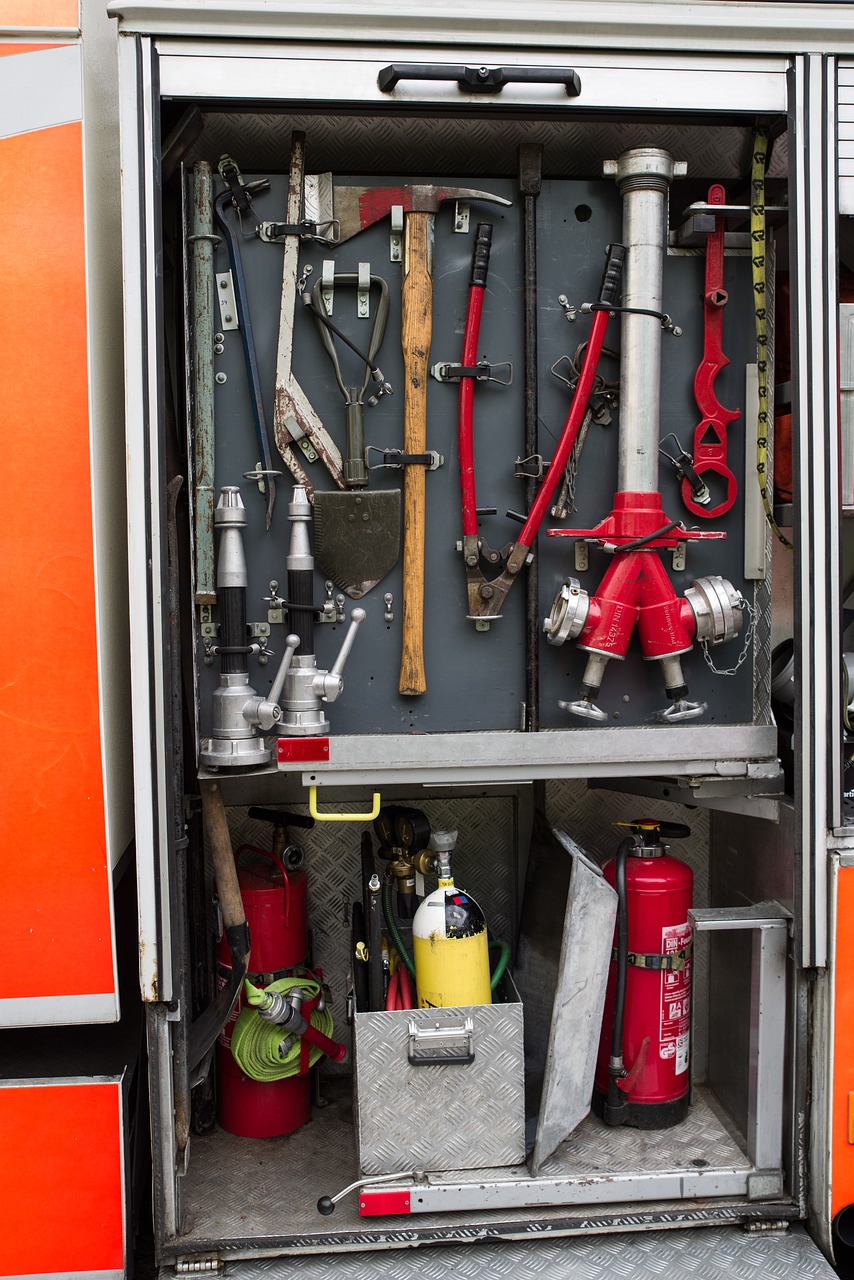
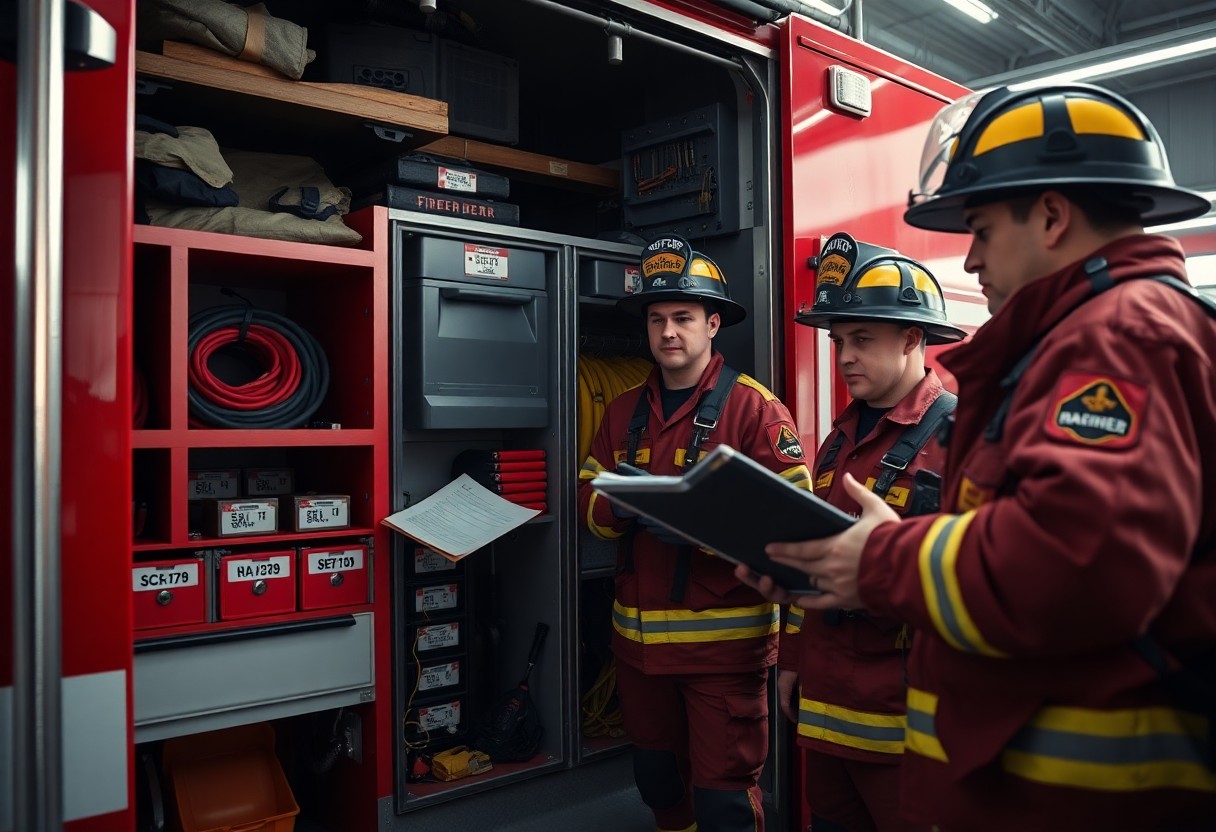
Over time, you’ll refine equipment lists that make inspections faster and more reliable by focusing on standardization, clear item descriptions, prioritized maintenance needs, and easy tracking. You will learn to involve crews, match lists to apparatus configurations, use concise check methods, and implement regular updates so your volunteers can perform consistent inspections, reduce downtime, and improve operational readiness.
Understanding the Importance of Equipment Lists
When you put a clear, prioritized equipment list in the cab, your crews perform inspections faster and with fewer errors; standardized lists often reduce time spent hunting for items and cut missed-check rates. For example, organizing a 120-item manifest by compartment and use case lets you complete a walkthrough in under 30 minutes instead of an hour, improves accountability for loaned tools, and makes it easier to spot missing or expired gear during shift turnover.
Benefits of Well-Structured Lists
You gain repeatability and transparency when lists are organized by task and location – pumps, EMS, RIT, hand tools – so anyone can follow them under stress. That structure supports cross-training, lets you assign ownership (pump check = Engine 2), and simplifies supply orders by grouping consumables. Departments using compartment-based lists report fewer duplicate purchases and clearer replacement cycles, which helps budget planning and compliance with local SOPs.
Common Pitfalls in Equipment Management
You often see lists that are either too long and granular or too vague, causing confusion; a 300-item master list with no compartment mapping slows inspections and increases missed items. Inconsistent naming (one person calls it a “rescue strap,” another a “lifting sling”), lack of version control, and no photo references create friction during high-turnover shifts and mutual-aid responses.
Address those pitfalls by implementing simple controls: enforce a naming convention, limit each apparatus list to items that physically belong on that rig, and maintain a change log with dates and initials. Use photos or QR codes for nonstandard gear, schedule monthly spot-audits and quarterly full inventories, and train two people per shift on the list so you avoid single-person knowledge gaps during incidents or staff changes.
Key Factors in Building Effective Lists
- Standardize names, part numbers, and NFPA 1901 references across all apparatus.
- Keep engine checklists to about 30-60 items; aerials and rescues vary by configuration.
- Use three inspection tiers (daily, weekly, monthly) and assign single owners per item.
- Prioritize safety systems first (brakes, lights, SCBA) and log time-stamped results.
Assume that you adopt standardized nomenclature, 1-3 priority tiers, and mapped frequencies (daily/weekly/monthly); departments that follow this approach typically see 20-30% faster inspections and significantly fewer duplicate checks.
Identifying Essential Apparatus
You should inventory mission-critical rigs first: pumpers, aerials, rescue units, tenders, wildland engines, and boats. Use your call history to weight priorities-if pumpers handle 80% of structure responses, list pump, intake valves, hose, and SCBA components as top-line checks. Aim for 30-60 items per engine to stay thorough but efficient.
Prioritizing Inspection Criteria
Prioritize by risk and mission impact: safety systems get Priority 1, operational systems Priority 2, and administrative items Priority 3. Assign daily checks for P1, weekly for P2, monthly for P3, and require photo or timestamp evidence for any failures to enforce accountability.
You should start by defining failure modes-safety, availability, compliance-and score each item for impact (1-5) and likelihood (1-5); any score ≥4 becomes P1. Map intervals to manufacturer and NFPA guidance-for example, perform pump flow tests monthly or after repairs, check hydraulic systems quarterly, and hose-test annually. Use digital checklists that auto-create rechecks within 24-48 hours for P1 failures, track MTTR and pass rates, and review metrics monthly; one 12-station volunteer department that implemented these steps reduced pump-related failures by ~40% and cut average repair time from 72 to 36 hours in six months.
Tips for Organizing Equipment Information
Group items by usage, inspection interval, and ownership to cut inspection time by 25% in many departments. Use serial numbers, photos, and a three-field description (Item, Location, Condition) for clarity. Prioritize gear over $2,000 and set audit cycles at 30, 90, or 365 days to reduce missed checks. Standard templates save 10-15 minutes per inspection. Recognizing that you need lists crews can scan quickly improves compliance and speeds repairs.
- Standardize names: Pump 1 vs. pump_1 to avoid duplicates
- Record next inspection date and inspector initials for accountability
- Attach one photo and one serial number per item for rapid ID
Categorizing Equipment Types
Assign categories-PPE, Tools, Medical, Rescue, Vehicle Systems-and set frequencies: daily (PPE), weekly (tools), monthly (SCBA), quarterly (generators), annual (ladders). Label categories with short codes (PPE-01) and map responsibility to roles to avoid gaps. Use counts and minimums (e.g., carry 6 SCBA bottles per apparatus) to standardize inventories. Knowing that clear categories let you automate sorting and delegate checks.
- PPE – helmets, gloves, SCBA masks (daily checks)
- Tools – axes, hydraulic tools (weekly checks)
- Medical – AED, oxygen kits (monthly checks)
| Category | Frequency / Example |
| PPE | Daily – helmets, gloves, SCBA masks |
| Tools | Weekly – axes, hydraulic cutters |
| Medical | Monthly – AEDs, oxygen cylinders |
| Vehicle Systems | Quarterly/Annual – pumps, generators, ladders |
Utilizing Technology for List Management
Use mobile inspection apps (e.g., iAuditor, AssetTiger) to capture photos, timestamps, and signatures; departments adopting digital checklists report ~30% faster inspections. Implement barcode or RFID tagging to drop inventory errors below 1% and enable instant lookups. Sync to cloud with offline capability for stations that lose connectivity, and export CSVs for monthly reports.
Start with a 6-8 week pilot: configure fields (Item, Condition, Next Due), tag 50-200 high-priority items, and train crews with a two-hour session. Track metrics: time per inspection, completion rate, and defect closure time. Expect software costs from $0-$50/user/month and one-time barcode scanners at $150-$400; hardware investment often pays back within 3-6 months via labor savings. One mid-size volunteer department cut re-inspection follow-ups by 35% after a three-month rollout when they paired mobile checklists with photo evidence and automated reminders.
Collaborating with Volunteers and Staff
Engage volunteers and staff as partners when you revise lists: hold quarterly workshops with 5-10 frontline responders, run 15-minute pre-shift huddles to capture immediate feedback, and name a liaison to resolve conflicts. Assign clear roles-inspection lead, equipment custodian, QA auditor-and record decisions in a shared folder. Pilot changes on 3 apparatus to validate them before a full rollout. One department reduced missed items by 30% after formalizing this collaboration and documenting every change.
Gathering Input for Comprehensive Lists
Use short surveys of 5 focused questions, ride-alongs, and shadow inspections to gather practical input; ask veteran drivers to list 8 frequently missed items and run field tests on 10 apparatus to see what actually surfaces. Convert anecdotes into data by logging each suggested change with frequency counts, then prioritize items that appear on at least 20% of reports. This makes your lists evidence-based and defensible.
Training Volunteers on Inspection Procedures
Structure training into a 30-minute classroom overview and a 30-minute hands-on session, include a 10-point competency checklist, and run a timed 10-minute inspection drill. Provide photo examples, QR-linked demo videos, and a one-page quick-reference mounted in rigs. Require a signed competency sign-off and schedule refreshers every 6 months to keep skills current.
Pair new volunteers with experienced inspectors for their first 5 inspections, track errors in a shared spreadsheet, and perform monthly audits of 10 random inspections to identify trends. Run timed drills weekly during drills or Saturday trainings and measure percent improvement month-to-month; aim for a 15-25% reduction in average inspection time while lowering missed-item rates. Offer badges or certificates to acknowledge competency and sustain engagement.
Reviewing and Updating Equipment Lists
You should tie list reviews to maintenance cycles, vendor recalls, and post-incident lessons so updates happen when they matter most. Align reviews with annual SCBA flow tests and pump maintenance, use a CMMS or versioned spreadsheet so each edit records who made it and why, and push checklist changes to crew tablets and station boards immediately. For fast-changing consumables set quarterly reviews; for long-life tools keep annual audits.
Establishing a Regular Review Schedule
You should adopt a predictable cadence: quarterly reviews for consumables and adapters, monthly spot-checks for radios and scene lights, and full audits annually for PPE and hydraulic tools. Assign one owner per apparatus who completes the review in the first week of Jan/Apr/Jul/Oct and files an audit report. Require post-incident reviews within 72 hours and track completion rates in your CMMS to hit on-time targets.
Incorporating Feedback and Changes
You must capture inspection feedback directly from crews via digital forms or QR-code links on each rig so notes feed the master list in real time. Triage submissions by severity: safety or missing gear get a 48-72 hour SLA for list updates, while low-impact suggestions roll into the next quarterly revision. Keep a changelog and notify crews by roster email and station whiteboards when you alter required items or quantities.
You should standardize feedback fields-item ID, location, defect type, recommended action-and require photos to reduce ambiguity. Prioritize changes by frequency and operational risk, then assign a single accountable owner with a deadline for each correction. Track metrics like time-to-update and repeat-issue rate, and flag items appearing in three consecutive inspections for immediate procurement, SOP change, or targeted training.
Conclusion
Hence you can improve volunteer apparatus inspections by standardizing clear, prioritized equipment lists, assigning responsibilities, and using concise checklists and digital logs to track condition and maintenance. Train your crew on list usage, schedule regular reviews, and adapt items to local risks so inspections are efficient, consistent, and defensible. These steps will strengthen readiness, reduce oversights, and keep your apparatus mission-ready.