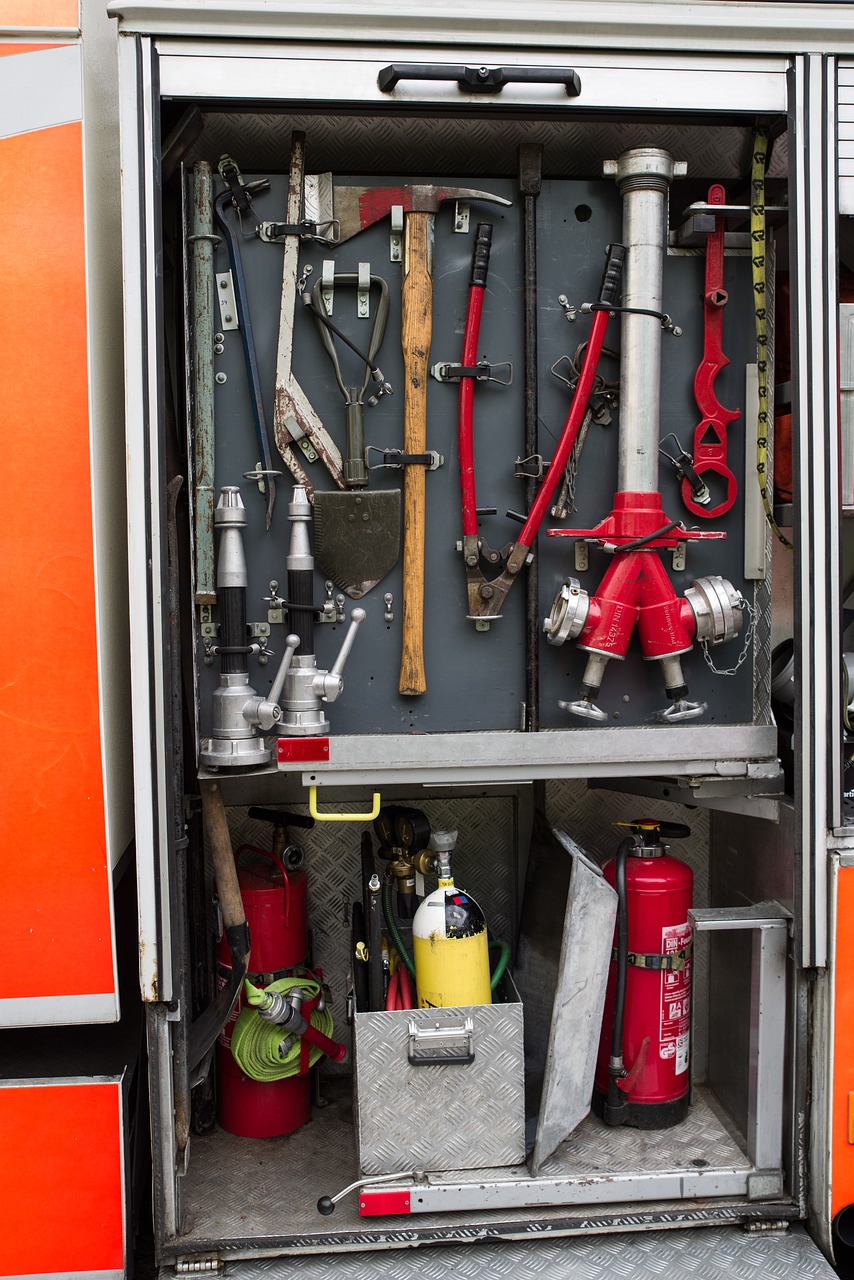
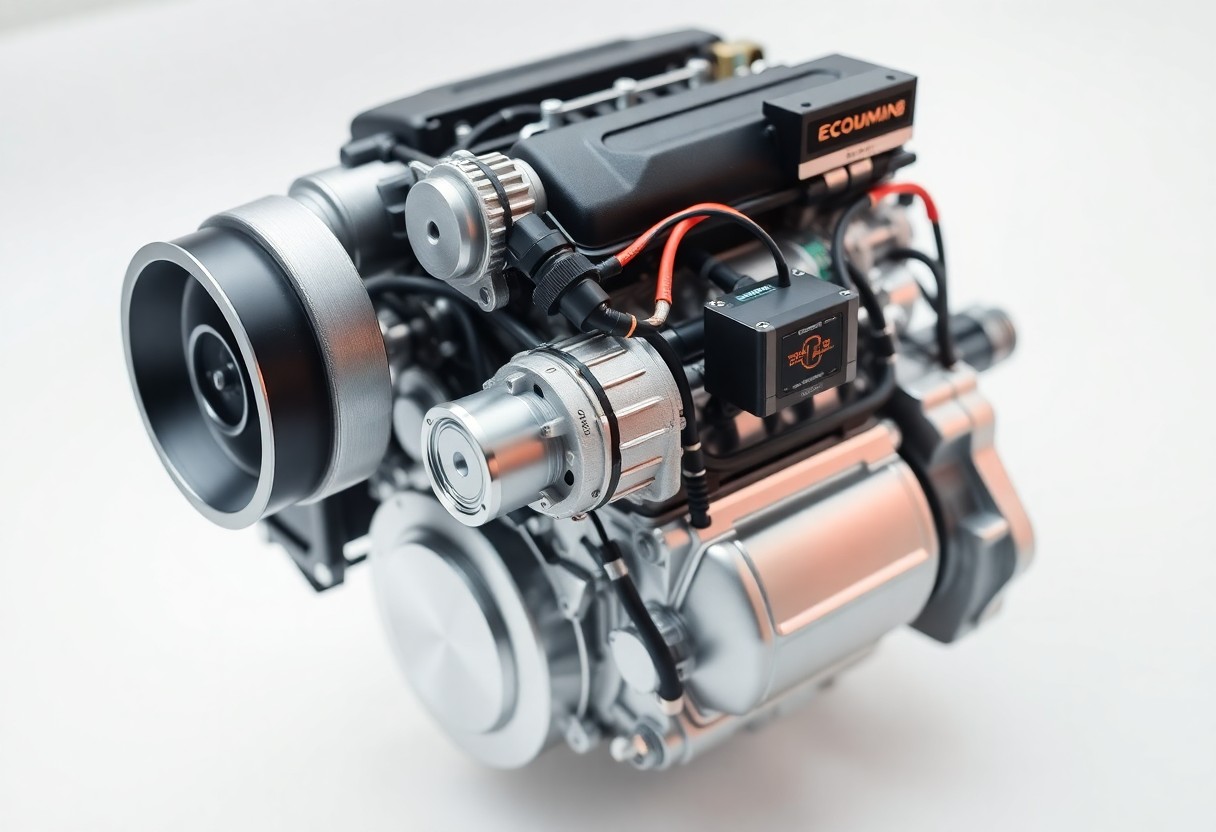
Engine performance hinges on optimized components, clear instrumentation, and proactive maintenance so you can deliver consistently. You need reliable fuel and ignition systems, accurate sensors and diagnostics, efficient cooling and filtration, and ergonomic controls that let your crew respond faster. Regular data-driven tune-ups, redundancy for critical systems, and accessible storage for tools and PPE keep your engine ready and your response times predictable.
Key Takeaways:
- Real-time context and intelligent routing: use caller history, channel and agent skill matching, and predictive routing to minimize handle time and maximize first-contact resolution.
- Automation and adaptive scaling: implement AI-assisted workflows, IVR automation, and dynamic resource scaling to keep latency low and throughput high under variable load.
- Observability and resilience: include comprehensive monitoring, logging, analytics, health checks, and redundant failover to maintain consistent performance and enable rapid recovery.
Engine architecture for per-call efficiency
You should structure the engine so the per-call hot path is minimal and predictable: isolate the core dispatch and execution in a small, verifiable kernel, push optional features into lazily-loaded modules, and use warm worker pools to avoid cold-start penalties that can add tens to hundreds of milliseconds. Target reducing per-call overhead to microseconds by minimizing system calls, limiting branch mispredictions, and keeping the fast path within a few hundred CPU cycles.
Minimal, modular runtime and fast scheduler
You design the runtime as a compact kernel plus pluggable modules so the scheduler only handles necessary work. Employ work-stealing or MPMC queues with per-thread run queues to avoid global locks, and prefer cooperative preemption for sub-millisecond context switches. In practice, this reduces scheduling variance: aim for median scheduling latency under 50µs and predictable tail behavior by keeping task metadata small and avoiding blocking syscalls on the hot path.
Lightweight execution pipeline and memory model
You should implement a thin execution pipeline: parse/validate/plan phases kept lightweight, bytecode or AOT artifacts reused across calls, and zero-copy I/O formats (FlatBuffers, contiguous slices) to cut serialization costs. Adopt arena or bump allocators for per-call lifetimes to eliminate per-object malloc overhead, and prefer deterministic reclamation (stack-freeing, epoch-based) over stop-the-world GC for low tail latencies.
You can further optimize memory by using per-request arenas that are reset in bulk, thread-local caches (tcache/jemalloc arenas) to avoid contention, and stack allocation for short-lived temporaries. Inline caching and compact instruction formats reduce instruction fetch overhead, while JIT-tiering or ahead-of-time compilation for hot paths can push execution from microseconds to nanoseconds per operation. Measure with flamegraphs and p99 latency to validate gains.
Input handling and data flow
You should treat input as a continuous stream rather than discrete blobs: push parsing toward the IO boundary, apply backpressure when queues exceed 4-16 MB, and keep per-call allocations under strict budgets so your hot path never triggers the GC or large-page faults. Using preallocated buffers, arena allocators, and pooling will shave milliseconds off tail latency and let you handle spikes without blocking request processing.
Efficient parsing, validation and de-serialization
Prefer binary formats like Protobuf/Avro for predictable sizes, and use high-performance parsers-simdjson can parse JSON roughly 5-10× faster than naïve engines-so you cut CPU per request. Validate with precompiled schemas or lightweight checks (field-level, length, checksum) and avoid full-object materialization when streaming access suffices; incremental parsers and zero-copy deserializers keep per-call latency low and memory overhead predictable.
Batching, streaming and minimizing copy overhead
Group small messages into batches of 512-4096 items or 4-64 KB payloads to amortize per-message overhead, and prefer streaming protocols (gRPC streams, HTTP/2) to reduce handshake and allocation costs for multi-part exchanges. Backpressure-aware consumers and async producers let you increase throughput without exploding latency, and batching thresholds should be adaptive based on latency SLOs and current queue depth.
To minimize copies, use scatter/gather IO (readv/writev), kernel-assisted moves (sendfile/splice), and memory-mapped or pinned buffers for zero-copy paths; combined with a single-producer single-consumer ring buffer or lock-free queue you avoid mutex contention and extra memcpy. In practice, these techniques can yield multiple× throughput gains versus naive read-into-buffer-then-copy models and cut CPU usage on busy servers by a significant fraction.
Execution and optimization strategies
You should combine adaptive compilation, profile-guided optimization and micro-architectural awareness so hot calls run with minimal overhead. Use tiered approaches to let short-lived code execute interpreted or baseline-compiled while long-lived paths get aggressive optimization. Instrumentation costs should be limited: sampling profilers and lightweight counters (1-10% overhead) let you detect hotspots without killing throughput. Target both latency (cold-start/JIT warm-up) and steady-state throughput with metrics that track tail latency and instructions-per-cycle on representative workloads.
Compilation, JITing and hot-path specialization
You must let the runtime detect hot methods (typical thresholds range from 1,000-10,000 invocations) and apply inlining, escape analysis and speculative type specialization. Engines like V8 (Ignition + TurboFan) and JVM HotSpot (C1/C2, Graal) use on-stack replacement to swap optimized frames without restart. When guards fail, deoptimize back to safe code and recompile with broader assumptions; this speculative cycle yields large gains for stable call patterns while keeping correctness.
Caching, memoization and fast lookup structures
You should design multi-tier caches and choose lookup structures that minimize branch mispredictions and cache misses: per-thread tiny caches (e.g., 32-128 entries), a shared LRU or segmented hash table for medium locality, and a backing store. Favor open-addressing or robin-hood hashing to reduce pointer chasing, and employ lock-free or sharded maps for concurrency. Use bloom filters to avoid expensive misses when appropriate and tune TTLs to workload temporal locality.
In practice, implement a two-level cache: a 64-entry per-thread direct-mapped fast-path that fits comfortably in a 32KB L1, plus a 16k-64k entry shared cache using dense open addressing for bulk hits. Measure hit-rate and eviction cost: a jump from 80% to 95% hit-rate on the fast path can slash average lookup latency by half. Use metrics (miss latency, eviction rate, false-positive rate for bloom filters) and adjust sizes rather than guessing.
Resource management and concurrency
You must treat CPU, memory, sockets and descriptors as rate-limited assets: instrument p95/p99 latency, queue length, CPU utilization and context-switch rate; set concrete targets (for many APIs p95 <200ms, CPU util ~70-85%) and enforce ingress quotas. Isolate pools by workload type, apply per-tenant caps, and prefer horizontal scaling when steady-state metrics show sustained saturation rather than letting queues grow unbounded.
Adaptive pooling, throttling and backpressure
You implement adaptive pools by starting with sensible defaults (CPU-bound ≈ cores×1, I/O-bound ≈ cores×2-4) and resizing using EWMA of service time and queue depth: grow pool +10% when latency exceeds threshold for 30s, shrink when utilization <60% for 60s. Combine token-bucket/leaky-bucket rate limits (refill R, burst B), return 429/503 with Retry-After when overloaded, and propagate backpressure through reactive streams or gRPC flow-control to prevent cascading failures.
Non-blocking IO, async runtimes and affinity
You should use edge-driven APIs (epoll/kqueue/IOCP) or io_uring and mature async runtimes (Tokio, libuv, Node) to multiplex thousands of sockets without a thread per connection. Pin runtime worker threads to cores (sched_setaffinity), set worker count to num_cpus for latency-sensitive workloads, and isolate blocking work with spawn_blocking or dedicated pools so the event loop stays responsive.
For example, you can configure Tokio with num_cpus::get() workers and mark blocking operations via spawn_blocking; on Linux 5.1+ use io_uring for async disk I/O to reduce syscall and context-switch overhead compared with traditional epoll-based patterns. Measure with perf/eBPF (context switches, syscalls/request, cross-core cache misses), set IRQ and thread affinity, and consider disabling SMT or avoiding hyperthread siblings for ultra-low tail latency workloads.
Observability and feedback control
You instrument for closed-loop control: collect p95/p99 latencies, error rates, queue depths and resource utilization at 1-10s resolution so controllers can act within seconds. Use PID-style or model-predictive controllers for auto-scaling and concurrency limits, and keep control loop latency under ~30s to avoid oscillation. When telemetry shows deviation (e.g., p95 latency up 40% or error rate >1.5x baseline), your feedback path should trigger throttles, circuit breakers, or rollbacks automatically.
High-cardinality metrics, tracing and per-call telemetry
You tag per-call telemetry with route, client ID hash, model version and backend shard to enable fine-grained slicing; store high-cardinality attributes in traces while aggregating metrics. Sample full traces at 1-5% for normal traffic and 100% for errors, and retain span-level DB/NET timings for at least 7 days to diagnose regressions. Practical rule: aggregate for dashboards but keep raw traces searchable for targeted incident triage.
Adaptive tuning, feature flags and automated rollback
You run progressive rollouts (1%, 5%, 25%, 100%) with automated gates: halt or rollback if error rate exceeds 2x baseline, p95 latency rises >30%, or user-facing failures exceed 0.5% over a 3-5 minute window. Implement feature flags that can toggle behavior per-region or per-segment, and wire them to your CI/CD so changes can be reverted within seconds without a full deploy.
You can extend automation with statistical and safety policies: use Bayesian A/B checks or multi-armed bandits to shift traffic toward better variants, and set concrete thresholds (error ratio >1.5x over 3 minutes, p95 delta >25%) that trigger webhooks into your rollback pipeline. Include audit logs, metric windows (1m/5m/15m), a manual kill-switch, and smoke-tests that run during canaries so rollbacks are traceable and reversible with minimal customer impact.
Reliability, security and correctness
Aim for predictable availability and correctness: target 99.999% uptime where practical, set SLOs like p99 latency <50ms, and enforce determinism on business logic paths. You should run unit, integration and property-based tests, plus fuzzing for parsers; apply formal verification on payment and safety-critical modules. Deploy canaries with automated rollback thresholds (e.g., 1% error rate over 5 minutes), and use continuous verification to catch regressions before full rollout.
Idempotency, retry policies and graceful degradation
You should use idempotency keys and deterministic request identifiers for non-idempotent endpoints: include an Idempotency-Key header or sequence number and persist outcomes for 24-72 hours to avoid duplicate side effects. Implement exponential backoff with full jitter, limit retries to 3-5 attempts, and add circuit breakers that trip if error rate >50% for 30s. When capacity wanes, degrade gracefully by serving cached responses up to 10 minutes or returning compact partial responses with clear stale indicators.
Secure, minimal-auth flows and auditability
You should prefer short-lived, minimal-auth flows: issue JWTs with 5-15 minute lifetimes and use scoped OAuth2 tokens for consent, reserving refresh tokens for trusted clients only. Employ mutual TLS for service-to-service calls, enforce least privilege via narrow scopes and RBAC, rotate keys every 60-90 days, and centralize secrets in KMS. Attach trace IDs to requests and write structured, encrypted logs to append-only storage for forensic analysis.
For auditability you should implement append-only audit logs with fields like user_id, action, timestamp, request_id, before/after and an HMAC-SHA256 signature; store copies in AWS S3 with Object Lock and SSE-KMS, retaining records ≥365 days. Use CloudTrail or equivalent for infra events, stream logs to a SIEM indexed by trace ID, rotate signing keys every 90 days via KMS, and revoke refresh tokens on anomalous events with an immediate revocation list for enforcement.
Summing up
The engine should provide deterministic scheduling, lean runtime paths, intelligent caching, efficient I/O, adaptive resource allocation, and robust observability so you get low, predictable latency on every call and protect your SLAs. You should enforce timeouts and backpressure, favor optimized code paths, and automate scaling and testing to sustain consistent throughput and minimal resource waste.