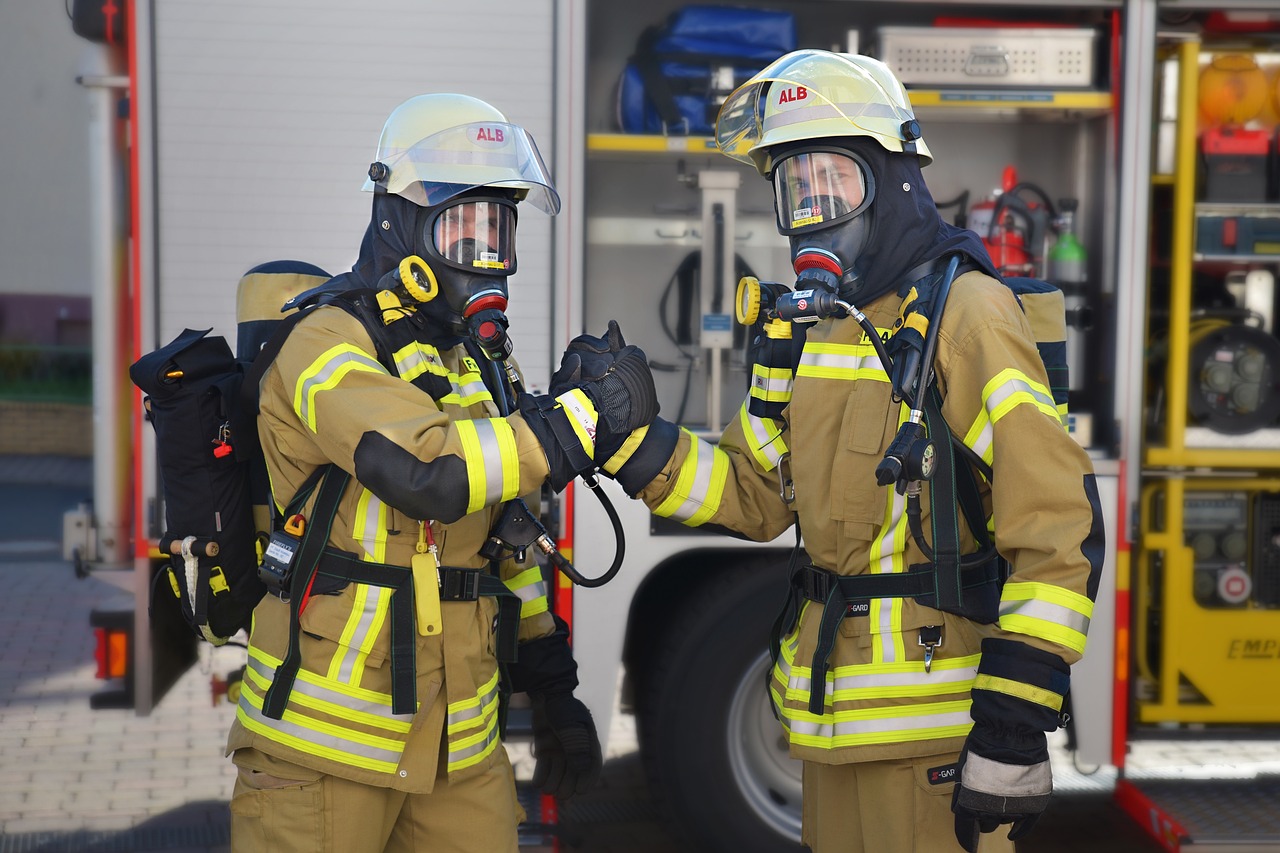
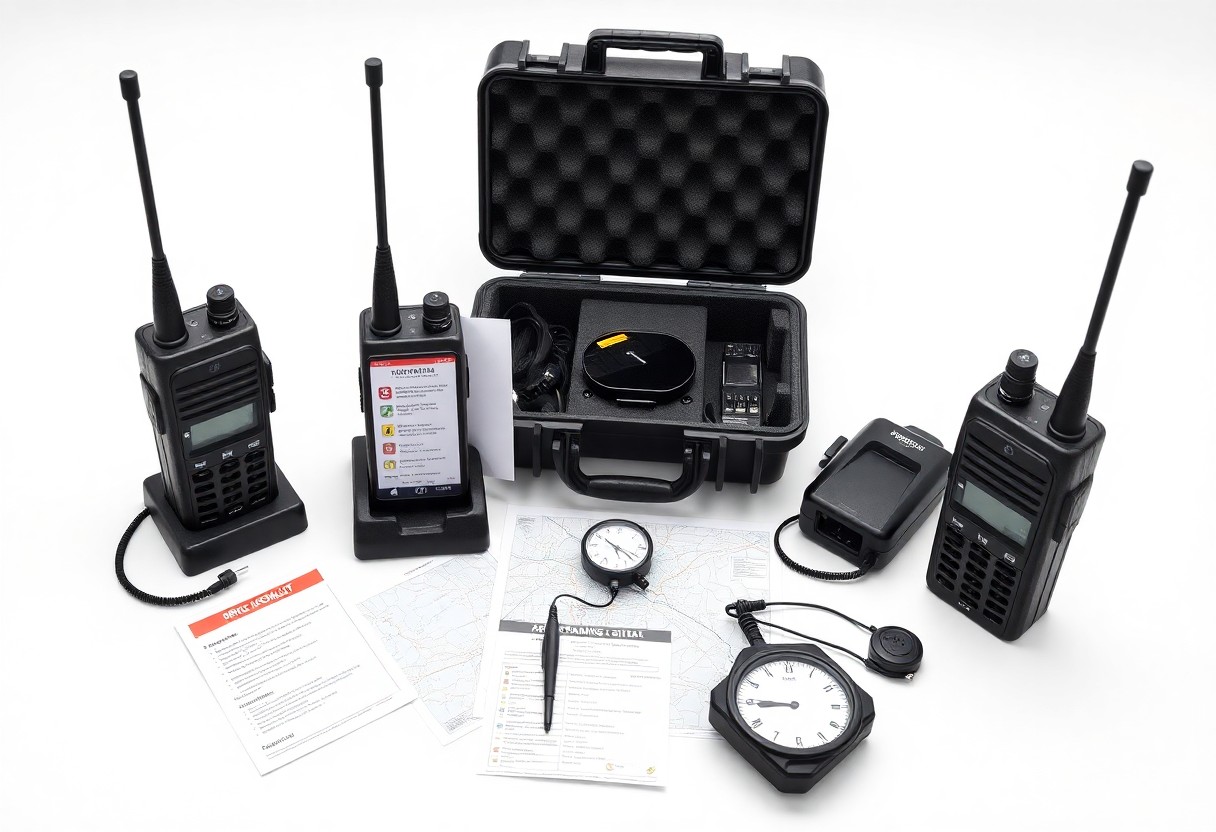
Many agencies sharpen response speed and reduce errors by running realistic radio coordination drills that you can design and execute with clear objectives, realistic scenarios, standardized call signs and concise radio protocols; you should schedule regular interagency exercises, evaluate transmissions for clarity and brevity, and use after-action reviews to refine procedures so your team maintains interoperability and rapid, reliable communications during real incidents.
Key Takeaways:
- Standardize radio procedures and terminology-defined channel plans, call signs, and brevity codes reduce misunderstandings and speed decision-making.
- Run regular, realistic drills that simulate stress, equipment failures, and multi-unit scenarios; use after-action reviews and measurable metrics to identify gaps and track improvement.
- Ensure interoperability and redundancy by pre-establishing mutual-aid channels, conducting joint training with partner agencies, and maintaining backup communication systems and logs.
Planning & Objectives
You should schedule planning around measurable targets: run quarterly radio coordination drills, log baseline metrics (dispatch-to-on-scene time, message delivery rate, channel occupancy), and set reductions-for example, cut average dispatch-to-on-scene from 8 to 6 minutes (25%) and raise message accuracy to 95%. Use after-action reports to iterate, assign timelines for corrective training, and ensure equipment checks happen 30 days before major drills to prevent avoidable failures during exercises.
Define goals, success metrics, and how-to set measurable outcomes
You’ll define SMART goals tied to KPIs such as message delivery success rate, average call-handling time, and channel collision frequency; for instance, aim for ≥95% successful transmissions, ≤2% dropped calls, and a 20% reduction in inter-agency relay time within six months. Use baseline data from three prior incidents, implement monthly spot-checks, and codify pass/fail thresholds so you can quantify improvements and justify resource changes.
Identify stakeholders, command structure, and tips for role alignment
You must map stakeholders-dispatch centers, field units, incident commanders, COMLs (Communications Unit Leaders), and mutual-aid partners-into a clear chain of command consistent with NIMS/ICS principles (e.g., IMT spans: Incident Commander → Operations → Communications). Assign primary and alternate radio roles, mandate cross-training for at least 2 personnel per role, and document escalation paths to avoid overlap in high-tempo incidents.
- Dispatch centers: own initial triage and channel assignment
- Field crews: execute orders and provide radio check feedback
- COMLs/Communications Unit: manage frequencies, interoperability gateways
- Agency liaisons: coordinate mutual aid and shared SOPs
- Recognizing the need for pre-designated alternates reduces single-point failures
You should also create role-alignment playbooks with exact call signs, freqs, and scripted check-ins; include sample timelines (0-2 min initial check, 2-5 min status update) and case studies-one rural EMS district cut relay confusion 30% by enforcing two-word acknowledgement protocols. Train using 2-hour simulations that replicate noisy RF environments and record each session for blind review to spot habitual errors and retrain specific personnel.
- Develop playbooks with call signs, frequencies, and scripted confirmations
- Run 2-hour RF-noise simulations and record for analysts
- Mandate cross-training for at least two alternates per critical role
- Use after-action metrics to target retraining within 30 days
- Recognizing that documented alternates and timelines prevent mission delays under stress

Standardizing Radio Protocols
You should align radio phraseology with NIMS and FEMA plain-language guidance, standardizing call signs, status codes, and mandatory readbacks; agencies that adopt NIMS-aligned protocols reduce cross-agency friction during multi-jurisdiction responses. Use fixed templates for dispatch, a 10-second confirmation window for critical transmissions, and a single authority for protocol updates so your teams follow the same vocabulary under stress.
How-to create clear SOPs, call procedures, and message formats
Define an SOP owner, publish concise templates, and drill the exact call flow: unit ID, incident type, location, action, ETA, then readback. Example procedure: “Unit 12, fire confirmed, 123 Main St, suppressing, ETA two minutes” – you train to speak that sequence every time. Use checklists for role-specific duties and version-controlled documents accessible on mobile devices.
Tips for brevity, priority designations, and error minimization
Keep transmissions under 10-15 seconds, limit initial updates to three data points, and use a three-tier priority scheme-Priority 1 (immediate life-safety), Priority 2 (urgent), Priority 3 (routine). Require readbacks for addresses, patient condition, and unit assignments, and use the NATO phonetic alphabet for critical alphanumerics to cut errors in noisy environments.
- Adopt three-tier priorities: P1 life-safety, P2 urgent, P3 routine.
- Cap initial updates at three facts and 15 seconds.
- Mandate readback for any movement or patient status.
- This reduces transmission time and confusion during high-tempo incidents.
You should run 15-minute radio drills quarterly, log every priority transmission for audit, and analyze errors per 1,000 messages to target training. Implement mandatory corrective coaching for repeated mistakes and use role-play scenarios-mass casualty, active shooter, multi-vehicle pileup-to stress-test brevity and priority rules under realistic tempo.
- Schedule quarterly 15-minute radio drills with timed objectives.
- Audit 100% of P1 transmissions and sample 10% of others for QA.
- Provide immediate corrective coaching after failed readbacks.
- This builds measurable competency and shortens on-scene coordination times.
Designing Effective Radio Coordination Drills
You should structure drills to mirror operational tempo: 30-90 minute runs, 6-12 active radio operators, and 20-40 transmissions per hour to simulate realistic load. Build injects for comms relay, channel congestion, and equipment failures, and assign 2-4 observers for AAR notes. Reserve 30 minutes after each drill for a focused after-action review with recorded audio and 3-5 prioritized corrective actions.
Step-by-step how-to: scenario selection, script, resources, and timelines
You should select scenarios that stress coordination-MCI, HAZMAT, or infrastructure outage-with clear objectives. Draft a script with injects every 5-10 minutes and decision points; designate roles and comms protocols (tactical vs. command). Gather P25 radios, spare batteries, ICS forms, and 2-4 observers. Plan two weeks prep, a 60-minute exercise, and a 30-minute AAR; run three iterations to refine procedures.
Step Components
| Element | Example / Notes |
| Scenario | MCI (20 simulated patients) or HAZMAT plume model |
| Script | Injects every 5-10 min; scripted radio failures at minute 25 |
| Resources | P25 radios, spare batteries, ICS 205/214, noise generators |
| Observers | 2-4 trained evaluators with checklist |
| Timelines | 2 weeks prep, 60-min drill, 30-min AAR, three iterations |
Tips for realism, scalability, safety, and multi-agency integration
You should use role players and noise generators to reproduce urban comms and record all radio traffic for transcription. You should scale by doubling participant counts each iteration (e.g., 6→12→24) and assign safety officers plus medical standbys for live exercises. You should test interoperability on shared talkgroups and run a tabletop with partner agencies to align ICS terminology, channel assignments, and common operating pictures.
- Run audio playback for training and evidence collection.
- Assign a safety officer and medical standby for every live drill.
- Perceiving degraded comms during a drill helps you prioritize redundancy and gateway validation.
You should measure key metrics-time-to-acknowledge, relay latency, and message accuracy-with targets such as acknowledgement within 20 seconds and message error rate below 5%. You should formalize MOUs and common comm plans with neighboring agencies and pre-test encryption and talkgroup assignments. You should use injects that force channel switching to validate cross-agency gateways and document failures for corrective action.
- Log timestamps, operator IDs, and transmission durations for each exchange.
- Share AAR notes within 72 hours and update SOPs based on findings.
- Perceiving communication patterns under stress reveals training gaps, equipment limits, and necessary protocol changes.
Evaluation, Training & Key Factors
- You log dispatch-to-arrival times to the nearest second and tag radio handoffs.
- You record and transcribe 100% of drill radio traffic for message-clarity scoring (1-5 scale).
- You track channel occupancy, percent of missed acknowledgements, and operator errors per 100 transmissions.
You schedule AARs within 72 hours, compare metrics across drills, and target a 10-20% improvement in key measures over three iterations; many municipal pilots report ~15% reduced on-scene delays after focused radio drills. After each AAR you update SOPs, refresh training modules, and run a short validation drill within two weeks.
How-to run AARs, collect performance data, and iterate drill design
You convene AARs within 72 hours, play recorded radio streams, align them to CAD timestamps, and extract metrics: dispatch-to-arrival, call-to-ack time, channel occupancy, and errors per 100 transmissions; analyze with simple spreadsheets or a dashboard, run 5-10 scenarios per cycle, and apply split-group testing to measure whether changes produce statistically meaningful gains before full rollout.
Critical factors affecting efficiency: human, technical, and environmental
- Human: training frequency, fatigue, turnover, team size and role clarity.
- Technical: radio fleet compatibility, antenna siting, battery reliability, encryption and interoperability.
- Environmental: urban canyons, foliage/building loss, weather and temporary interference sources.
You quantify human error rates (target <2 errors per 100 transmissions), map coverage gaps with drive tests showing typical building-penetration losses of 10-20 dB, and log equipment failures; Knowing which factor contributes most to delays lets you prioritize mitigation and budget.
- Training mitigation: monthly 30-60 minute drills, mandated cross-training, and proficiency checks.
- Technical fixes: targeted antenna upgrades, deployable repeaters, standardized radios, and routine battery replacement cycles.
- Environmental planning: pre-identified alternate comms, site surveys, and AR-based coverage maps for incident commanders.
You measure ROI on fixes (for example, one targeted antenna site upgrade often reduces local response delays more than broad retraining), run pilot mitigations with control groups, and update risk registers and equipment inventories after validation; Knowing the relative impact and cost-per-minute-saved helps you allocate resources effectively.
Summing up
Presently you can significantly improve emergency response by implementing regular radio coordination drills that standardize protocols, refine brevity codes, and stress-test chain-of-command communications; by measuring transmission clarity, response times, and role adherence you identify weaknesses and train teams to maintain interoperability under pressure, ensuring your personnel act swiftly, consistently, and safely during real incidents.