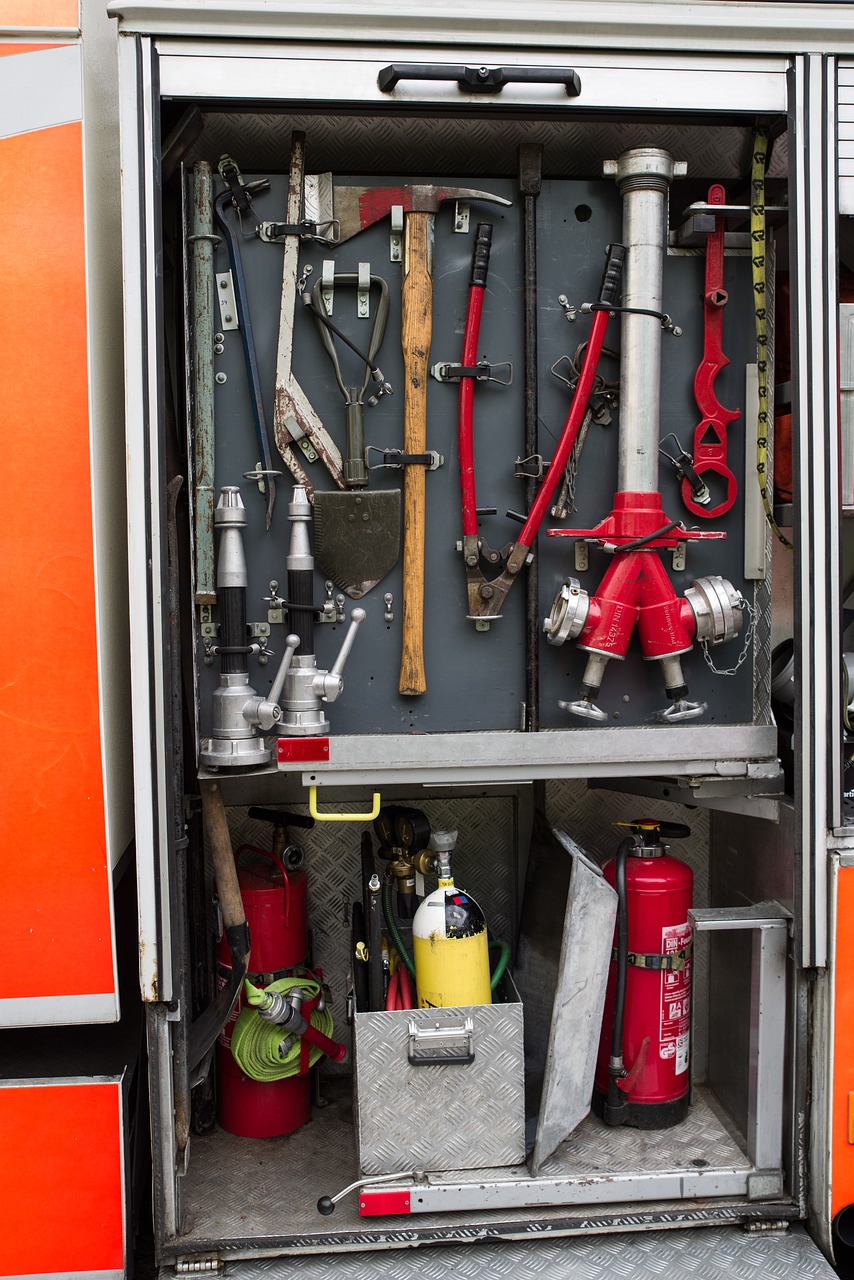
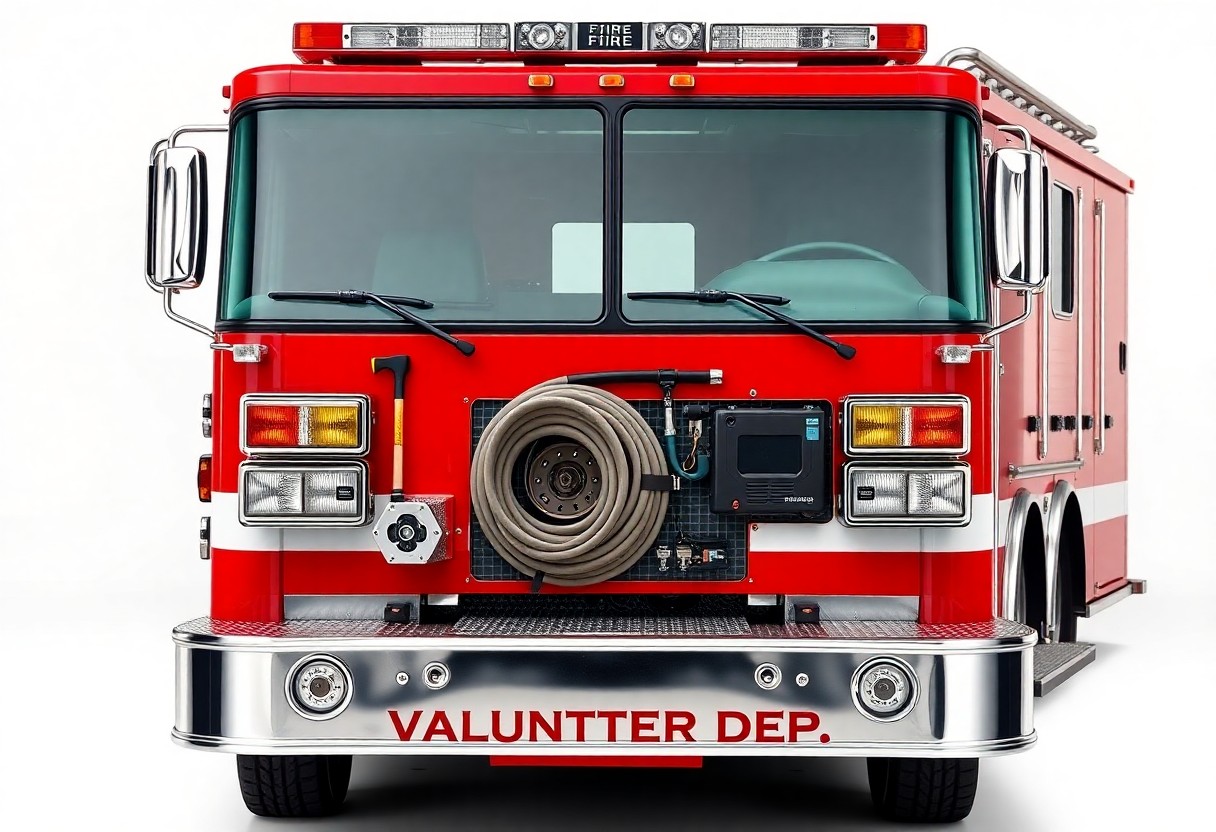
Overall, you must outfit your engine to handle fire attack, rescue, and rapid medical response with a reliable pump and water supply, hoses and nozzles, ladders, portable lighting, basic EMS gear and an AED, extrication tools, spare air cylinders, foam and hose fittings, durable PPE storage, radios and scene command tools, generators and rehab supplies, plus easy-access maintenance and inventory systems to keep equipment mission-ready.
Key Takeaways:
- Reliable water delivery: appropriately sized pump (commonly 750-1,250 GPM), tank capacity suited to local supply (typically 300-1,000 gal), and a hose inventory with both large-diameter supply lines and 1½-2½” attack lines plus booster reel for quick attacks.
- Portable water and extinguishing support: portable tanks, drafting strainer and suction hose, quick-connect fittings, and a foam system or proportioner for class-B/structure support where water supply is limited.
- Essential tools and scene support: ground ladders, forcible-entry and hand tools, hydraulic rescue and stabilization gear, basic EMS/first-aid kit, scene lighting/generator, reliable radios, and PPE for entire crew.
Pump, Water Supply & Foam Systems
Your engine should balance pump performance, onboard water, and foam capability so you can start a sustained attack or support shuttle operations; typical volunteer apparatus carry 300-1,000 gallons and pumps rated 500-1,250 gpm, with onboard foam systems sized for both Class A (0.1-1%) and Class B (3% or 6%) needs, plus hard-suction, transfer valves, and quick-access fittings to switch between hydrant, draft, and shuttle modes under pressure.
Pump capacity, controls, gauges & drafting capability
You want a pump that matches local risks: 500 gpm for residential/light commercial, 1,000+ gpm for highways or industrial exposures, with a 250 psi panel max and clear pressure/gpm gauges; electric vacuum or centrifugal primers, reliable pressure relief valves, and a drafting setup able to lift and sustain flow from static sources-practical suction lifts of 15-20 feet-using hard suction, foot valves, and tested priming procedures.
Water tank, transfer, drafting equipment & foam proportioning
You should spec a tank sized to your response area-300-750 gallons is common for rural engines, up to 1,000 for long-haul runs-plus tank-to-pump transfer lines (2.5″-3″) with a positive transfer valve, 2.5″ or 3″ hard-suction sections, float strainers, and foam systems that include balanced-pressure proportioners, bladder-tank or eductor options to deliver Class A at 0.1-1% and Class B at 3%/6% reliably across expected flows.
In practice, you’ll want at least two hard-suction sections (2.5″ or 3″) with a foot valve and a screened strainer, a portable 2-6″ transfer pump for tank-to-tank moves, and a selectable proportioning setup: inline eductors for 95-500 gpm nozzles, bladder tanks for instant low-flow foam, and a balanced-pressure system when you need consistent percentage across variable engine pressures; run annual flow tests and train on switching between hydrant, relay, and drafting modes.

Hose, Nozzles & Appliances
Hose types, sizes, lengths and deployment strategies
You should carry a mix: 1 3/4″ attack lines (50′ preconnects) for 150-200 gpm, 2 1/2″ for supply/backup at 250-300 gpm, and 3″-5″ LDH for hydrant supply at 400-1,200 gpm. Keep 50′, 100′ and 200′ lengths to match building size and stretch distance. Preconnects, crosslays and split lays speed attack; supply lines need quick-access stowage for rapid hookup. Assume that you carry five 50′ 1 3/4″ attack lines, two 200′ 3″ LDH rolls and a 200′ 2 1/2″ supply line.
| 1 3/4″ (50′) | Primary attack; ~150-200 gpm |
| 2 1/2″ (50-200′) | Supply/backup; ~250-300 gpm |
| 3″ LDH (200′) | Hydrant supply; ~400-600 gpm |
| 4″ LDH (200′) | Main supply; ~600-900 gpm |
| 5″ / large-diameter | Relay mains for extended supply; 800-1,200+ gpm |
- Preconnects: 50′ 1 3/4″ for rapid entry
- Crosslays: allow immediate opposite-side operations
- Split lay: combine attack and supply from same apparatus
- LDH rolls or bulk-stowed 200′ packs for long hydrant stretches
Nozzles, smoothbore/combination, appliances, fittings & adapters
You need both smoothbore and combination nozzles: smoothbores operated at ~50 psi deliver a solid, penetrating stream and lower pump demand, while combination (fog) nozzles at ~100 psi give adjustable patterns and flow control from ~30-350 gpm. Include gated wyes, Siamese adapters, in-line eductors for foam, and a set of NST/NH adapters (1½”, 2½”, 4″) to mate municipal hydrants and mutual aid apparatus.
Match nozzle choice to crew size and objective: with two personnel you may favor a 1 3/4″ smoothbore tip for simplicity and ~150-200 gpm, whereas larger crews benefit from a 1 1/2″ combination nozzle for flow variability. Keep a dedicated appliance bag with a 2 1/2″ gated wye, two 1 1/2″ reducers, a hydrant wrench, and a portable foam eductor (eductor ratios 1%, 3%, 6%) so you can switch to foam for class B or deep-seated fires without delaying pump ops.
Ladders, Forcible Entry & Ventilation
You should outfit your engine with ladders and entry/ventilation gear matched to local housing: two 35′ extensions, one 28′ extension, two 14′ roof/attic ladders and a 10′ folding attic ladder, plus a PPV fan in the 10,000-20,000 CFM range and powered saws. Mount ladders in side- or rear-racks for rapid deployment, keep forcible-entry tools accessible, and train on integrated ladder carries, fan placement, and coordinated door entry drills.
Ladder complement, mounting, carries & safety
You should carry two 35′ extensions for second-floor rescues, a 28′ for reach variability, two 14′ roof ladders and a 10′ attic ladder. Mount them in quick-release side or rear racks with reflective markings and secure straps. Practice three-person shoulder and two-person flat carries for 35′ ladders, enforce three-point contact while climbing, use taglines for awkward placements, and inspect rungs, halyards and fittings monthly.
Forcible entry tools, ventilation fans, saws & accessories
You should stow a Halligan, flathead axe, 8-10 lb sledge, bolt cutters, K12 rotary saw (14″ blade), chainsaw (16-20″), reciprocating saw with metal/wood blades, and spare blades and batteries. Keep a PPV fan (10k-20k CFM), fuel in approved cans, hearing/eye protection, and a compact charge station for batteries. Mount saws in ventilated compartments and secure fuel separately.
For maintenance and tactics, sharpen blades every 2-3 uses, check chainsaw chain tension before each shift, keep one battery set at 90-100% charge and rotate spares, and perform ladder inspections monthly per NFPA guidance. When ventilating, place the PPV fan 3-6 feet from the entry angled 10-15° upward and create an exhaust opening opposite and high; practice these evolutions quarterly with timed drills so your team deploys ladders, tools and fans in a coordinated sequence.
Medical & Rescue Equipment
Basic/trauma medical kit, AED, oxygen & patient packaging
You should stock a trauma pack with tourniquets (CAT or SOF-T), hemostatic dressings (QuikClot), chest seals, large trauma dressings, and SAM splints. Add an AED with adult/paediatric pads, a portable oxygen setup (one M- or D-cylinder with regulator, NRB, nasal cannula, and adult/child BVM), and patient packaging: scoop or long spine board, vacuum mattress or straps and a stair chair for confined egress.
Vehicle stabilization, extrication tools & lightweight technical-rescue gear
Your engine should carry cribbing (6-8 blocks), wheel chocks, 2-3 ratchet straps rated ~5,000 lb, a set of adjustable pneumatic or mechanical struts, a battery-powered spreader/cutter and a battery ram or compact hydraulic ram, plus rescue airbags and hand tools (recip saw, Halligan, cutters). Include portable scene lighting and PPE for two operators.
Load at least two sets of 4×4 or 2×6 cribbing and two wheel chock sets so you can stabilize all contact points quickly; deploy struts rated for vehicle rescue to secure lateral movement before any cutting. Equip your crew with a battery hydraulic combi-tool (batteries capable of 6-8 full cycles) and a compact ram for common passenger-vehicle extrications, plus two 18-24″ pneumatic rescue bags for lifting; add 10-20 feet of rated webbing and rescue chains for anchoring. Train to stabilize first, then create a patient-access plan-this gear lets you do FRD-style but lean extrications with a two- to four-person team.
PPE, SCBA & Crew Safety
Your engine should carry enough certified PPE and SCBA support to protect your on-duty crew and two spares, plus rehabilitation and accountability tools for extended incidents. Include NFPA 1971 turnout sets, NFPA 1981 SCBA, spare cylinders, PASS-capable masks, CO/LEL monitors, rehab kit (cooling, fluids, vitals monitors) and an accountability board or RFID tags so you can track crews and equipment during multi-company responses.
Turnout gear, helmets, gloves, visibility & rehab equipment
Store complete turnout sets in quick-access compartments and keep helmets with integrated eye protection and leather or synthetic gloves for overhaul; follow NFPA 1971 for replacement cycles. Add ANSI Class 2/3 high-visibility vests for traffic incidents, a rehab canopy, cooling vests, electrolyte drinks and a pulse oximeter/automated BP kit so you can evaluate heart rate, SpO2 and core signs on scene.
SCBA storage, spare cylinders, PASS & accountability systems
Mount SCBA in secure, ventilated racks near the crew area and carry at least two spare cylinders per apparatus, filled to common service pressures (2216 or 4500 psi as used locally). Ensure PASS devices are integrated and tested, use hard-tag or RFID accountability systems and maintain a clear RIT/crew assignment board so you can perform PARs and track air usage during interior operations.
Keep spares in upright holders protected from heat and moisture, label cylinders with hydrostatic test dates and log fills. Inspect SCBA and PASS monthly and after every use per manufacturer guidance, maintain two spares at service pressure, and practice bottle-change drills so you can swap in under 30 seconds; tie accountability tags to crew assignments and sync with your incident command board for rapid searches and PAR checks every incident phase.
Communications, Training & Maintenance
Radios, lighting, incident command tools & documentation
You should outfit the engine with at least two portable radios plus a mobile unit programmed for local and mutual‑aid channels (NFPA 1221 guidance), carry two spare batteries per radio, and use 360° LED scene lighting plus one portable 3,000-10,000 lumen telescoping light. Include an ICS command board, accountability tags, pre‑incident plans on a tablet, ICS-201/214 templates, and a waterproof run sheet clipboard so your officer can manage staffing, assignments and post‑incident documentation without delay.
Routine maintenance, testing, spare parts inventory & training requirements
You should run daily apparatus checks, perform monthly fluid/tire inspections, and schedule an annual NFPA 1911 pump certification. Keep a spare parts kit with 2 fan belts, 1 pump packing kit, 2 sections of 2.5″ hose, common adapters (NST/NH), 4 spare bulbs, 10 fuses and two spare radio batteries per unit. Require quarterly driver/operator and pump‑operator drills and log all maintenance in an electronic or paper maintenance book.
Build a written checklist and inventory: daily walkaround items, weekly battery/load bank checks, monthly hydraulic/light tests and an annual certified pump flow test at rated pressures (document gpm at 50/100/150 psi points). Store spares in a locked, labeled compartment and rotate consumables every 12 months to avoid degradation. Track parts with simple barcodes or a spreadsheet, assign one member to verify inventory quarterly, and require new operators to complete a pump operator course plus two supervised live‑flow evolutions before solo duties.
Summing up
Following this you should ensure your engine carries water and a reliable pump, varied hose and nozzles, foam and tank options, SCBA and spare masks, basic and advanced medical gear, forcible entry and extrication tools, hand tools and chainsaw, portable lighting and generator, thermal imager and robust communications, plus ample PPE and maintenance spares – items that allow you to safely handle fire, rescue, medical and mutual-aid calls in a small-town or volunteer setting.