Many departments struggle to align apparatus equipment lists with NFPA and ISO standards; this how-to shows you a step-by-step process to audit current inventories, map items to specific clauses, update procurement and documentation practices, and establish routine verification and training so your fleet sustains regulatory compliance and operational readiness.
Understanding NFPA and ISO Standards
When you update apparatus equipment lists, align prescriptive NFPA rules with ISO management-system principles: NFPA 1901, NFPA 1911 and NFPA 1906 define minimum onboard items and inspection intervals, while ISO 9001 and ISO 45001 require documented processes, traceability and continual improvement. For example, a midsize department that mapped NFPA 1901 gear to an ISO 9001-controlled inventory reduced missing-item incidents by about 25% within a year.
Overview of NFPA Standards
You should treat NFPA as the prescriptive baseline: NFPA 1901 (Automotive Fire Apparatus) specifies required equipment types and layout, NFPA 1911 governs inspection, maintenance and testing intervals (often annual), and NFPA 1906 covers wildland apparatus. Applying these standards means listing minimum quantities, specifying pump capacities and ground-ladder counts, and embedding routine test schedules so your lists withstand audits and safety reviews.
Overview of ISO Standards
ISO standards focus on system controls rather than item-by-item mandates: ISO 9001 demands process control, documented procedures and corrective action; ISO 45001 requires hazard identification and worker safety; ISO 14001 covers environmental aspects. When you adopt ISO, you implement version control, supplier evaluation and KPIs-examples include targeting 95% equipment availability and tracking supplier lead times to reduce stockouts.
To operationalize ISO for your equipment lists, you should document procurement, incoming inspection, labeling and shelf-life procedures, retain records (commonly 3-5 years), and run internal audits and management reviews. Use barcodes or RFID for traceability, define KPIs such as mean time to replace and percent compliant at inspection, and close nonconformities within set windows (for example, 30 days) to drive continuous improvement.
Assessing Your Current Equipment List
Start by establishing a validated baseline: itemized make/model, quantity, serial numbers, installation year, last service date and a condition rating (1-5). Cross-reference each entry against NFPA 1901 apparatus requirements and your ISO document-control records, flagging gaps where policy lacks evidence. For example, log 100% of hoses and ladders with test dates and age; departments that did this reduced unexpected equipment failures by measurable margins within one year.
Factors to Consider
Balance operational profile, regulatory mandates and logistics: call volume, mutual-aid agreements, terrain, and typical incident types (structure, hazmat, wildland). Use staffing models-engine staffed with 3 personnel vs. 5 alters needed rescue and EMS gear quantities-and track replacement cycles (example: 10-15 years for major pump assemblies). Assume that you will prioritize items with high operational impact and high usage frequency.
- Regulatory alignment: NFPA 1901, NFPA 1962 (hose testing), ISO document control
- Usage rates: how many times/year each tool is deployed
- Failure impact: loss of life-safety vs. support equipment
- Maintenance intervals and spare-part availability
- Storage/weight limits on apparatus and compatibility with compartments
- Training requirements and operator proficiency
- Budget and planned replacement cycles (e.g., pump overhaul every 10 years)
How to Conduct an Audit
Implement a systematic audit: build a master spreadsheet or CMMS record with unique IDs, use barcode/RFID tagging, and perform a 10-20% rolling physical verification weekly until 100% is confirmed. Cross-check service records and functional tests-one mid-size department’s audit found 22% of portable radios out of service, prompting immediate procurement and updated maintenance schedules.
Conduct physical verification, run functional tests (e.g., pump flow, generator load), and review maintenance logs for last service dates and repair history. Score items 1-5 for condition, assign owners, set remediation timelines (30 days for minor repairs, 90 days for critical replacements), and update your apparatus equipment list and capital plan based on audit findings.
Updating Equipment to Meet Standards
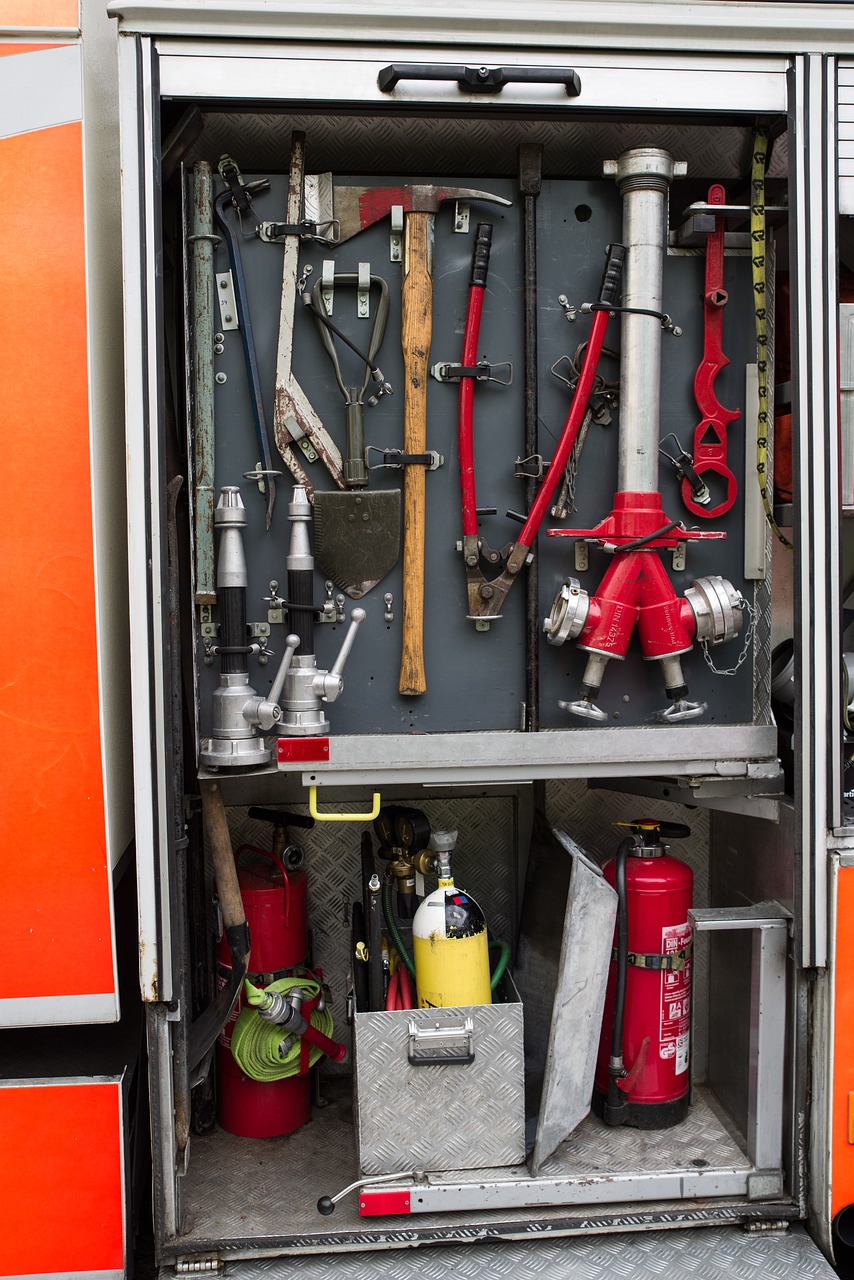
When you update apparatus lists, directly map each item to the applicable NFPA 1901 clause or your ISO 9001 procedure and note the acceptance criteria: pump capacity, hose sizes, lighting lux levels, and PPE counts. Use examples-add thermal imagers, ensure at least two spare SCBA cylinders per unit, and verify pump performance to manufacturer specs. Track changes in a single inventory spreadsheet with version control and date stamps so you can show auditors the when, who, and why for every equipment change.
Tips for Compliance
You should crosswalk every line-item to the exact NFPA or ISO requirement, tag assets with QR codes for instant records, schedule quarterly inventory audits and annual certification reviews, and train crews on updated checklists. This creates audit-ready documentation and reduces nonconformities.
- Cross-reference each item to NFPA 1901/1911 or your ISO clause number.
- Tag equipment with QR/barcodes linking to maintenance logs and certificates.
- Perform quarterly physical audits and annual compliance reviews.
- Train personnel on updated lists and inspection procedures every 6-12 months.
- Use a central, version-controlled inventory spreadsheet or CMMS to log changes.
Prioritizing Equipment Replacements
Start by ranking life-safety gear (SCBA, AEDs, PASS devices) highest, followed by mission-critical operational items (pumps, hoses, radios), then support gear (scene lighting, ADS). You should consider manufacturer service life-often 10-15 years for cylinders-inspection failures, and frequency of use when setting replacement windows. Leverage grant cycles (AFG, SAFER) to fund high-priority replacements and document risk reductions to justify requests.
You can implement a weighted scoring matrix to prioritize buys: assign Safety 40%, Reliability/Failure Rate 30%, Age 20%, and Cost 10%, then score each asset 1-10. Items scoring above 70 warrant immediate replacement; those 50-70 enter a two-year plan. Use historical failure data and pump/hose test results to populate scores so decisions are data-driven rather than anecdotal.
Maintenance and Regular Updates
Treat maintenance as a continuous program: you perform monthly equipment walk-throughs, reconcile inventories every 90 days, and update your apparatus lists immediately after repairs or purchases. Align inspections with NFPA 1901 for vehicle-mounted systems and NFPA 1932 for ladders, and document actions to meet ISO 9001 record-keeping standards. Assign 2-3 staff for routine checks, keep digital logs, and retain service records per your policy (commonly 3-7 years) to support audits.
How to Maintain Compliance
You appoint a compliance lead who maps each equipment item to the applicable NFPA/ISO requirement and uses standardized checklists tied to manufacturer specs. Schedule monthly pump and hose tests, annual ladder service, and immediate corrective actions within 30 days of failures. Leverage a CMMS or QR-tagged assets to trigger maintenance alerts, create calibration schedules for instruments, and ensure staff training records are updated after each service cycle.
Scheduled Review Processes
You implement a review cadence that mixes short and long intervals: quarterly internal audits every 90 days, semi-annual crosswalks against updated NFPA/ISO revisions, and a full external compliance audit annually. Use a three-person review team for field verification, maintain versioned equipment lists with change logs, and publish updated manifests to crews within seven days of approval to prevent mismatches in the field.
For each quarterly cycle follow a strict workflow: (1) run an automated inventory scan, (2) perform a field verification within 14 days, (3) cross-reference discrepancies against NFPA 1901/1932 and your ISO controls, (4) update the apparatus list and CMMS within 7 days, and (5) notify affected crews and update training. Track metrics-discrepancies per vehicle, time-to-correct-and target reductions each quarter to demonstrate continuous improvement.
Training Staff on Standards
Embed NFPA and ISO requirements into routine operational drills: require an annual classroom review of NFPA 1901 and ISO 9001 roles plus quarterly hands‑on inspections tied to NFPA 1911 checklists; you should use standardized digital logs and equipment checklists, and a mid‑sized department that added 4‑hour quarterly drills reduced equipment omissions by 35% within six months.
Importance of Staff Training
When your crews understand the rationale behind each list item, audits and readiness improve: documented training and competency checks every six months help you demonstrate compliance, lower inspection failures, and in programs that track outcomes can reduce equipment‑related failures by roughly 25-40% through better stowage, inventory control, and preventive maintenance adherence.
Creating Training Programs
Map training modules directly to NFPA 1901 and NFPA 1911 inspection points, combining 1-2 hour classroom briefings, 2-4 hour hands‑on stations, and scenario‑based drills; require an 80% pass on practical checklists, maintain electronic attendance and competency records in your LMS or RMS, and schedule annual refresher courses for all apparatus crews.
Example curriculum: Module 1 – apparatus layout and equipment locations (2 hours); Module 2 – NFPA inspection items and stowage checks (3 hours); Module 3 – pump, hose, ladder operation and safety (4 hours); Module 4 – recordkeeping and audit prep (1.5 hours). Use train‑the‑trainer for sustainability, run monthly short‑form drills, and track pass rates and omission trends to adjust frequency and content.
Documentation and Record-Keeping
Keep meticulous logs of asset ID, serial number, installation and decommission dates, inspection findings, maintenance actions, parts replaced, and calibrations so you can demonstrate NFPA 1911 and ISO 9001 traceability; many departments retain records for a minimum of 5 years or longer per local policy. Use timestamps, inspector initials, and photo evidence tied to specific checklist items to provide audit-ready documentation and to support warranty or liability claims.
Best Practices for Documentation
Standardize templates and naming conventions so you can quickly pull reports: include fields for equipment model, NFPA/ISO clause referenced, date, inspector, corrective action, and part numbers. Adopt QR codes on assets for instant record lookup, require photo before/after repairs, and enforce version control with digital signatures; schedule quarterly audits and annual cross-checks against inventory to catch discrepancies early.
Tools for Record-Keeping
Choose tools that match your size and workflow: small departments often start with templated spreadsheets and cloud folders, while larger agencies use CMMS platforms (mobile inspection apps, barcode/RFID integration, parts inventory) that export audit-ready reports. Prioritize systems with offline mobile sync, PDF/photo attachment, and easy export to CSV or PDF for ISO audits and NFPA compliance checks.
When evaluating solutions, score options on scalability, API/integration ability, audit trail fidelity, encryption/backups, and user permissions; expect cloud CMMS pricing from roughly $500 to $10,000+ annually depending on users and modules. Track KPIs like on-time inspection rate, mean time to repair (MTTR), and overdue items; pilot with one station for 60-90 days, measure compliance improvements, then roll out department-wide with role-based training.
Final Words
Summing up, you can ensure your apparatus equipment lists meet NFPA and ISO standards by conducting a baseline audit, aligning item specifications with relevant clauses, logging calibration and maintenance dates, integrating version control, and scheduling periodic reviews with stakeholders; this disciplined approach reduces liability, improves operational readiness, and helps you demonstrate compliance during inspections and audits.