You will create a comprehensive emergency management binder that organizes crucial documents, contacts, medical info, evacuation plans, and printable preparedness checklists so your household can act quickly and confidently during crises; this step-by-step guide shows what to include, how to format sections, and tips to keep your binder current and accessible.
Understanding Emergency Management
Definition and Importance
Emergency management organizes mitigation, preparedness, response, and recovery so you can reduce harm from hazards and restore normalcy faster. FEMA frames these four phases to guide actions before, during, and after events; for individuals and organizations that means planning for a 72-hour immediate survival window and aligning with local EOC procedures to protect life, property, and critical services.
Key Components of Emergency Management
You need hazard and vulnerability assessments, clear communication plans, resource inventories, continuity plans, training/exercises, and mutual-aid agreements; together these form the backbone of operational readiness. Practical tools you should include are an ICS-compatible chain of command, an Emergency Operations Center activation checklist, and contact rosters for 24/7 notification and logistics coordination.
Drilling into implementation, quantify your resources (e.g., list quantities, shelf lives, and storage locations) and run regular exercises – tabletop scenarios quarterly and a full-scale drill annually are common practice – to test interoperability with local responders. Case studies such as Hurricane Harvey (2017) show how gaps in sheltering and supply-tracking hamper response, so integrate GIS-mapped assets, barcoded inventories, after-action reports, and assigned recovery timelines into your binder for measurable improvement.
Planning Your Emergency Management Binder
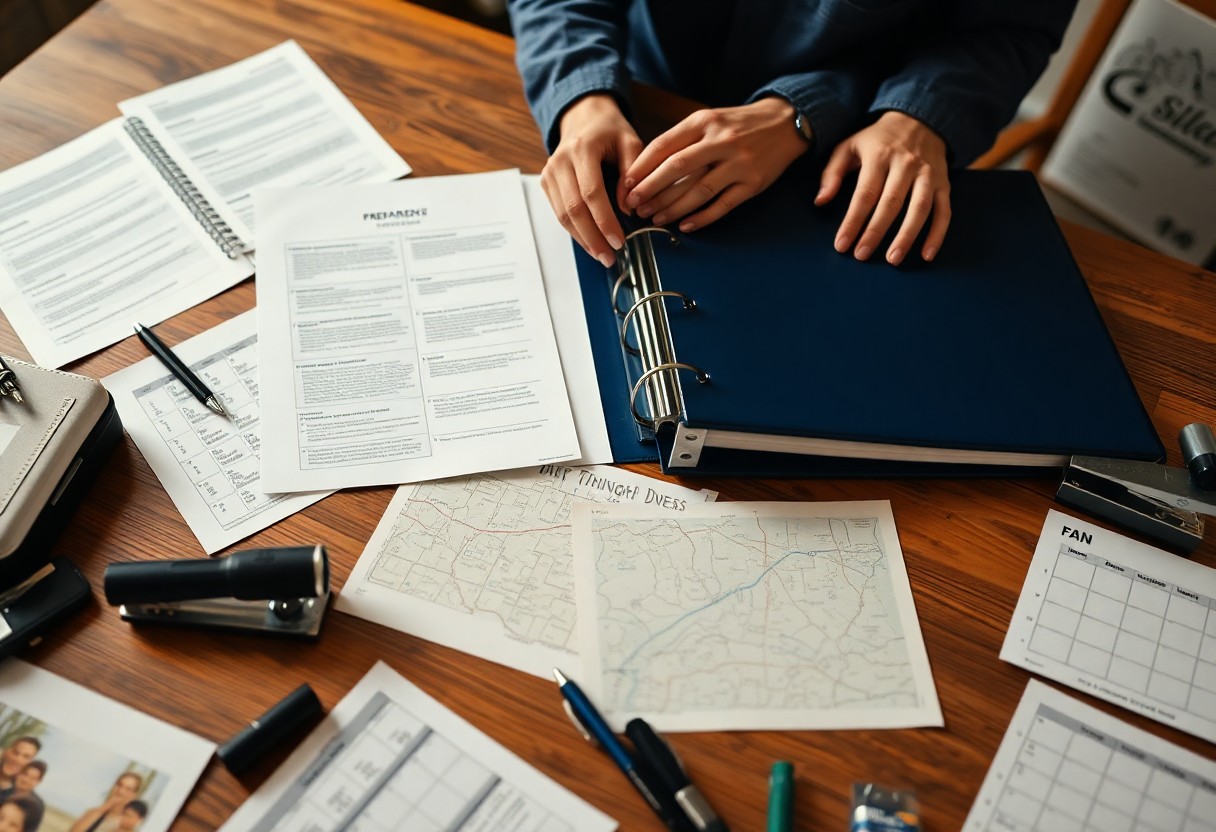
Start by mapping the sections you’ll need: IDs, insurance, medical, financial, legal, home, vehicle, pets, and your emergency plan. Aim for 8-10 labeled tabs so you can find items fast during stress. Include both physical originals and digital backups, and plan a quarterly review schedule to update contacts, policies, prescriptions, and maps after any major life change.
Choosing the Right Binder
Pick a durable 2-3 inch D-ring binder (holds roughly 300-600 sheets) with a rigid spine and a clear cover for a contact sheet. Opt for a poly or vinyl material that resists tearing and moisture, add zippered interior pockets for flash drives and cards, and use tabbed dividers plus plastic sleeves to protect single-page documents and receipts.
Essential Documents to Include
Gather originals and copies of key items: government IDs and passports, birth and marriage certificates, social security numbers, insurance policies (home, auto, life), bank and investment account info, mortgage or deed, vehicle titles, wills and power of attorney, medical records, vaccination and prescription lists, and a printed emergency contact list with at least two alternate numbers.
Organize documents by priority: keep originals in a water-resistant sleeve, photocopies in a separate section, and scanned PDFs on an encrypted USB and in a secure cloud folder. Scan at 300 dpi, name files with clear tags (e.g., “Passport_JohnDoe_2024.pdf”), update files every 6 months or after big changes, and store a duplicate binder or digital access info with a trusted off-site contact.
Creating Printable Preparedness Checklists
Convert plans into short, scannable checklists organized by timeframe-immediate (0-2 hours), short-term (2-72 hours), and long-term (72+ hours). Include clear headings, checkboxes, last-reviewed date, assigned person, and a priority column; keep each checklist to 5-10 top items so you can act under stress. Use Letter/A4 layout, laminate critical pages, store a digital backup, and label sections for household, vehicle, workplace, and pet needs.
Types of Checklists
Separate checklists by function: evacuation, shelter-in-place, medical/medication, utility shutoff, and family reunification to avoid confusion during an event. Evacuation lists should list routes, fuel status, and pet carriers; medical lists include prescriptions and dosages; utility lists note shutoff locations and tools. Any checklist you create should include owner, review date, priority level, and a simple yes/no column for completion.
- Evacuation
- Shelter-in-place
- Medical/Medications
- Utility Shutoff
- Family Reunification
| Evacuation | Routes, vehicle fuel %, go-bag list |
| Shelter-in-Place | Seal points, air filters, 72-hour water/food |
| Medical/Medications | Rx names/doses, dosette times, emergency contacts |
| Utility Shutoff | Water/gas/electric locations, required tools, who shuts off |
| Reunification | Meeting points, out-of-area contact, child ID details |
Customizing Checklists for Your Needs
Adjust checklists to your household makeup, health needs, pets, and local hazards: add infant formula/diaper counts, oxygen/care equipment details, or flood-elevation steps as required. Assign specific roles-who grabs the go-bag, who collects documents-and set quantities (FEMA recommends a 72-hour supply as a baseline; extend to 7-14 days if you or family members have chronic conditions). Use color-coding for rapid recognition.
Test and update checklists on a regular schedule-every 6 months or after major life changes-and log the review date on each sheet. Create one-page versions for quick grabs and extended versions for detailed planning; include QR codes linking to scanned IDs and medical records so first responders or family can access key info if originals are lost.
Tips for Organizing Your Binder
Efficient organization reduces search time so you can act quickly: use a 2-3 inch 3-ring binder (a 2″ holds ~400 pages) with a laminated index and color-coded tabs for IDs, medical, insurance, financial, legal, home, vehicle, and pet sections. Place duplicates of passports and insurance cards in a waterproof pouch and scan PDFs to encrypted cloud storage for redundancy. After assembling your binder, review contents every six months and after major life changes.
- Use numbered tabs and a one-page index so you can pull any section in under 30 seconds.
- Keep a compact “grab-and-go” folder by the door and a duplicate set in a trusted off-site location.
- Store originals in clear page protectors and label each with date and source.
- Encrypt digital backups and test access monthly to confirm you can open files.
Categorization Strategies
Group documents by function and retrieval frequency: put IDs and vital records together, place medical records and medication lists in a quick-access section, and collate insurance and financial papers by provider with policy numbers visible. Assign simple priorities (1-3) and color codes-red for immediate action, yellow for follow-up, green for long-term-so you or family members can identify what to grab in seconds during high-stress situations.
Storage and Accessibility Considerations
Balance protection with speed by storing your primary binder in a fire- and water-resistant safe with a one-hour rating while keeping a compact emergency folder in an easy-to-grab spot like a hook by the front door or your car’s glove box. Digitize documents to encrypted cloud storage and a password-protected USB, and verify access monthly to ensure you can retrieve files when needed.
Consider keeping a full duplicate binder at a trusted relative’s home 10-30 miles away and storing your key contacts and medical notes on an NFC tag or laminated wallet card. Label the spine and front cover with “Emergency Binder” plus a primary contact number. Practice retrieving the binder in under two minutes during household drills so everyone knows where to go.
Factors to Consider When Preparing for Emergencies
You should weigh hazard type, household vulnerabilities, and logistics when organizing your binder: include flood, wildfire, winter storm, and power outage plans; list medications, mobility aids, infant and pet supplies; assign roles for evacuation and document retrieval; and maintain both physical and encrypted digital copies of important records. Use local hazard maps and historical event data to prioritize items, and update contact lists and supplies at least twice a year.
- Hazard types: consult FEMA flood maps, NOAA storm tracks, and local fire danger indexes to identify top threats.
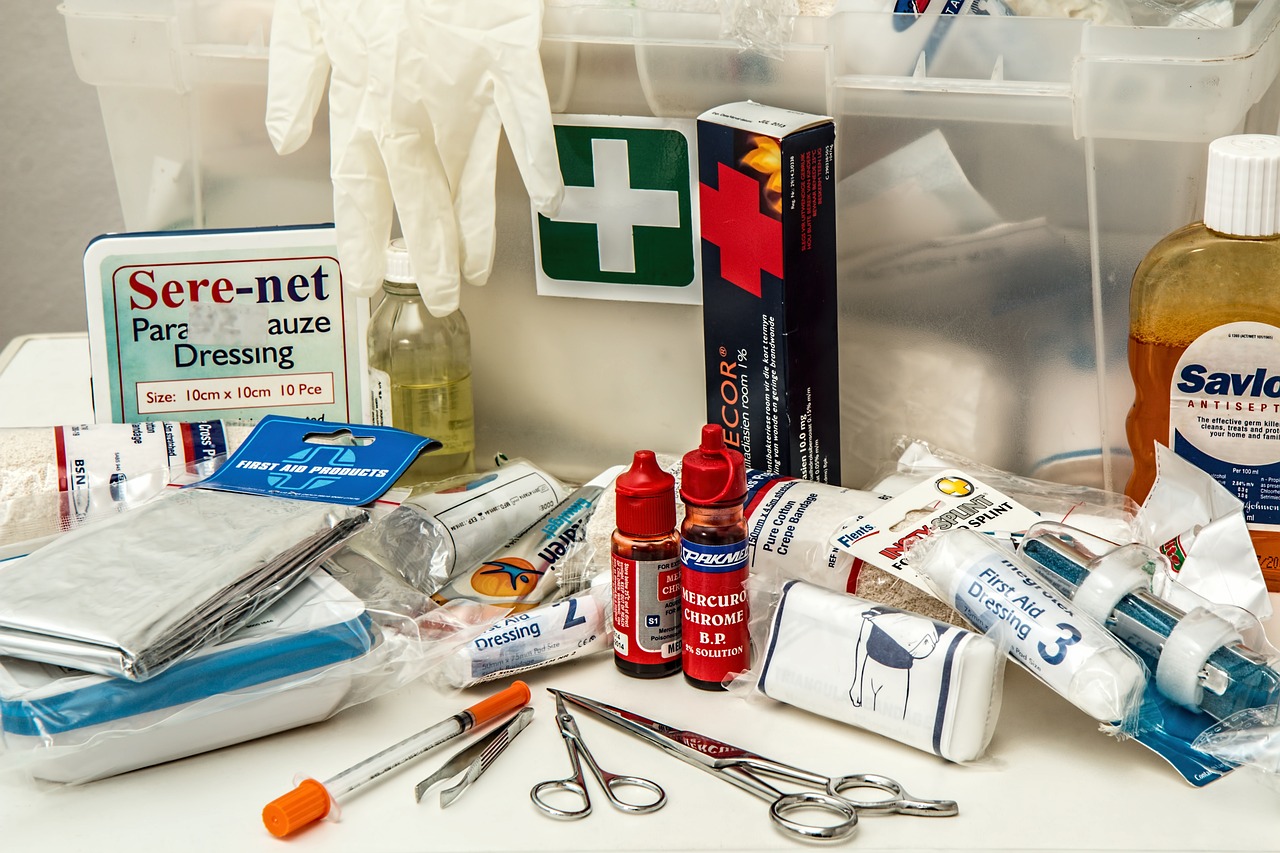
- Household needs: pack prescriptions, mobility devices, infant formula, pet food, and a minimum 72-hour supply of water and food per person.
- Essential documents: IDs, insurance policies, medical records, and financial info stored in a waterproof folder and encrypted cloud backup.
- Communication & roles: designate primary and out-of-area contacts, two meeting points, and a reunification plan that all household members know.
- Assume that power outages and blocked roads may last 72+ hours, so plan for fuel, backup charging, and alternative transportation.
Assessment of Risks
You assess risks by inventorying likely hazards, their frequency, and their potential impact on life and property; consult FEMA flood maps, NOAA historical storm data, state wildfire incident layers, and local seismic or landslide reports. Then score each hazard on a simple 1-5 scale for likelihood and severity to decide which mitigation steps and supplies to prioritize, such as elevating valuables in flood zones or hardening defensible space near homes.
Understanding Community Resources
You map community assets like the county emergency management office, American Red Cross shelters, CERT teams, hospitals, and utility outage hotlines; sign up for Wireless Emergency Alerts, local reverse-911, and 211 information lines where available. Also identify pet-friendly shelters, pharmacy continuity plans, and nearby fueling points that historically remained open during incidents.
Actively connect with those resources: register on special-needs and pet registries, join local alert apps and neighborhood groups, and complete basic CERT or first-aid training so you can both receive and provide help. Keep a list of direct numbers for hospital triage, power company outage reporting, and animal control, and review these contacts quarterly.
Maintaining and Updating Your Binder
Set a maintenance routine so your binder stays actionable: schedule a quick scan every 3 months and a full audit annually. Check IDs, passports, medication lists, and insurance for expiration dates; replace documents that have less than 6 months validity. After events like moves, births, or local disaster alerts (for example, a flood advisory), update evacuation routes and contact lists. Use color tabs and a dated index page to track changes and make audits faster.
Regular Review Schedule
You should set specific review intervals: a brief quarterly check (15-30 minutes) to confirm contact info and supplies, a semiannual check for meds and food rotation, and a comprehensive annual audit to verify policies, wills, and vehicle documents. Put calendar reminders on your phone for March, June, September, and December, and log each review on the binder’s update sheet with date and reviewer initials so you can track compliance over time.
Incorporating New Information
When new information arrives-policy changes, doctor updates, or post-disaster lessons-you must log the source, date, and action taken. For example, after a 2019 local wildfire you might add new evacuation shelters and mark them on maps; when an insurer alters coverage place the new declarations page up front. Keep a digital backup (PDFs in an encrypted cloud folder) alongside physical copies to ensure access if originals are lost.
Adopt a verification workflow: within 7 days of a reported change, update the binder, notify household members, and test any new procedures (run a timed evacuation drill or call updated contacts). Tag replaced pages with revision dates and version numbers and keep outdated copies in an archive pocket for claims or legal reference. After any incident conduct a short after-action review and incorporate lessons and supplier contacts into the next scheduled audit.
Summing up
Presently you have a roadmap to assemble an emergency management binder that centralizes plans, contacts, medical info, insurance, and printable checklists for preparedness. Keep copies both physical and digital, update them regularly, practice the procedures with household members, and customize sections for pets, seniors, or special needs. With this binder you enhance readiness and reduce response time.