Most volunteer fire departments depend on efficient onboarding to get your recruits ready; you can simplify this by focusing on a few priorities: clear competency checklists, rigorous safety protocols, and structured mentorship with hands-on drills. Use plain language, modular lessons, regular skills assessments, and paired training so you minimize on-scene decision-making hazards while accelerating your readiness and retention.
Key Takeaways:
- Implement a standardized, modular curriculum with clear milestones and sign-off checklists to guide progressive skill development.
- Use a mentorship/buddy system so experienced volunteers provide on-the-job coaching, feedback, and shift integration.
- Adopt blended learning: short online theory modules paired with focused hands-on scenarios and live drills to reinforce skills.
- Make training flexible with micro-sessions and a condensed orientation day to reduce time barriers for busy recruits.
- Track progress using simple competency assessments, digital records, and scheduled reviews at 30 and 90 days to adapt training.
Understanding the Unique Challenges of Volunteer Fire Departments
You face a mix of operational and human-resource constraints that differ sharply from career departments: limited budgets, aging equipment, and broad coverage areas that can stretch response times. In rural and suburban settings you may cover dozens to hundreds of square miles per station, which magnifies the impact when a single call pulls away one or two trained members; that gap often turns routine incidents into higher-risk situations for both residents and responders. Staffing models vary widely-some departments operate with fewer than 20 active members while others manage 50-100-but the common thread is that each vacancy or skill gap has an outsized operational cost.
Funding shortfalls and unpredictable availability combine to make sustained training one of your biggest obstacles. When training budgets are small and overtime is impractical, you end up prioritizing immediate operational needs over refresher training and cross‑training, which increases the likelihood of certification lapse and limits succession planning. Departments that track metrics report that even a few missed quarterly training sessions per member can reduce team readiness by a measurable margin, so you need onboarding and ongoing training that fit the rhythms of volunteer life.
High Turnover Rates
Turnover in volunteer ranks frequently runs in the double digits annually; for many departments you’ll see 15-30% attrition per year because members move for work, face family changes, or become unavailable due to job schedules and health. That level of churn forces you to repeatedly restart basic skills training, reassign leadership roles, and rebuild team cohesion, which drains instructor time and reduces overall effectiveness.
When you lose experienced members, the biggest losses are institutional knowledge and tactical judgment-things that aren’t captured in a checklist. For example, a 25‑member department that loses 5-7 volunteers a year can quickly find itself without a trained pump operator or incident commander for certain call types, creating a cascading need for targeted training and mentorship to fill those specific competency gaps.
Limited Time for Training
Volunteers typically juggle careers and families, so your window for training is often evenings or weekends and can be as little as 4-8 hours per person per week available for all duties. That constraint means you must compress necessary onboarding into high‑yield formats and avoid long classroom sessions that many members can’t consistently attend.
To make the most of short time blocks, you should adopt microlearning and blended approaches: deliver 15-20 minute online modules for cognitive skills, schedule 60-90 minute hands‑on drills for critical tasks, and run monthly 2‑hour scenario exercises to build team coordination. Aim for a practical target such as 12 hours of hands‑on training per quarter, supplemented by on‑duty ride‑alongs and mobile refreshers, so your onboarding becomes realistic and repeatable despite limited availability.
Developing an Effective Onboarding Program
Begin by mapping specific skill milestones to clear timeframes so you create a predictable progression: set a 90-day baseline for important competencies (radio procedures, turnout gear donning, hose advance) and a 12‑month plan for advanced tasks (pump operations, vehicle extrication). Use modular units that let you compress or expand training around volunteer schedules; one midwestern department cut classroom hours by 40% by switching to 20 micro-lessons and weekend practicals while maintaining performance on practical assessments.
Pair those milestones with measurable sign-offs and a mentorship ladder so every recruit knows who signs each skill. Track progress with a simple LMS or a shared spreadsheet, target a maximum instructor-to-trainee ratio of 1:6 during live drills, and enforce 100% PPE compliance before any hands-on evolution to reduce exposure to the most dangerous failure modes.
Establishing Clear Objectives
Write objectives in SMART terms so you and your mentors can evaluate progress objectively: for example, “By day 30 you will conduct a safe interior search within a controlled training burn under SCBA and complete the skills checklist with 85% accuracy.” Tie each objective to an accepted standard like NFPA 1001 or your department SOPs, and attach the exact checklist that will be used for assessment.
Allocate hours and assessment types to each objective-classroom (video + quiz), hands-on (skills station), and scenario (full-scale drill)-so you can measure outcomes: aim for a practical pass rate of at least 90% on core skills and re-test within 30 days for any failures. Also define retention checkpoints at 3, 6, and 12 months to verify long-term competence and identify where refresher training is needed.
Creating Comprehensive Training Materials
Design materials that match how volunteers train: short videos (5-10 minutes), one‑page SOPs, laminated checklists, and equipment-specific pocket guides. Include procedural flowcharts for high-risk tasks such as SCBA failure, vehicle stabilization, and confined-space entry, and provide at least one practical drill per module so you can observe skill transfer from paper to action.
Make materials accessible in multiple formats: downloadable PDFs, an offline USB set for stations with poor internet, and low-cost smartphone videos filmed on the rig during functional checks. Update content on a fixed cadence-quarterly for tactics changes, annually for standards-and keep a version log so you and your instructors always use the latest SOPs. Highlight the most dangerous procedures (for example, SCBA failure drills and electrical hazard response) at the front of every module.
Use templates to speed creation: a 1‑page lesson plan, a 10‑step skills checklist, and a 5‑question practical quiz. You can produce effective video lessons for under $500 using a smartphone and a simple tripod, or scale up to $1,000-$1,500 for edited multi-angle drills; either way, validate each asset by testing it with a recruit cohort and tracking improvement in practical scores and time-to-signoff.
Utilizing Technology in Onboarding
Integrating digital tools lets you streamline paperwork, standardize training content, and keep track of progress across shifts and seasons. With about 70% of U.S. fire departments staffed by volunteers, you can use a lightweight learning management system (LMS) – examples include Moodle, TalentLMS, or a simple Google Workspace setup – to deliver modules, host SOPs, and capture time‑stamped sign‑offs for practical skills. Use QR codes on apparatus and PPE that link to short how‑to videos and checklists so recruits can access just‑in‑time guidance during on‑call hours.
Because many volunteers operate from rural areas with limited bandwidth, design resources for offline access and small file sizes (short MP4s, PDFs under 5 MB). Secure personally identifiable training records with role‑based access and encrypted cloud storage; exposing rosters or medical training status publicly can create liability and privacy exposure, so treat those files as restricted assets. Automate reminders and cohort schedules through the LMS or a simple calendar app to ensure modules are completed before hands‑on sign‑offs.
Online Resources and Courses
Leverage free, nationally recognized modules for baseline knowledge: FEMA’s ICS series (IS‑100, IS‑200, IS‑700, IS‑800) and state fire academy e‑learning can establish common language and expectations before station‑level training begins. Break content into microlearning units – 10-15 minute lessons with a short quiz – and require an 80% passing score to proceed, which reduces time wasted on repeated classroom reviews and makes competency easier to verify during practical evaluations.
Supplement national courses with locally tailored modules: record short walkthroughs of your apparatus, SOP callouts, and station radio procedures so every recruit sees department‑specific details before live drills. Off‑the‑shelf content is helpful for fundamentals, but it often won’t reflect local SOPs, so always pair external courses with a local orientation module and a checklist that an officer must sign off on during the first three on‑duty shifts.
Virtual Training Simulations
Use virtual simulations to practice high‑risk, low‑frequency scenarios-searchs in zero visibility, stairwell evacuations, or confined‑space entries-without exposing recruits to open flames or structural hazards. Desktop and tablet simulations are cost‑effective starting points; immersive VR systems (consumer headsets plus licensing) typically range from about $300-$1,500 for hardware per seat, with software subscriptions varying widely, so pilot with one headset and a subscription before scaling department‑wide.
Pair simulations with metrics you can track: time‑to‑victim, number of search sectors cleared, and adherence to radio discipline. Departments introducing simulation sessions of 20-30 minutes monthly often see higher drill participation because recruits can attend outside standard drill nights, but be aware that simulations are a supplement – they do not replace live, hands‑on evolutions that validate physical skills and teamwork under real equipment loads.
To implement, start small: deploy 360° scenario videos viewable on smartphones, then add a single VR headset for immersive house‑fire search practice. Run a short briefing, a 15-20 minute scenario, and a 10‑minute structured debrief where you review recorded performance and set one measurable improvement target (for example, locating a simulated victim within 3-5 minutes). Track improvements across sessions and tie simulated performance to on‑station sign‑offs so virtual gains translate into verified field competence.
Engaging Experienced Members in Training
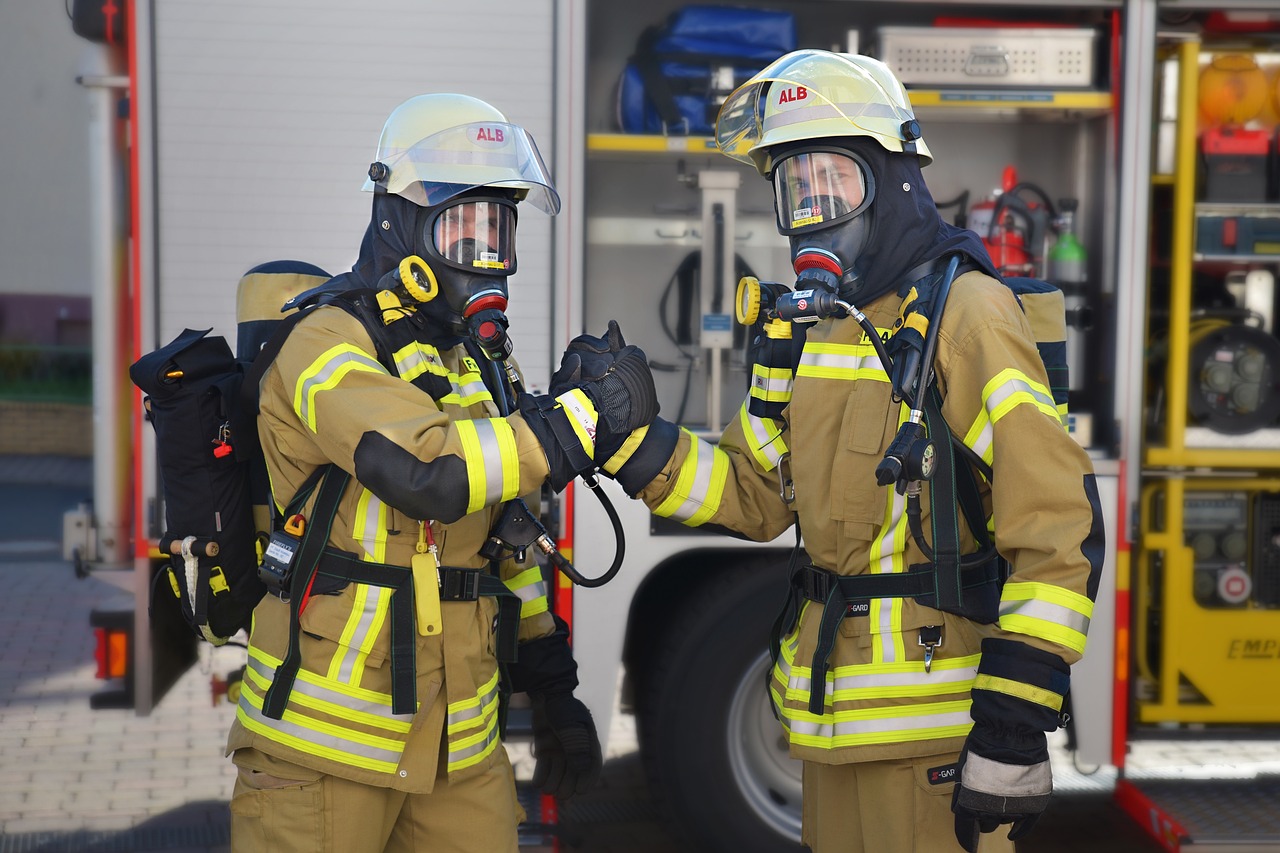
You can turn senior volunteers into the backbone of onboarding by assigning clear, time-bound training roles and measurable outcomes. Set expectations such as dedicating 4-8 hours per month to mentoring or leading drills, pair each recruit with a primary mentor, and require documented sign-offs on a 10-item core-skill checklist (PPE donning, SCBA use, hose line control, ladder operations, scene size-up, radio discipline, patient assessment, vehicle stabilization, pump basics, water supply). Emphasize that tasks like SCBA use and live-fire evolutions are high-risk and must only be signed off after supervised, documented competency demonstrations.
Measure impact with simple metrics you can track weekly: time-to-first-ride-along, weeks-to-operational sign-off, and first-year retention. Departments that formalize mentor roles often reduce time-to-competency and improve retention; for a practical target, aim to get recruits to basic operational sign-off within 8-12 weeks through a structured mentor program combined with monthly scenario drills.
Mentorship Programs
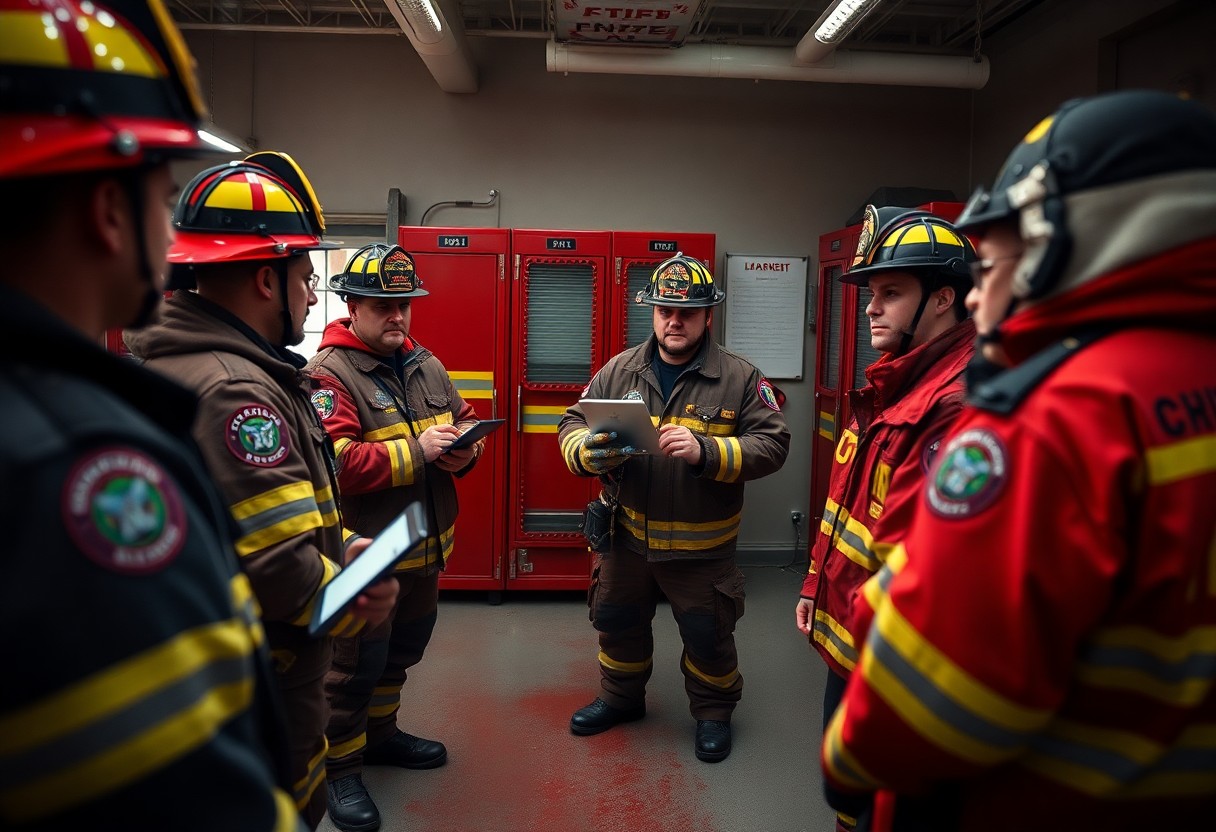
Design a formal mentorship program with a clear syllabus: a 12-week pathway that schedules two supervised ride-alongs per week for the first month, followed by weekly skill stations and progressive scenario complexity. Assign a 1:1 or 1:2 mentor-to-recruit ratio, require mentors to complete a short train-the-trainer module (4 hours), and use a standardized sign-off form for each skill so you can audit progress at 4, 8, and 12 weeks.
Structure incentives to keep experienced members engaged: offer comp-time (for example, one shift credit per month of mentoring), public recognition at quarterly meetings, or eligibility for additional leadership training. In one pilot program, a department that formalized mentor expectations and provided small incentives saw recruits reach operational sign-off in a median of 10 weeks and reported higher mentor participation during night and weekend trainings.
Peer-to-Peer Learning Opportunities
Run peer-led drill nights that mix experienced members and recent recruits into rotating teams so every person practices different roles: officer, nozzle, driver, and search team. Keep sessions focused with a 60-90 minute structure: 15 minutes of setup, 30-45 minutes of two live scenarios, and a 15-20 minute after-action review (AAR). Use short, measurable objectives per scenario – for example, complete search and rescue in under 8 minutes while maintaining radio discipline – and capture results on a shared spreadsheet or mobile app.
Encourage teach-backs where each experienced member prepares a 10-15 minute micro-lesson (knot tying, SCBA checks, handline management) and then evaluates peers on a 3-point rubric (needs coaching, competent, proficient). Combine these with inter-station exchanges once per quarter to expose your team to different apparatus and procedures without heavy cost or scheduling disruption.
To implement quickly, publish a rotating calendar, require sign-up for specific roles, and start with one focused objective per drill night; over three months you can document improvements in specific skills (times, errors, sign-offs) and use that data to refine who leads each session and which scenarios present the most danger so you can allocate extra supervision.
Incorporating Feedback Mechanisms
Embed feedback into every stage of onboarding so training becomes an iterative process instead of a one-off event. Use brief, structured debriefs after drills and real responses (15-20 minutes), combined with weekly digital check-ins for the first 90 days, to capture both immediate safety issues and longer-term skill gaps. Track clear metrics – for example, time-to-first-response, number of supervised calls before independent status, and pass rates on task checklists – and review them monthly to spot trends instead of relying on anecdotes.
Make feedback actionable by linking observations to specific remediation steps and owners: create a simple ticket for each gap with a target completion date (aim for 90% of items closed within 30 days) and a verifying sign-off from a trainer. Deploy low-cost tools like 5-question pulse surveys, Google Forms for anonymous reporting, and a shared spreadsheet or training-management app to maintain an audit trail that you and your leadership can consult when planning drills or assigning mentors.
Regular Assessments of New Recruits
Start with a baseline skills assessment on day one that covers PPE donning/doffing (target: <60 seconds for full PPE), radio procedures, and one fundamental task such as hose-line advancement or victim drag. Schedule formal practical assessments at 30, 60, and 90 days, then move to quarterly checks; this cadence captures fast initial learning and prevents dangerous skill erosion. Use a standardized checklist with an objective scoring system (pass threshold e.g., 85%) so you can compare performance across recruits and stations.
Pair assessments with scenario-based evaluations under stress – for instance, a 10-minute timed search with smoke and noise – to surface not just technique gaps but decision-making under pressure. Record short video clips of key evolutions when possible so trainers can do asynchronous review and give targeted coaching; in many volunteer units a 2:1 mentor-to-recruit ratio for the first 60 days reduces remedial training needs and strengthens retention.
Gathering Input from Trainers and Recruits
Use a mix of immediate post-evolution feedback and scheduled reflections: conduct a 10-15 minute after-action review after every drill with the trainer documenting three positives and three deltas, and run a monthly anonymous pulse survey for recruits with 5 core questions plus an open comment field. Encourage trainers to flag any safety-related observation immediately via text or the incident ticket system so hazardous practices get corrected before they become habits.
Set up quarterly focus groups that include both trainers and newer recruits to discuss systemic issues like scheduling conflicts, training material clarity, and mentorship effectiveness. Capture action items from each session, assign an owner, and publish progress to the company so feedback leads to visible change – a transparent loop increases buy-in and reduces repeated complaints.
Sample questions you can use in surveys and debriefs: “Which three tasks felt least prepared for?”, “Did any procedure feel unsafe or unclear?”, and “What single change would improve your next training?” Triage responses into safety issues, skill gaps, and administrative fixes, then prioritize by risk: address any safety items within 48 hours, schedule skill remediation within 7 days, and resolve administrative items in the next monthly meeting. Track closure rates and aim for rapid, documented follow-up so feedback becomes measurable improvement rather than unmet suggestions.
Maintaining Ongoing Training and Development
You should build a predictable rhythm for ongoing training that balances the limits of volunteer availability with the demands of safe operations. Establish a calendar combining short weekly or monthly drills with longer quarterly or annual evolutions; for example, aim for at least one 60-90 minute skills session per month plus a quarterly full‑scale scenario that integrates apparatus, command structure, and multi‑agency communication. Use a simple tracking sheet or an LMS to log hours, skill sign‑offs, and recertification dates so you can spot gaps early instead of chasing compliance at the worst possible time.
Assign a training officer or small committee to coordinate curricula, grant opportunities, and outside instructors so your program doesn’t rely on a single person’s memory or goodwill. When possible, align content to NFPA standards (for example, NFPA 1001 for qualifications and NFPA 1410 for evolutions) and set measurable targets such as 24-40 training hours per member per year as a departmental goal, adjusting by state requirements and local risk profile.
Continuous Education for Volunteers
You can use microlearning and blended formats to keep volunteers engaged without overloading their schedules: short online modules (10-20 minutes) on topics like incident command updates, PPE changes, or new EMS protocols, paired with monthly practical labs, produce steady knowledge gain. Partnering with the state training center or a nearby community college makes specialty classes like confined space or HazMat awareness affordable and often eligible for training grants; many departments secure reimbursement for 50-75% of course fees through regional programs.
Track completion and learning gaps with simple competency checklists that map modules to required skills; aim to deploy 1-2 online modules per month and one instructor‑led classroom session every quarter. Doing so keeps your members current on evolving practices-such as revised trauma triage or opioid response techniques-and makes it easier to certify new instructors from within the roster, which reduces dependency on outside resources.
Recurrent Skills Refreshers
Schedule targeted refreshers for high‑risk skills on a defined cadence: SCBA confidence drills and low‑visibility search should occur at least annually, with semi‑annual sessions for interior attack teams if call volume or local risks are high. Basic but high‑impact tasks-hose line deployment, ladder raises, patient packaging and cervical stabilization-benefit from monthly practice; keeping the repetition short and scenario‑based preserves muscle memory without fatiguing volunteers.
Standardize the refreshers with competency checklists and a pass/fail rubric so every member knows the objective: for instance, require a timed three‑member hose deployment to be completed within a set standard during the quarter, and require documented proficiency for forcible entry and vehicle extrication before assigning those roles on the rig. Use instructor rotation to keep evaluations consistent and to develop internal trainers who can lead on‑shift refreshers.
For practical planning, run one full‑dress, multi‑company scenario per quarter and schedule an annual live‑burn or controlled live fire evolution that follows NFPA 1410 benchmarks; this delivers the high‑stress training needed to transfer classroom learning into safe, effective action on the fireground. Emphasize high‑hazard skills (SCBA, live‑fire attack, patient extrication) in these events and capture after‑action notes to close performance gaps within the next monthly drill.
Final Words
The simplest onboarding reduces complexity by breaking training into modular, competency-based units, combining short classroom sessions, hands-on drills, and digital microlearning so you can accelerate skill acquisition while maintaining safety and standards.
You should pair each recruit with a trained mentor, set measurable milestones with checklists and assessments, use centralized digital resources and training logs, and solicit regular feedback to refine the process so you can onboard recruits reliably and sustain readiness without overburdening volunteers.